

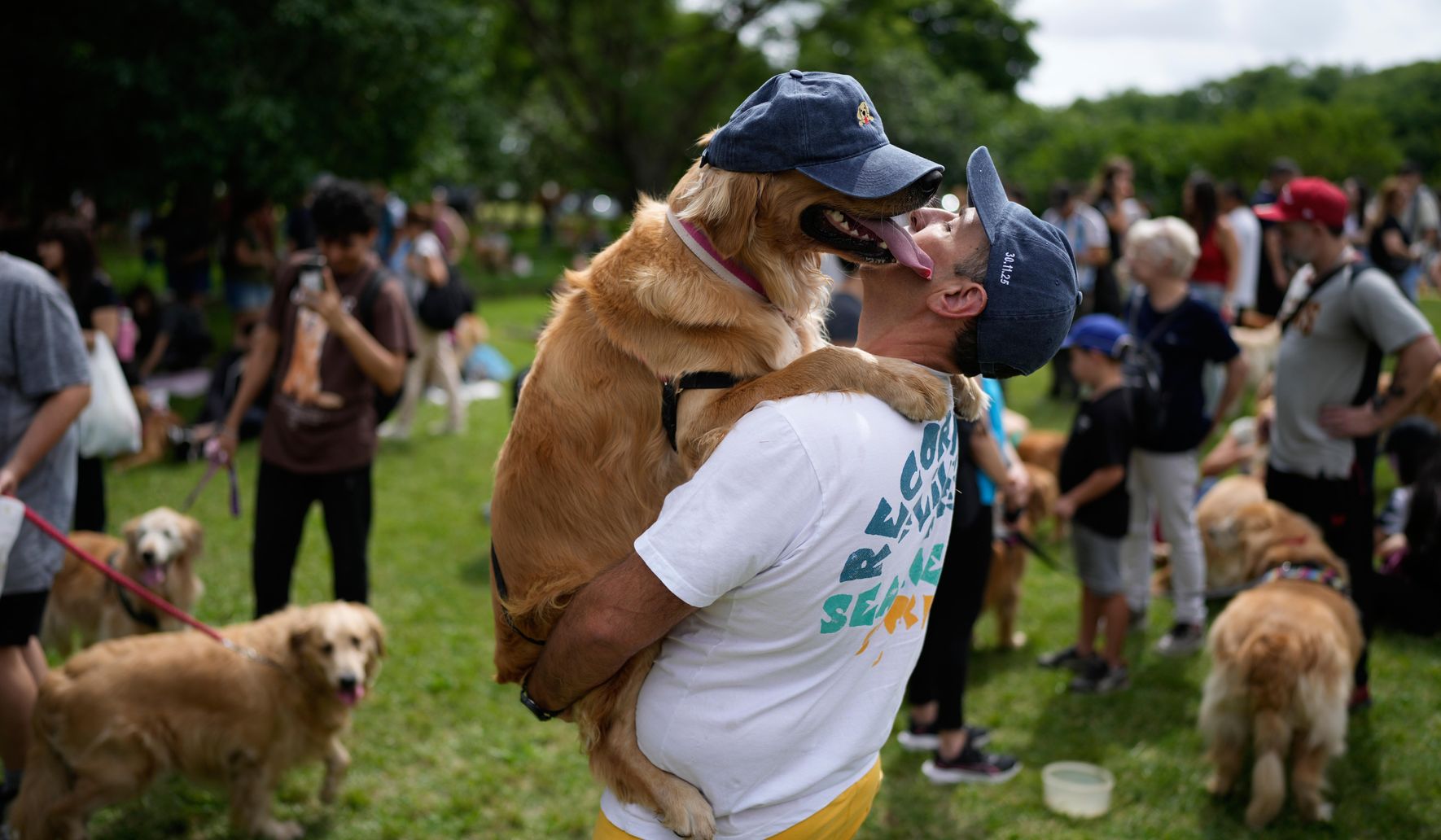
A passerby could hear the cacophony from miles away in the Argentine capital, the unmistakable sound of 2,397 dogs barking, creating a raucous, record-chasing spectacle.
The scene in Buenos Aires felt more like a festival than a neighborhood event, with owners, volunteers and dogs of every size converging on a park that was temporarily taken over by canine noise. Organizers say the turnout reached 2,397 dogs, a figure that immediately drew attention as an unofficial world record for the largest gathering of dogs. For several hours the city hummed with barking, wagging tails and the kind of organized chaos only pet lovers and professional event crews could manage.
Logistics were the backbone of the day, with checkpoints for registration, wristbands for participating pets and volunteers stationed to keep traffic moving and animals calm. Water stations and shaded rest areas were set up so dogs could cool off, and on-site vets were on hand to respond to any health concerns. Organizers emphasized safety and calm handling, because gathering thousands of animals in one place raises real practical and welfare questions.
Neighbors had mixed reactions, from bemused smiles to mild annoyance, as the bark chorus rolled across nearby streets. Some residents leaned out of windows to watch, while others called city services asking about noise levels and crowd control. Authorities monitoring the event focused on public safety and ensuring that the gathering complied with local regulations rather than policing the volume of the barking itself.
Participants described why they came: companionship, a love of dogs and the chance to be part of something big and joyful. Owners walked their pets in groups, posed for photos and compared training tips, turning the event into an informal social exchange as much as a record attempt. For many, the day offered community connection after years of smaller, quieter meetups and private dog-park visits.
Record verification remained unofficial at the moment of the gathering, with organizers pledging to follow up with the necessary documentation and counting procedures. Independent observers and volunteer counters were used during the event to track registrations and arrivals, and videos and photos provided a visual audit trail. Whether the number is ultimately certified by an official record authority, the scale and coordination of the turnout make the effort notable on its own terms.
Animal welfare advocates who attended said they watched closely for signs of stress and intervened when necessary to separate dogs that became agitated. Temperament screenings at registration helped reduce risks, and handlers stepped in quickly when play escalated into discomfort. The presence of animal-care professionals reassured many owners and helped the organizers present the event as responsible and humane.
Local businesses near the park reported a busy day, with pet stores, food vendors and public transit seeing a spike in customers. Several small vendors sold treats and accessories tailored for dogs, and nearby cafes benefited from the influx of visitors. The economic ripple effect was modest but noticeable, turning what began as a single-community event into a temporary boon for nearby commerce.
Photos and footage from the day circulated widely on social platforms, capturing the surreal image of thousands of dogs gathered together and the human enthusiasm that made it possible. Those images helped spark follow-up meetups and inspired other communities to consider how they might organize similar gatherings. For some viewers the spectacle was pure joy; for others it raised practical questions about noise, space and animal supervision.
Organizers said they plan to compile the counting data, submit evidence to record authorities if appropriate and assess lessons learned for future events. They flagged improvements around crowd flow, clearer signage and expanded shade and water points for subsequent gatherings. Regardless of the final certification outcome, the event demonstrated a capacity for mass coordination around a shared love of pets.
The day left a clear impression: a city briefly united by canine energy and human enthusiasm, marked by the unmistakable count of 2,397 dogs. It was a noisy, colorful reminder of how pet culture can mobilize people and how careful planning makes large-scale animal events possible without compromising welfare or safety.

