

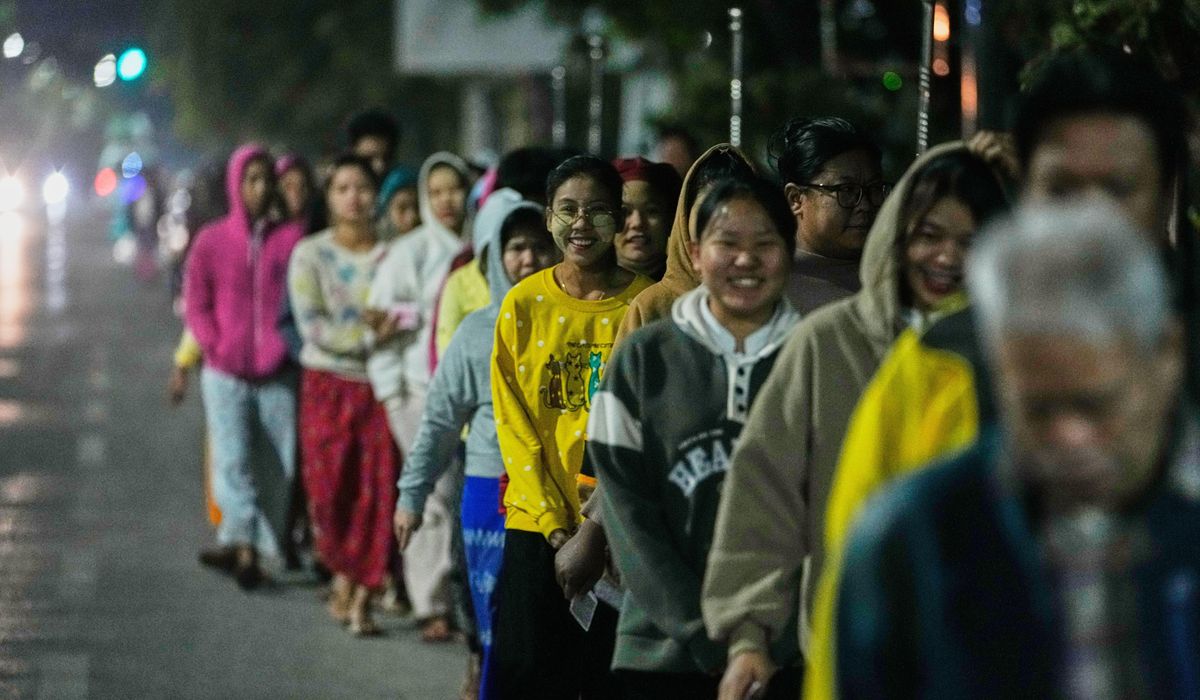
Myanmar began a second round of voting Sunday in its first general election since a takeover that installed a military government five years ago, drawing tense attention at home and abroad as citizens, neighbors, and policymakers watch how the country navigates a fragile return to the ballot box.
Voters in Myanmar have been asked to cast ballots again after a long, turbulent stretch marked by a military takeover and years of unrest. The second round is about finishing what the first round started and testing whether the electoral process can actually deliver credible results in a country still under military control. For many inside Myanmar, this is about basic political legitimacy and the hope that daily life will face fewer shocks and more predictable institutions. For those watching from outside, it raises questions about regional stability and the balance of power in Southeast Asia.
The Republican perspective is straightforward: free, fair elections matter, but so does rooting out sham processes that merely legitimize authoritarian rule. Genuine elections require transparent management, independent observers, and meaningful access for opposition voices—none of which can be assumed when the military continues to hold real power. Americans on the right tend to tie credibility to clear benchmarks: no voter intimidation, no arbitrary arrests of candidates, and genuine freedom for the press to report. If those conditions are absent, any result risks international non-recognition and sanctions responses.
Practical concerns are piling up. Humanitarian and refugee flows from Myanmar already strain neighboring countries and create security headaches that ripple beyond the region. A vote that does not address the root causes of violence, exclusion, and economic collapse is unlikely to calm the migration pressures that affect border states. From a Republican viewpoint, the U.S. should support measures that reward concrete progress toward openness while holding bad actors accountable for abuses that fuel instability.
Another major factor is geopolitical competition. China has deep ties to Myanmar’s military and economic networks, and a contested election hands Beijing leverage to increase influence across critical infrastructure and resource sectors. That matters to U.S. interests and to allies in the region who prefer stable, independent partners over client states. Republicans who focus on national security see Myanmar’s trajectory as a test case: will democratic norms hold, or will authoritarian designs expand under cover of a flawed electoral process?
At the same time, the reality on the ground is complex. Many Burmese citizens are exhausted and wary after years of conflict, and some view participation as the best way to protect their families and communities. Others fear retaliation for voting against the military-backed candidates. Any outsider commentary has to acknowledge those lived anxieties and avoid simplistic proclamations. A responsible approach mixes pressure with targeted support for civil society groups that help citizens participate safely and securely.
Economic consequences will follow whatever the outcome. Investors shy away from uncertainty, and opaque governance makes long-term deals risky. If the second round deepens the perception of a managed or captive election, foreign capital and development aid may take a hit, worsening conditions for ordinary people. Republicans generally push for policies that link economic engagement to measurable governance reforms, not to blanket normalizations that leave authoritarian behavior unchecked.
Finally, the post-election period deserves attention. If winners are installed under disputed circumstances, protests and unrest could flare, prompting a hard security response and deeper repression. Conversely, a genuinely open process could open modest but real pathways for political reconciliation and stabilization. The United States, with Republican policymakers often skeptical of nation-building, still has an interest in backing institutions and actors that can deliver order while expanding freedom, not in propping up leaders who promise stability at the cost of liberty.

