

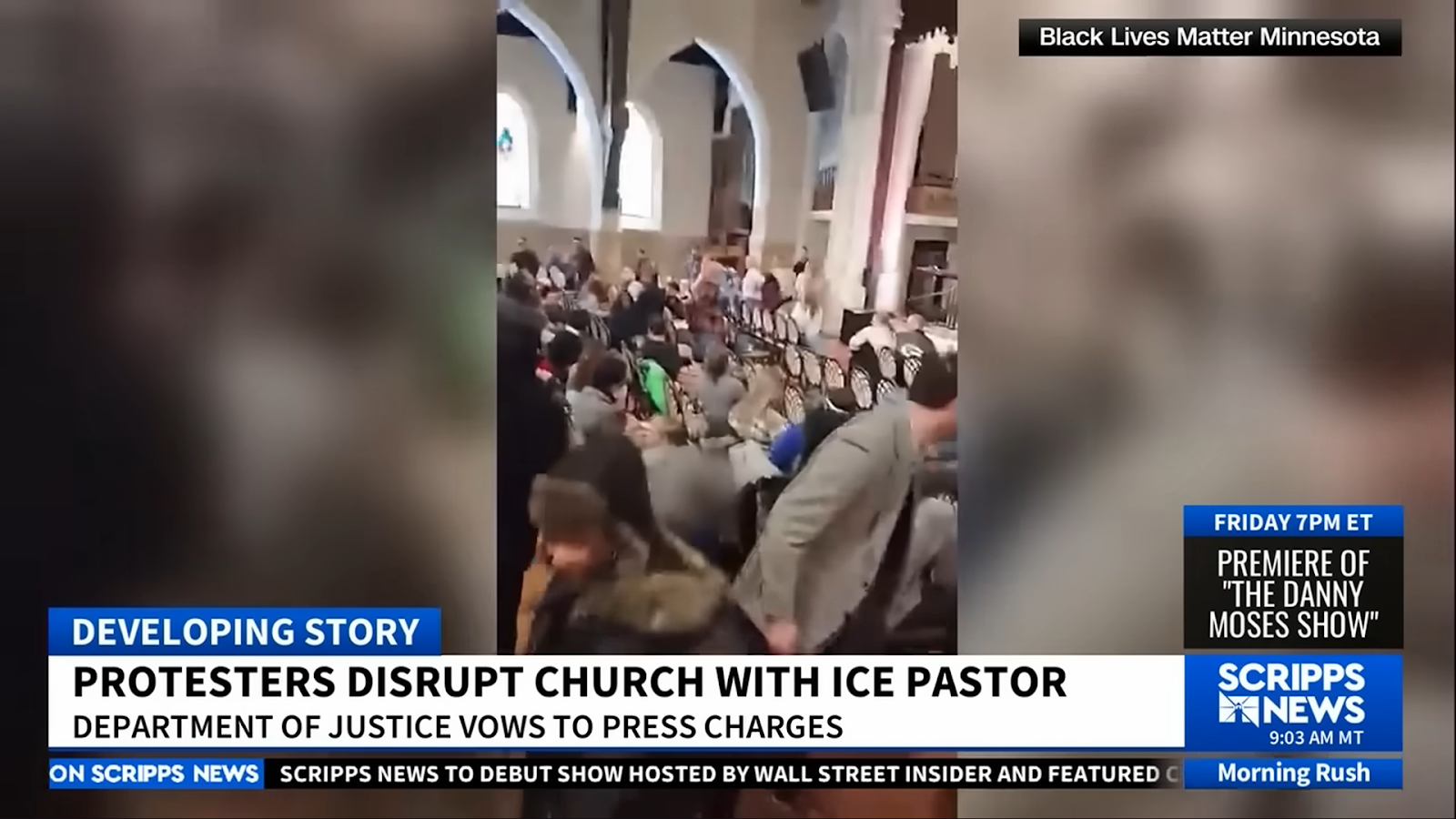
Federal authorities arrested two activists after they allegedly stormed a Minnesota church, Attorney General Pam Bondi said in a series of X posts; Homeland Security Investigators and FBI agents carried out the arrests of Nekima Levy Armstrong and Chauntyll Louisa Allen, and Bondi included that Armstrong “allegedly played a […]
Federal law enforcement moved quickly after reports of activists entering a church in Minnesota, and officials say two people were taken into custody. Attorney General Pam Bondi posted about the arrests on X, naming Nekima Levy Armstrong and Chauntyll Louisa Allen. The operation was carried out by Homeland Security Investigators alongside FBI agents.
The case touches on basic questions of respect for private property and public safety, which many Republicans see as nonnegotiable. Churches and other houses of worship should be safe spaces where people gather without fear of being targeted for political demonstrations. When activists use aggressive tactics that cross into illegal behavior, the rule of law must be enforced without bias.
From a legal perspective, arrests by federal agents signal prosecutors believe the conduct rose to a federal level or involved violations that warranted national attention. That is why both Homeland Security Investigations and the FBI were involved, according to officials. The involvement of those agencies tends to bring more scrutiny and higher stakes for anyone accused.
This situation also raises questions about political protest tactics and their limits. There is a long tradition of peaceful dissent in our country, but storming a church suggests a line was crossed. People on the right argue that defending institutions and orderly process matters just as much as protecting free speech.
Bondi’s choice to communicate via X highlights how law enforcement and elected officials now use social platforms to share critical updates. Public officials have an obligation to inform citizens quickly, but that transparency should not override legal process or counsel. Reports must be handled carefully to avoid prejudicing ongoing investigations or trials.
Local communities often feel the immediate impact when activist actions escalate into confrontations, and that concern matters politically and practically. Congregants who expected a calm worship environment were suddenly thrust into a charged situation with federal attention. Those consequences can damage trust and invite calls for stronger protections of religious and private spaces.
Supporters of strict law enforcement point out that consistent application of laws prevents chaos and protects everyday Americans. When misconduct by protesters crosses into alleged criminal behavior, it is appropriate for investigators to act and for prosecutors to weigh charges. The right expects equal treatment under the law and no special allowances for political actors.
At the same time, civil liberties remain an important part of the conversation, and any prosecution should be transparent and grounded in clear evidence. Defense attorneys will have their say in court, and due process should play out fully. Observers on all sides will watch how the investigation proceeds and whether charges are filed.
Ultimately, the episode is a reminder that political passion does not excuse unlawful acts, and that public officials must balance communication, enforcement, and fairness. Republicans emphasize protecting institutions and ensuring law and order while allowing lawful protest. The next steps will depend on prosecutorial decisions and the facts federal agents document in their case files.

