
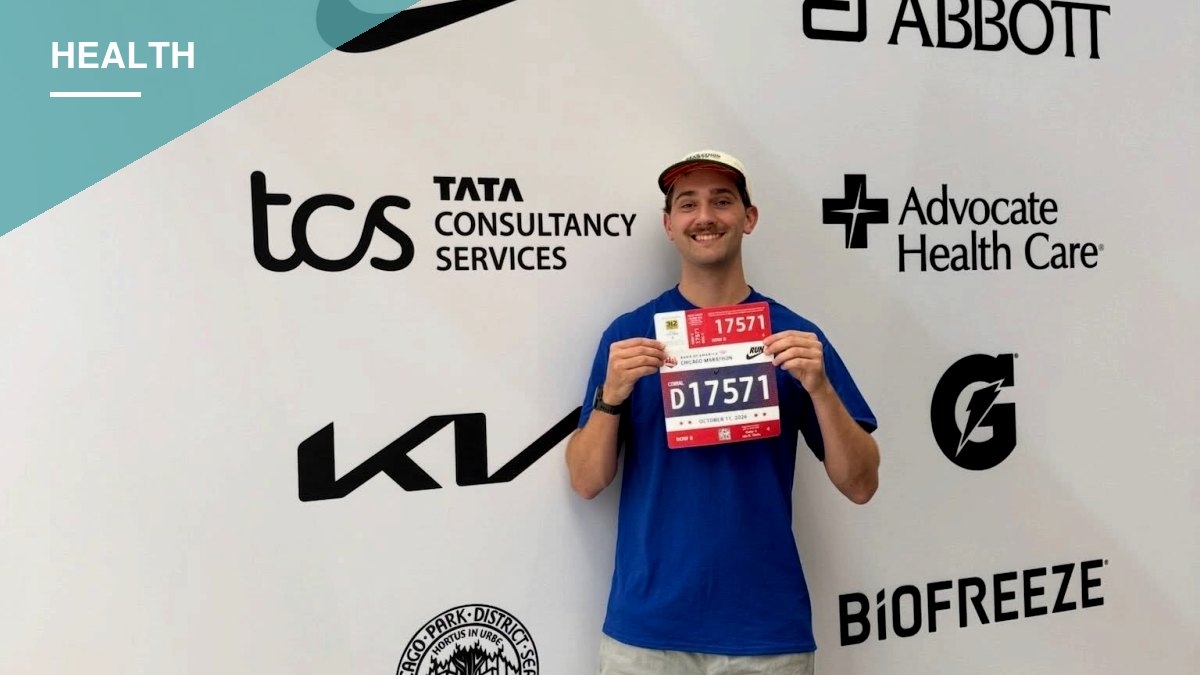
Patrick Mascoli was 27 years old, worked as an engineer, and ran 40 miles a week. In July 2024, after a 10-mile run and a gym session in Boston, he collapsed alone in a locker room with what he described as “a bomb” going off in his head.
“The right side of my brain just felt like a severe burning sensation, a lot of pain,” Mascoli told Fox News Digital. “And that came out of nowhere.”
His vision blurred, his legs refused to obey him, and when he tried to walk he veered into a wall instead. “No matter what I was telling my body to do, it just wasn’t working,” he said. He managed to text his sister before collapsing again, then lay vomiting on the floor, unable to control his legs or see clearly, until she arrived and found him in the gym bathroom, drenched in sweat, and called 911.
Stroke crossed his mind briefly, but he dismissed it. “I thought a stroke was something that happens to someone who is elderly or has other pre-existing conditions,” he said. “And in my mind, I’m like, ‘I don’t fit that.'”
First responders, seeing a young, fit man who had just run in the heat, initially suspected dehydration and gave him IV fluids. Clinicians also treated him for possible vertigo. Neither explanation held. It was only at Boston Medical Center, after a CT scan and a confirming MRI, that doctors identified a stroke.
Searching for a Cause
By the next morning Mascoli’s head pain had eased, but movement on his right side remained, in his words, “completely useless.” He spent several days in the hospital relearning to walk with a walker.
“It was very jarring and terrifying,” he said of the diagnosis.
Extensive blood testing for clotting disorders turned up no clear answers. But a heart ultrasound using tiny injected bubbles found a patent foramen ovale, or PFO — a passage between the heart’s upper chambers that normally seals shortly after birth but hadn’t in Mascoli’s case.
“In most people, it closes shortly after birth – but in others, it does not shut completely,” said Dr. Dheeraj Khurana, chief of cardiology at Episcopal Health Services in New York, who did not treat Mascoli. “In rare cases, a blood clot passes through this opening, travels to the brain and causes a stroke.”
Doctors considered that opening the likely pathway for the clot that reached Mascoli’s brain, though the American Stroke Association notes most people who have a PFO never develop related problems. Khurana said that in younger stroke patients without typical risk factors, physicians will often look for a PFO using an echocardiogram when initial tests come up empty.
Mascoli still doesn’t know why the clot formed in the first place. “I had none of the genetic predispositions to it. I had no clear physical issues that were causing it. So that is a little bit of a mystery,” he said.
Repair and Recovery
About a month after the stroke, Mascoli had a catheter procedure to close the heart opening using an Abbott device resembling a mesh, double-sided umbrella. He said hearing from his cardiologist that the suspected pathway had been closed helped quiet his fears.
Mobility has returned with therapy, but fine motor skills haven’t fully followed. “I was very hard on myself, and I still get mad if my hands are shaking and my writing looks bad,” he said.
Running came back too, though differently. Before the stroke he ran without tracking mileage; now he keeps close watch. “I need to know how far I’m going because I don’t want to be too far away and have something happen,” he said he thought at the time.
His girlfriend gave him a fitness watch during recovery and pushed him toward racing. “It was something that kept me motivated, because I knew it was helping me both physically and mentally,” he said. In October 2026, Mascoli finished the Chicago Marathon running for Team Abbott, representing the company that made his heart implant. Afterward he listened to a voice message from his sister — the one who had found him and called for help.
“She was the one who saved me, so it meant a lot to me.”
To others facing their own health emergencies, Mascoli’s advice is modest. “Just take as many steps as you can,” he said. “It might not be running a marathon. It doesn’t need to be this big thing.”
Know the Warning Signs
Khurana said risk factors for stroke in younger adults include high blood pressure, smoking, unhealthy cholesterol, clotting disorders, certain heart conditions and tears in the arteries supplying the brain. He warned that symptoms in young people are easily mistaken for something else. “Younger adults with stroke may experience dizziness, altered mental status, vomiting and headaches, which they can easily mistake for exhaustion, especially after exercise or migraine,” he said. “Other common symptoms include visual disturbances, speech problems, weakness, lethargy or seizures.”
Dr. Sean Levchuck, chair of pediatric cardiology at St. Francis Hospital & Heart Center in New York, said young, active adults should keep exercising but replace fluids after strenuous activity and avoid smoking and tobacco.
The American Stroke Association advises anyone experiencing sudden loss of balance, vision changes, face drooping, arm weakness or difficulty speaking to call 911 immediately, regardless of age or fitness level.