

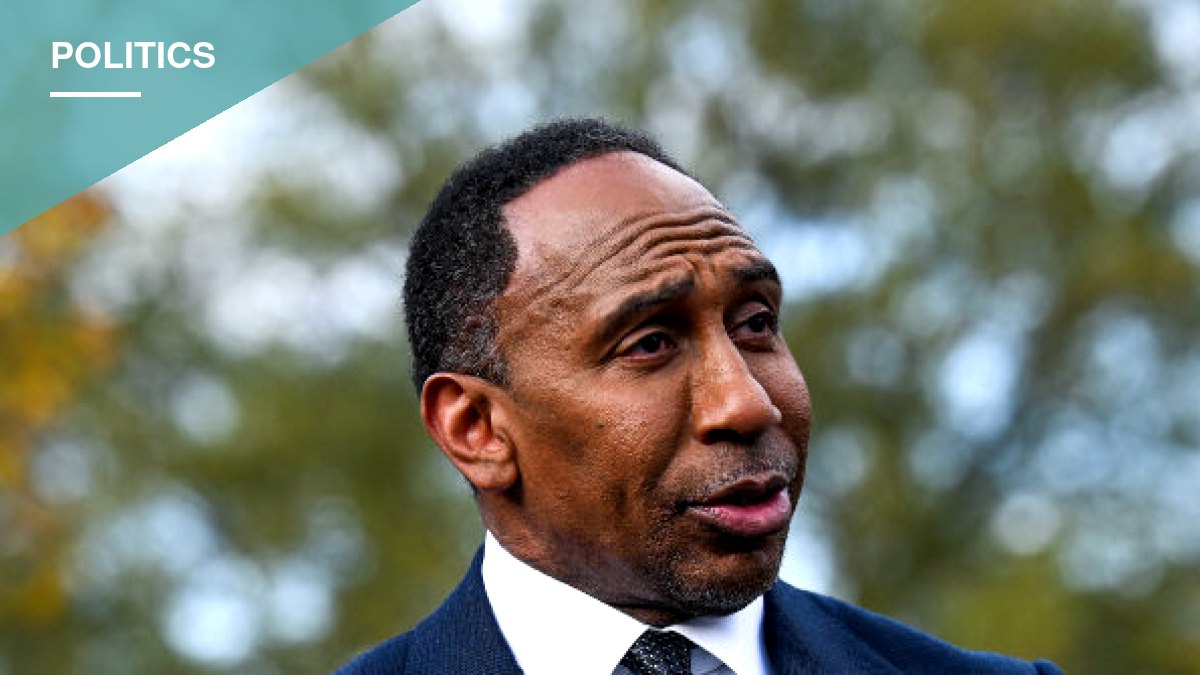
Sports commentator Stephen Smith used a Washington, D.C. barbershop appearance on November 18 to press Democratic leaders on whether their pursuit of a growing Latino voting bloc, built in part through expanded immigration, will come at the expense of black political influence.
“I’m worried about the same arrogance from the Democratic Party that I saw in the past,” Smith told the gathering, questioning what Democrats intend to do on affordability, inflation, the economy, employment and street safety now that they control the House and Senate.
Oh, by the way, I’m on the record. I firmly believe immigration is about securing a voting bloc.
Smith argued that once Democrats lock in enough Latino and Hispanic support, black voters — who make up 13.6 percent of the population — may find themselves with less leverage inside the party. “You’ll take our vote… but in the end, if you don’t need us, hell, you wasn’t giving us enough when you did need us!” he said.
Shifting numbers in Congress
The remarks come as Democratic leadership, including likely House Speaker Rep. Hakeem Jeffries (D-NY), pushes to extend legal status to millions of Latino migrants, a move critics say would also expand labor pipelines bringing in additional workers.
Projections cited in the discussion show the Hispanic caucus in the 2027 Congress growing past 50 members, up from 43 in 2025, while the black caucus is expected to grow more modestly, from 62 members in 2026 to 69 in 2027. After the 2030 census, further apportionment changes tied to population growth could shift additional House seats — including some currently held by black lawmakers — toward areas with expanding Latino populations.
Smith laid out how that process works in blunt terms: “When the Census Bureau comes, and they take numbers, what they do is they count the number of bodies in their state. That dictates how much money you get from the government, and how many seats you occupy in the House of Representatives… The more people that come in, the more money that you get. The more money you get, the more seats you get.”
A history of economic swings
Smith’s comments touch on a broader economic pattern. Black Americans saw wage and political gains after Congress sharply curtailed immigration in 1924, a period that coincided with migration to Western and Northern cities and a rise into the middle class. That progress slowed in the 1970s and stalled further after Congress expanded immigration in 1965, doubled it in 1990, and doubled it again between 2021 and 2024. More recently, black workers saw wage and housing cost improvements under President Donald Trump’s lower-migration policies, after losses during President Joe Biden’s higher-migration approach.
Black caucus has mostly stayed quiet
The Congressional Black Caucus has generally avoided public fights over immigration, a posture that helps it steer clear of friction both with black constituents and with the Tri-Caucus alliance of black, Latino and Asian lawmakers. One exception came in 2022, when Rep. Yvette Clarke (D-NY), who chairs the caucus’s immigration task force, helped block a large white-collar immigration bill, writing only that she “cannot support efforts that would perpetuate the current inequities in our immigration system.”
Clarke has also spoken about the political upside of a growing immigrant population within black-held districts. “I need more people in my district, just for redistricting purposes and those members could clearly fit here,” she said in 2021.
Polling shows mixed loyalties
Surveys and anecdotal video evidence suggest some working-class black Americans share economic concerns about immigration common among other American workers, with friction often emerging in shared workplaces. That skepticism toward immigration does not appear to translate into alignment with white voters, however. In Michigan’s Senate race, Abdulrahman Mohamed Al-Sayed won roughly 87 percent of the black vote despite his support for expanded immigration, and nationwide 87 percent of black men and 93 percent of black women backed Democratic candidates, a result that came amid public appeals from black leaders including former President Barack Obama.
Smith pushes back on criticism
Smith said he has faced backlash from Democratic-aligned black leaders for speaking favorably about Trump’s lower-immigration policies and for raising questions about the party’s reliance on immigration to build political power.
What’s wrong with us asking? They’re getting on me for asking, and I’m looking at brothers and sisters, and I’m like, when have we had a problem asking a question? Let somebody walk up to any of y’all right now and tell y’all y’all can’t ask a question, and let me see how y’all act towards them.
“That’s what they’re trying to do to me, and I ain’t going for it — and that’s what it’s all about,” he said.

