

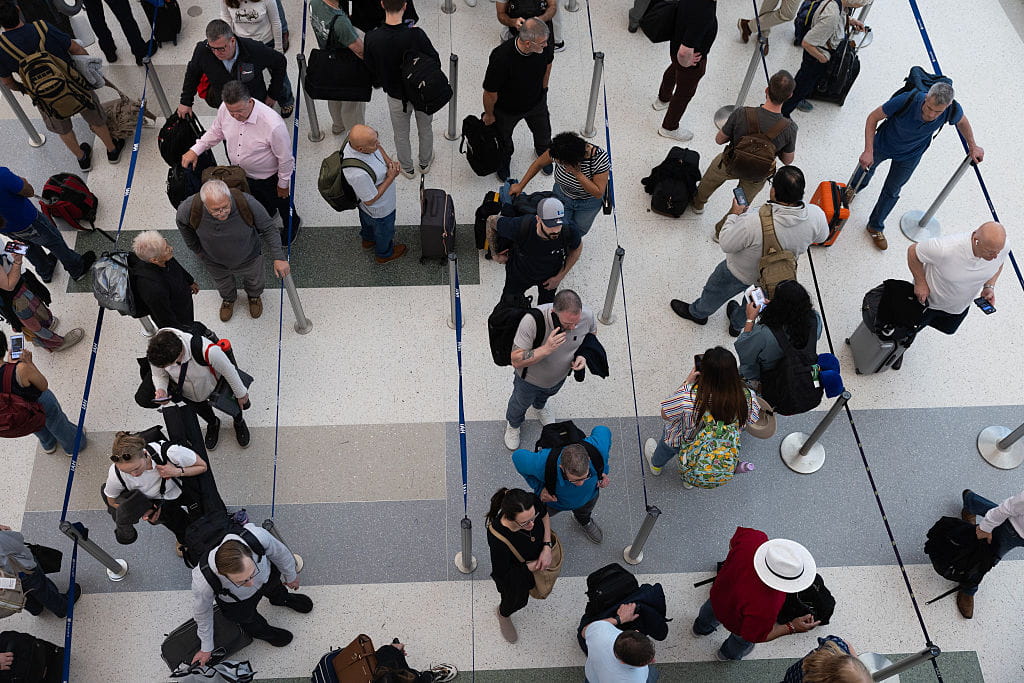
The Senate’s fifth failed attempt to fund the Department of Homeland Security left the partial shutdown dragging into its 35th day, with a 47-37 vote on March 20 and the Transportation Security Administration facing another missed payday.
The Senate could not pass a full-year funding bill for DHS, and the tally on Friday, March 20 was 47-37, marking the fifth time lawmakers came up short. That result keeps the partial shutdown in place as the clock runs on essential operations and pay cycles. The immediate consequence is real for workers and travelers alike.
Thousands of TSA employees and other DHS staff operate under uncertainty when lawmakers fail to act, and agencies scramble to prioritize. Those who are essential continue to work, but the morale hit is obvious and the financial strain is immediate. The phrase “set to miss yet another payday” sums up the tangible fallout for many federal employees.
Beyond personnel issues, the breakdown in funding leaves security planning hamstrung and procurement projects stalled. Longterm investments in border security, technology upgrades, and critical training get pushed to the back burner. That slowdown risks higher costs and greater vulnerabilities down the road if Congress does not restore steady funding.
Republicans have argued that funding must be tied to meaningful border enforcement and accountability for how dollars are spent. From that perspective, blank-check appropriations encourage poor management and fail to prioritize national security. Lawmakers on both sides should recognize that continuing with patchwork fixes only postpones tough choices.
The political theater in Washington has consequences for everyday Americans who expect secure airports and functioning immigration systems. Voters see delayed paychecks and uneven security staffing as symptoms of a broken process. Practical governance requires sticking to a funding plan that ensures operations while addressing policy disputes through negotiation, not brinkmanship.
Agency leaders face tough decisions when budgets stall: divert limited resources to core missions, delay maintenance, or cut back on nonessential projects. Those tradeoffs are never attractive, and they often occur quietly while headlines focus on the next vote. The cumulative effect is a less resilient security posture at a time when threats demand attention.
For TSA employees, the uncertainty is both financial and professional, with some required to show up without guaranteed compensation. That reality erodes confidence in federal commitments and complicates recruitment and retention in already stretched workforce pipelines. Reliable funding is a basic expectation for public servants who keep transportation systems safe.
Congressional gridlock also complicates coordination with state and local partners who rely on federal support for certain security and emergency management functions. When federal money is frozen or delayed, joint programs and grants suffer, and local responders face tougher choices. The ripple effects undermine the whole security ecosystem.
On the Hill, leaders will likely continue negotiating, but time is not neutral in this equation; pay cycles and critical maintenance schedules move forward regardless of political timetables. The 47-37 vote on March 20 underscores how fragile progress can be when consensus is absent. Each missed funding deadline tightens the squeeze on the systems and people meant to protect the public.
Ultimately, restoring a predictable funding path for DHS is about more than avoiding headlines; it is about ensuring the agencies that safeguard travel, border integrity, and disaster response can do their jobs without constant uncertainty. Lawmakers who want to claim they care about security should prioritize stable appropriations and clear, enforceable policy conditions. The country deserves steady operations and accountable spending, not recurring shutdown drama.

