

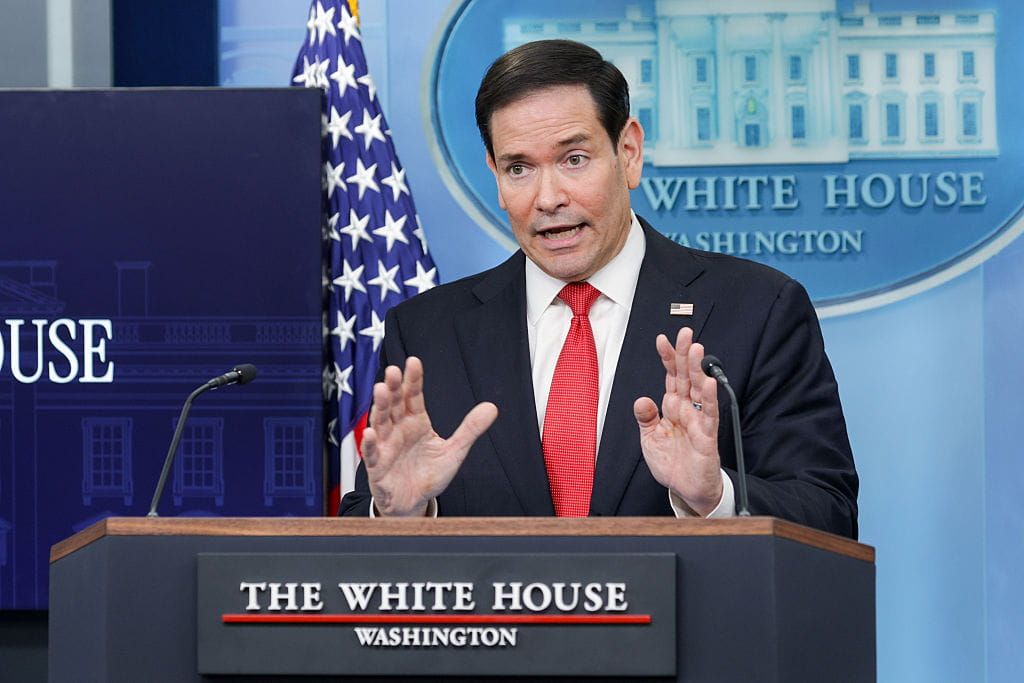
Sen. Marco Rubio pressed the urgency of protecting civilian mariners in the Strait of Hormuz, warning that repeated Iranian harassment threatens global trade and American interests and urging a tougher international response to keep those shipping lanes open and crews safe.
Senator Rubio laid out a blunt assessment of recent maritime incidents, calling attention to civilian sailors who face intimidation and seizure while transiting one of the world’s busiest choke points. He stressed that these are not isolated run-ins but part of a pattern that jeopardizes innocent crews and the flow of commerce. His remarks pushed the conversation from abstract diplomacy to concrete risks for people on the water.
Secretary of State calls Iran’s actions piracy, calls on UN to condemn Iran. That language matters because it frames Tehran’s behavior as criminal, not merely provocative, and it demands an international reply rather than private negotiations. Rubio seized on that framing to argue the world should stop treating these episodes as routine and start treating them as violations that demand consequences.
The reality is simple: civilian sailors are not combatants and they should not be treated like pawns in a regional power play. When unarmed merchant crews are forced to change course, detained, or threatened, insurers raise premiums, shippers reroute, and supply chains pay the cost. Rubio warned that America’s economic security is on the line when a hostile state decides to test the limits of free navigation.
Under international law, freedom of navigation is a core principle, and consistent enforcement is necessary to preserve it. Rubio criticized the tendency of multilateral bodies to issue mild statements that lack teeth, and he urged allies to pair condemnation with enforceable measures. He made clear that words without follow-through only embolden bad actors to keep pushing the envelope.
From a policy perspective, Rubio outlined a realist approach: protect sailors, deter future incidents, and impose tangible costs on offenders. That means stepping up naval escorts for vulnerable traffic, coordinating sanctions that hit Tehran’s key revenue streams, and closing loopholes that allow aggression to pay. He argued these are practical, achievable moves that safeguard both Americans and global commerce.
Politically, Rubio’s stance reflects a broader Republican view that strength and clarity deter aggression more effectively than appeasement. He tied support for civilian mariners to a larger message about national resolve and the need to defend international norms. On May 7, 2026, his remarks landed in a context where voters and policymakers are weighing whether the U.S. will lead or retreat when maritime rights are under pressure.
The longer-term stakes go beyond individual incidents; they touch on how the free world responds when powerful states try to rewrite rules by coercion. Rubio warned that tolerating harassment in the Strait of Hormuz sets a precedent that invites further challenges elsewhere, and he urged a strategy that combines naval readiness, coordinated penalties, and diplomatic isolation for repeat offenders. The goal, he said, is to make clear that civilian sailors will not be left unprotected and that free navigation will be defended.

