

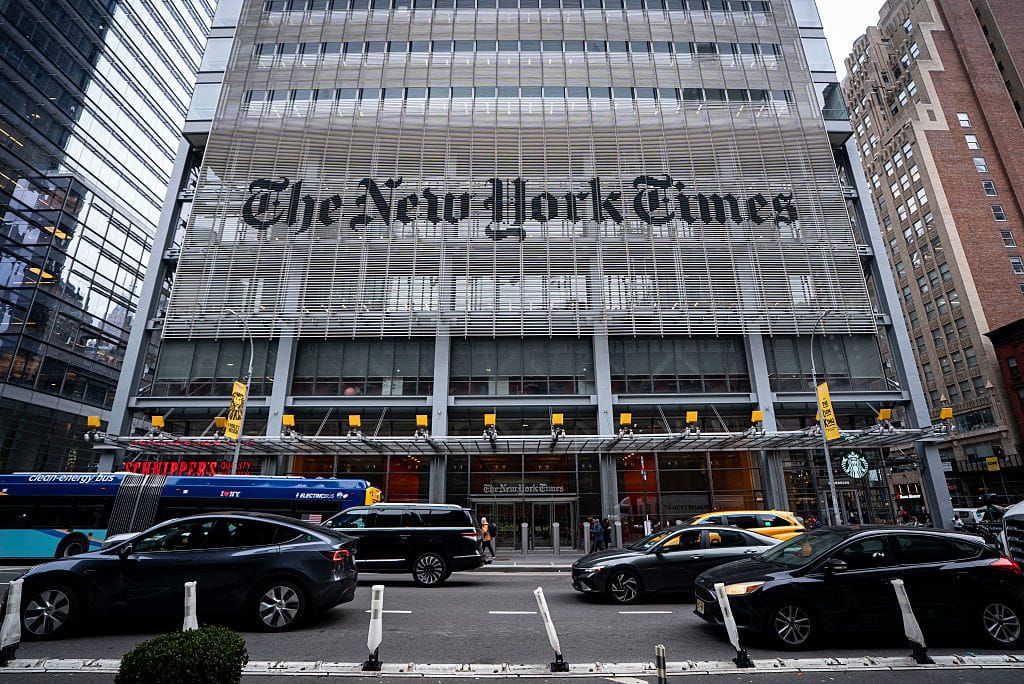
Perhaps a lawsuit filed on May 5 by the US Equal Employment Opportunity Commission (EEOC) against the storied New York Times will mark the beginning of the end for diversity, equity, and inclusion (DEI).
The EEOC lawsuit filed on May 5 against the New York Times has conservative observers sensing a turning point in the DEI era. For years DEI programs pushed identity politics into hiring, promotions, and workplace training, and that approach finally faces legal scrutiny. This case could force companies to rethink policies that prioritize group identity over individual merit.
DEI started as an effort to broaden opportunity, but it has evolved into a cultural engine inside major institutions that often demands ideological conformity. Many employees and managers complain that DEI initiatives emphasize race and gender in ways that distort hiring and evaluation. Conservatives argue that this produces resentment and lowers standards while masking real efforts to expand opportunity through merit.
A lawsuit from the federal agency charged with enforcing workplace civil rights will put legal pressure on employers who let DEI doctrine override anti-discrimination law. The EEOC stepping in signals regulators want to know whether diversity programs have crossed the line into unlawful practices. If courts side with the agency, companies may have to unwind policies that prioritize identity categories over qualifications.
Financial risk is another factor that could accelerate the retreat from DEI. Defending litigation is expensive, and settlements or penalties can be even more damaging to a brand and to shareholders. Boards and CEOs watching the market can decide that the cost-benefit of visible diversity programs no longer makes sense when legal exposure grows.
There’s also a reputational cost that business leaders cannot ignore. Consumers and employees are increasingly divided on DEI, and companies that lean too far into political stances risk alienating customers and talent. The Times facing a high-profile federal suit is a reminder that signaling progressive values through workplace policy can invite scrutiny and backlash.
On the policy side, the debate returns to a simple question: should workplace decisions be driven by ideology or by performance and fairness? Republican critics say workplace fairness means treating people as individuals, not members of identity groups. That perspective favors recruitment and promotion based on skills and results rather than on demographic targets.
Some commentators claim that rolling back DEI will shut down efforts to improve opportunity for disadvantaged groups. That is a predictable talking point, but it confuses goals with methods. You can pursue broader opportunity through color-blind, merit-based programs that expand access without institutionalizing permanent preferences.
There will be intense legal and public-policy fights ahead as regulators, courts, and employers test the boundaries of acceptable workplace practice. Expect a patchwork of responses: some firms will quietly scale back training and quota-like practices, while others will double down as a brand signal. The pressure from litigation will push more boards to ask whether the trade-offs are worth it.
Practically speaking, human resources departments will need to reassess language in job postings, performance rubrics, and mandatory training that emphasize group identity over competence. Training that reads like political indoctrination is particularly vulnerable to legal challenge and internal resistance. Companies that want to avoid courtrooms will likely favor neutral, skills-focused approaches.
Ultimately, this EEOC suit against the New York Times may not be a clean knockout for DEI overnight, but it could be the turning point that forces a wider re-evaluation. Political winds, legal risk, and shareholder concerns combine to make the current model unsustainable for many organizations. Whatever happens next, businesses and institutions are about to get a hard look at whether DEI practices promote real fairness or just create new forms of discrimination.

