

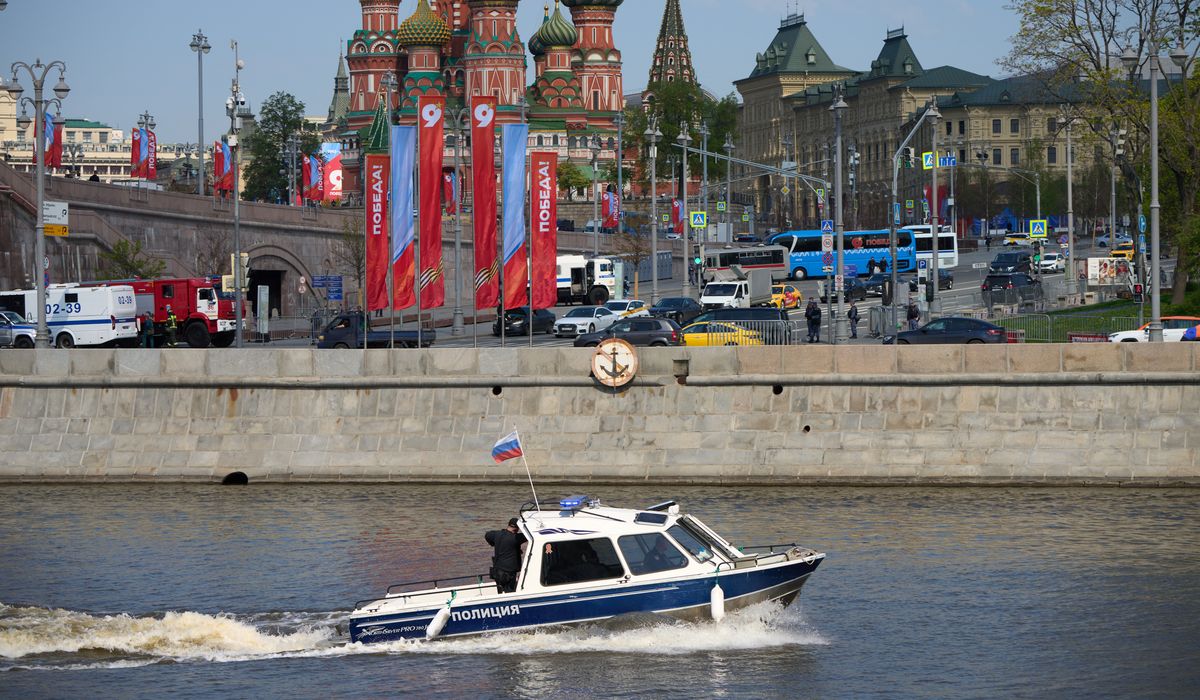
Russia’s Defense Ministry said 347 Ukrainian drones were shot down across 20 regions, including Moscow, in what it called Ukraine’s second-largest aerial attack since Russia’s full-scale invasion.
Russia’s official brief reported that air defenses intercepted 347 unmanned aerial vehicles across 20 regions, with strikes reaching as far as Moscow. The announcement paints the operation as unusually large, and it landed in the middle of an already tense campaign of strikes and counterstrikes. Details remain limited and are filtered through the Russian Defense Ministry’s public statements.
The sheer number—347—carries a political message as much as a military one, showing capacity to claim a major defensive success. From a Republican perspective, the numbers underline how critical reliable intelligence and hardened defenses are in modern conflict. The report also raises questions about the resilience of urban centers and the importance of preparing for asymmetric threats.
Counting losses and interceptions in wartime is always contested, so outside verification is often partial or delayed. Still, when a state announces mass shoot-downs, it aims both to reassure its population and to signal strength to opponents. That dual purpose is central to how information is used alongside kinetic responses in any war.
For U.S. observers, the episode is a reminder that the air domain now includes drones at large scale, which complicates traditional concepts of air defense. Republicans tend to view that evolution as a validation for investing in layered systems and more resilient logistics. The practical lesson is that asymmetric aerial threats demand faster modernization and more decisive procurement choices.
Moscow being named among the affected regions increases the political stakes inside Russia, where leaders must show they can protect the heartland. Public announcements like this one are designed to maintain confidence and deter escalation by emphasizing the ability to blunt attacks. On the other side, Kyiv has repeatedly used drone strikes as a way to target deeper into Russian-held areas, pushing the technology into strategic use.
Any large-scale drone operation also tells us about supply lines and production capacity on both sides, even if numbers vary between claims and independent assessments. Republicans often point to the importance of cutting off adversaries’ munition supplies at source and sustaining allies’ defense industries. That emphasis flows from a worldview that blends deterrence with industrial strength.
There is a diplomatic angle too: claims of massive defense successes are part of the messaging that shapes Western political debates. Lawmakers and voters respond to headlines about attacks and intercepts, and Republicans have used such reports to argue for clear, robust policies that prioritize security. The narrative here is less about moralizing and more about shoring up practical capabilities.
On the battlefield, counting dozens or hundreds of drones changes how commanders plan missions, allocate assets, and coordinate air-space control. Commanders must decide whether to disperse, conceal, or counterattack when faced with swarms. Those tactical shifts have strategic consequences that ripple into political decisions and defense budgets.
Information operations are inseparable from kinetic warfare, and both sides tailor public statements to domestic and foreign audiences. Russia’s announcement serves internal morale and external deterrence at the same time, and the United States and its partners watch closely for signals about capability and intent. Republicans typically press for policies that translate those signals into real-world deterrents.
Meanwhile, the humanitarian and civilian risks remain front and center whenever drones are used in or near populated areas. Regardless of which side reports the numbers, houses, hospitals, and infrastructure are vulnerable in modern conflict. A Republican view here often emphasizes protecting civilians through stronger defense measures while holding adversaries accountable.
Finally, the event underscores how the war continues to evolve with technology shaping tactics, strategy, and politics. Claims of 347 intercepts are a snapshot of that evolution, one that feeds debates in capitals about posture and priorities. For those watching, the takeaways are about readiness, resilience, and the need to adapt institutions to a changing battlefield environment.

