

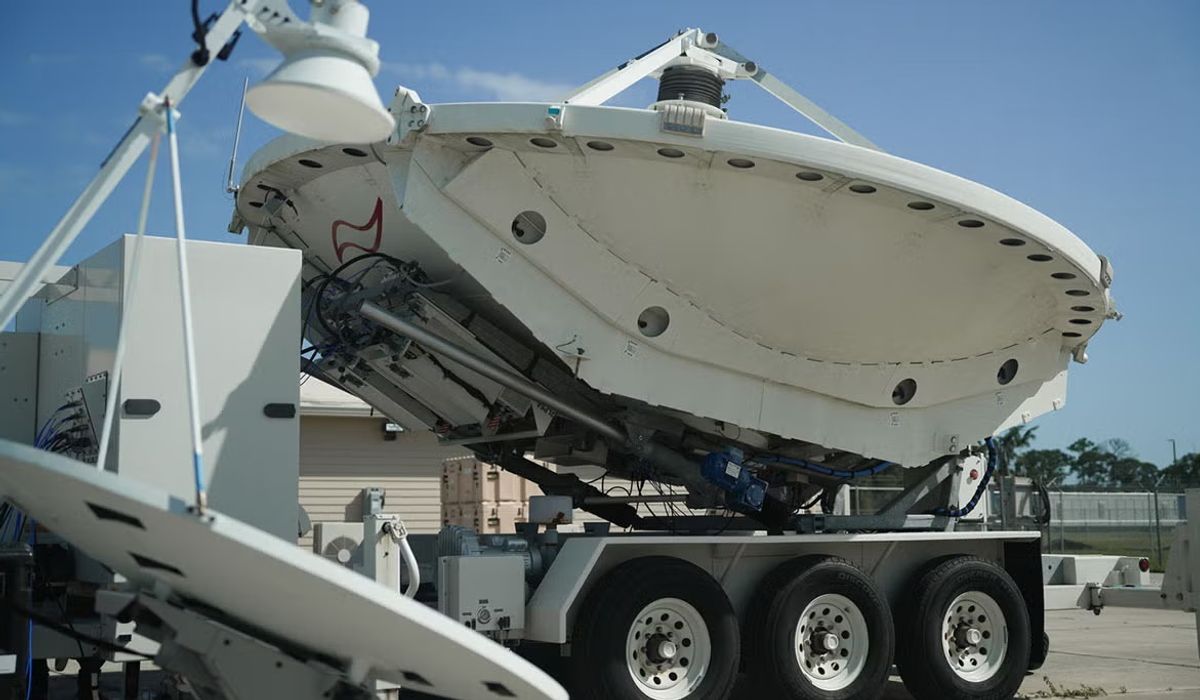
A new electronic warfare system called Meadowlands is now operational and capable of disrupting enemy satellites, the Space Force announced Friday.
The Space Force says Meadowlands is an electronic warfare system designed to contest hostile space capabilities. Officials described it as able to interfere with or deny adversary satellite operations, shifting how commanders think about space control and resilience. This development reflects growing focus on non-kinetic options that do not involve destroying objects in orbit.
Meadowlands emphasizes electronic attack rather than physical strikes, meaning it targets signals, command-and-control links, and sensing abilities. By degrading communications or navigation signals, the system can blunt an opponent’s advantage without creating orbiting debris. That matters because debris from destroyed satellites would threaten civil and military space assets for years.
The announcement underlines how militaries are adapting to a contested orbital domain where satellites are both tools and vulnerabilities. Capabilities like Meadowlands add a layer of deterrence by complicating an adversary’s calculus: space systems can be disrupted short of outright destruction. For planners, that expands options when diplomacy, cyber, or other levers are preferred over kinetic escalation.
Operational integration will be critical if Meadowlands is to deliver practical effects across campaigns. Space operators and joint commanders will need updated tactics, training, and clear rules of engagement to employ electronic warfare in ways that limit unintended consequences. Coordination with cyber and signals intelligence units will be essential to deconflict operations and maintain situational awareness in congested electromagnetic and orbital environments.
There are technical limits and legal questions that accompany any new space capability. Electronic attack can be transient and reversible, but it may also spill over into civilian systems that rely on the same frequencies or satellite services. Policymakers and military lawyers will have to clarify where lawful interference begins and ends, especially when commercial or allied assets are involved.
From a strategic perspective, Meadowlands contributes to distributed deterrence by giving commanders options to deny or degrade an opponent without escalating to full-scale war. Adversaries that rely on satellites for targeting, communications, or reconnaissance face greater uncertainty when electronic warfare is in play. That uncertainty can be stabilizing if it deters aggression, but destabilizing if it prompts rapid escalation or reciprocal moves in space.
Testing and validation phases likely preceded the public announcement, with demonstrations to prove the system works against representative targets. Fielding new systems at operational units will drive further refinements as real-world data highlights strengths and gaps. Maintaining a high tempo of exercises will be necessary to refine doctrine and to build confidence among joint partners who would rely on these capabilities in a crisis.
The emergence of Meadowlands also puts a spotlight on international norms and confidence-building measures in space. Nations operating similar systems raise questions about verification and restraint, and about whether non-kinetic interference should be constrained by agreements. Diplomacy and coalition discussions will influence how widely such tools are adopted and how they are used in practice.
Ultimately, Meadowlands is part of a broader shift toward treating space as an operational domain where electronic, cyber, and kinetic tools intermix. The Space Force framing highlights the priority of protecting U.S. interests in orbit while preserving freedom of action. As the system moves into service, expect continued debate over doctrine, safeguards, and how to balance operational advantage with long-term stability in space.

