

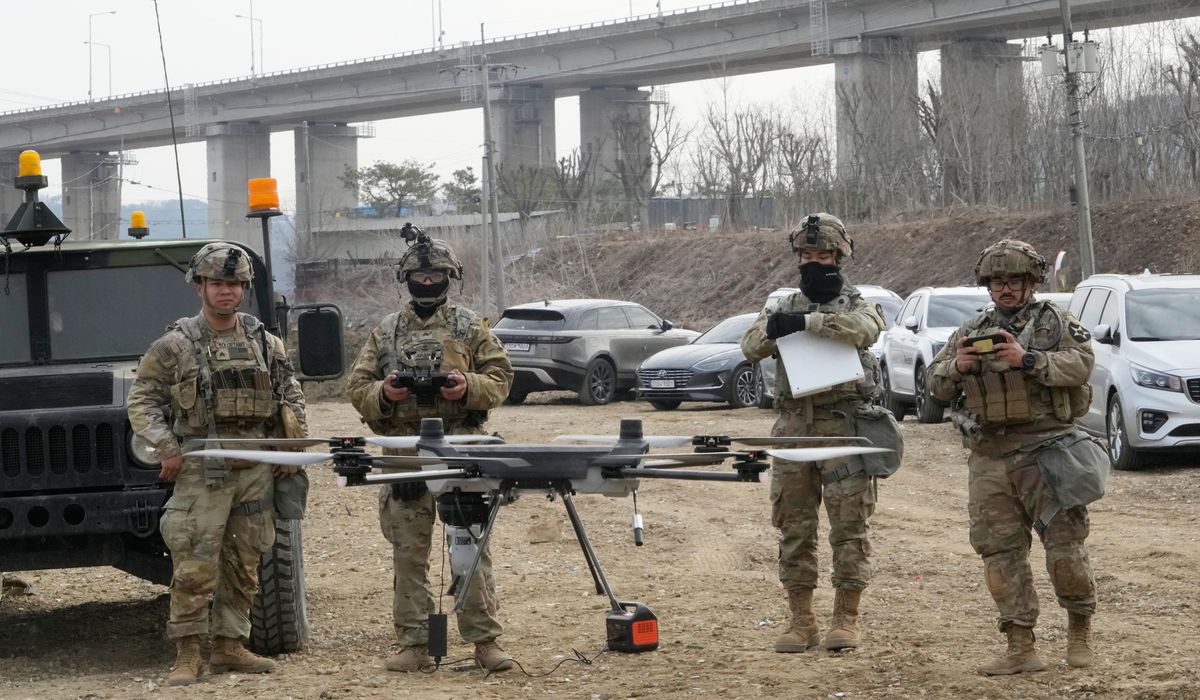
The Pentagon is centralizing unmanned and autonomous systems into a single office to accelerate mass production and close a widening gap with competitors.
The department is consolidating programs to move faster from prototypes to fleets that matter. This push responds to the blunt reality that adversaries are out-producing the United States in quantity, and leaders want a fix that actually delivers more machines into the field.
“The Pentagon is moving nearly every unmanned and autonomous systems program into a new office, in a bid to catch up in a global production race the U.S. is currently losing by volume.” That sentence captures the kernel of the shift: stop fragmenting effort, scale what works, and stop letting experiments sit on shelves.
For years the Pentagon ran dozens of siloed projects that produced impressive demos but few deployable systems. The result was a steady pipeline of prototypes without the industrial muscle to make thousands of units, and rivals used mass production to build deterrent advantage.
From a conservative standpoint, the answer is not just more studies and new committees. It is industrial policy focused on outcomes: get the private sector building at scale, simplify rules that slow contracting, and reward companies that can move from one-off to volume production reliably.
A single office can bring discipline: standardize interfaces, reduce duplicate tooling, and enforce common software standards so components can be swapped and upgraded without reinventing the wheel. When platforms share common building blocks, costs fall and factories can run continuously rather than sputtering between custom builds.
There are clear advantages beyond cost. Mass-producing unmanned systems creates deterrence by numbers, gives commanders redundancy in contested zones, and allows the United States and its allies to operate at tempo. Republicans emphasize that military readiness depends on both quality and the ability to sustain forces through predictable supply.
That said, centralization is not a cure-all. It risks turning into another layer of bureaucracy unless Congress insists on tight timelines, measurable milestones, and consequences for failure. Conservative oversight should push the office to use firm-fixed-price deals where possible and to prioritize rapid prototyping that transitions directly into production contracts.
Workforce and supply chain resilience are critical pieces of this puzzle. The U.S. will need more skilled technicians, streamlined certification for critical components, and incentives to onshore key suppliers so wars or diplomacy do not choke off essential parts. Private industry will respond to clear demand signals; policy should clear the runway rather than pick winners through endless regulation.
Export and alliance coordination should be part of the plan. Producing at scale opens markets for allied use, builds interoperability, and spreads the manufacturing burden among partners. Republicans argue that empowering allied factories strengthens deterrence without overstretching American industry.
Ultimately, the new office must be measured by production lines and delivered systems, not glossy studies. The country needs a regime that treats unmanned systems like ammunition: something you plan to consume, replenish, and improve relentlessly.

