

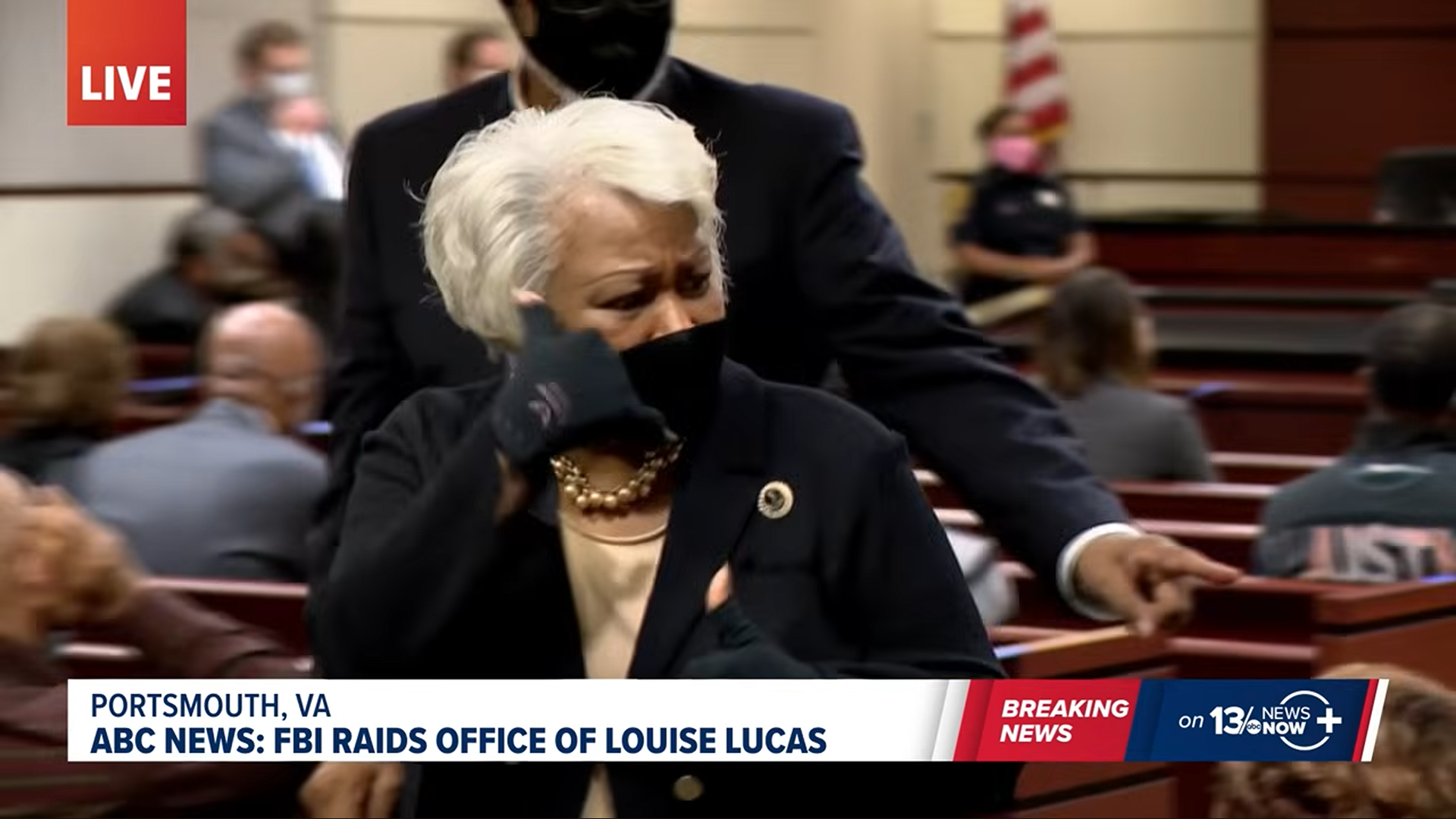
The FBI executed a raid at the Portsmouth office of Virginia’s Democrat Senate president pro tempore, launching what sources call a “major corruption probe,” with federal search warrants approved by a judge and reported to have been carried out under the direction of agents pursuing potential misconduct involving Senator Louise Lucas.
The scene in Portsmouth drew national attention when federal agents moved into the office of Louise Lucas. Officials on the ground described an organized, thorough operation that was not a casual visit but a targeted enforcement action. That level of federal involvement signals investigators believe there may be significant evidence to collect.
News outlets picked up the story quickly, quoting Fox News’ Bill Melugin who reported the FBI had executed “multiple search warrants.” Those words came straight from reporting tied to law enforcement sources, and they underline the formal legal steps taken in this inquiry. A federal judge agreed the warrants were justified, which is a key checkpoint that gives the operation legal backing.
From a Republican perspective, this is the kind of law enforcement activity voters expect when there are credible allegations of wrongdoing. Accountability is nonpartisan when it comes to corruption, and any public official facing a probe should get the same scrutiny. The focus now is on preserving the integrity of the investigation while making sure the rule of law applies equally.
There are many unanswered questions about timing and scope, and those gaps feed public concern. Who else might be involved, what documents or communications triggered the warrants, and whether this action will lead to charges are all vital details people want. For now, the evidence-gathering phase is public and the facts will come out through court filings and official statements as the probe advances.
Local leaders and state legislators are watching closely, since the implications reach beyond one office or one person. A high-profile investigation can shake public confidence in government if it points to systemic problems, so transparency about the process is important even as investigators keep specifics under seal. Lawmakers should support full cooperation with investigators while also protecting due process for anyone named.
Republicans will point to the raid as proof that federal authorities can and do pursue powerful officials when warranted. That argument rests on two pillars: that no one is above the law and that political affiliation should not shield anyone from accountability. At the same time, conservative voices will demand clarity to ensure enforcement is driven by facts rather than politics.
The practical next steps in an investigation like this typically involve reviewing seized material, interviewing witnesses, and deciding whether to return for additional warrants or to bring indictments. Those are procedural moves, but they matter because each step tightens the legal net or clears the air. Observers should expect a sequence of court filings and statements as the case develops, not an immediate resolution.
Whatever the final outcome, the raid on the Portsmouth office sends a blunt message that federal investigators are prepared to act when they see probable cause. Elected officials must remember that public trust is earned and can be eroded quickly when questions of corruption arise. For now, the spotlight stays on the investigation and the facts it produces as the judicial process moves forward.

