

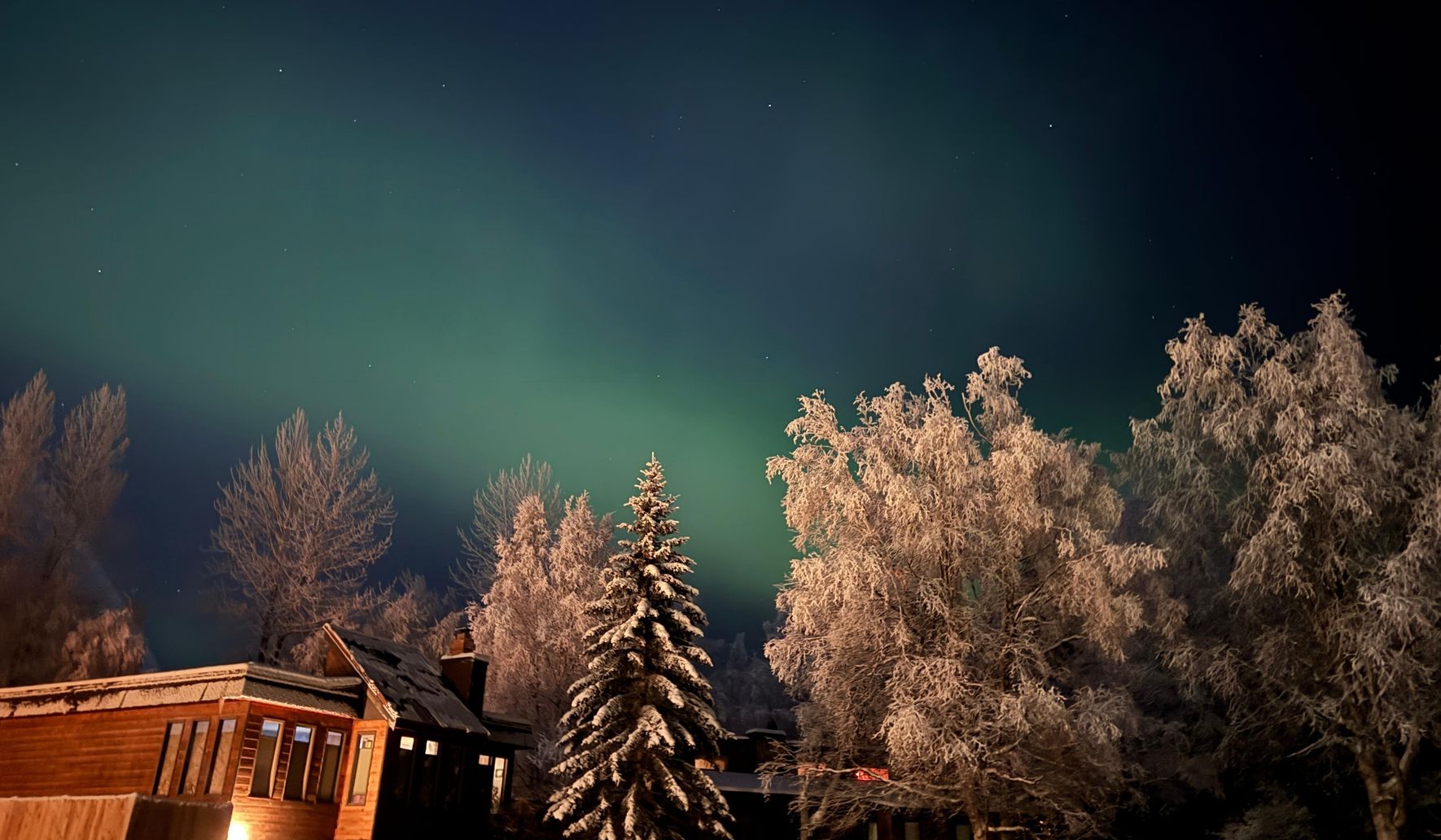
The aurora from a strong geomagnetic disturbance could light up skies across Canada and the northern U.S. Monday night, with chances of sightings stretching even farther south in some areas.
A powerful disturbance in the Earth’s magnetic field, driven by recent solar activity, is expected to push auroral displays into view for many northern locations Monday night. Clear, dark skies away from city lights will give the best chance to see bands of green and red shifting across the horizon. The event could also produce visible activity at lower latitudes if the geomagnetic storm proves strong enough.
This kind of show happens when charged particles from the Sun slam into the magnetosphere and excite atoms in the upper atmosphere, causing them to glow. Those collisions are what create the familiar curtains and ripples of the aurora borealis, which can appear to dance for hours when conditions line up. Intensity and color depend on altitude, particle energy, and the types of gases struck in the atmosphere.
Timing is centered on Monday night local time for much of Canada and the northern tier of U.S. states, with peak activity likely after local midnight in many spots. Forecasters warn that exact timing is tricky and can shift as the disturbance evolves, so patience is required for serious sky-watchers. Even if the main pulse misses your area, intermittent flashes or elevated skyglow might still be visible.
To improve odds of a good sighting, find a high viewpoint with an unobstructed northern horizon and avoid sources of artificial light. Dress warmly and bring a folding chair or blanket, since long stretches of staring at the sky are often needed to catch the show. Photography fans should use a tripod, wide lens, and long exposures to capture the subtle colors and movement that the eye sometimes misses.
Beyond the spectacle, strong geomagnetic disturbances can affect technology: high-latitude radio communications, some satellite services, and navigation systems may experience disruptions during intense activity. Power grid operators monitor these events because induced currents can stress infrastructure during prolonged storms. Those working with critical systems in affected regions typically follow space weather alerts and procedures until conditions settle.
If you miss the main event Monday night, auroral activity can continue for days following a major disturbance, offering repeat chances under favorable skies. Local weather will be the deciding factor for many observers, so a clear forecast is key to making plans. Keep an eye on official space weather updates from recognized agencies for timing and severity, but remember that nothing guarantees a perfect show.

