

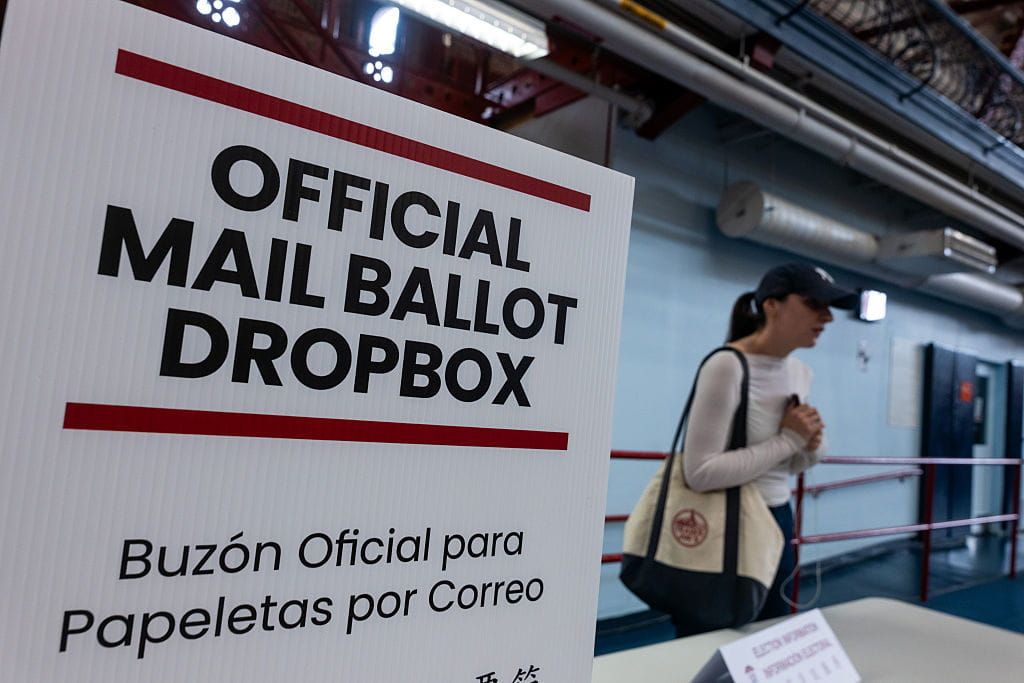
Federal courts and the Supreme Court have recently blocked several of the administration’s moves to reshape vote-by-mail rules, while Congress has stalled on legislative fixes, leaving an election-security fight splintered across the branches.
President Trump pushed hard this spring to constrain mail ballot delivery when states wouldn’t share voter data, and Postmaster General David Steiner announced a policy on June 24 aimed at enforcing that demand. Within days the courts pushed back, and judges in multiple districts issued rulings that undercut both the USPS policy and parts of a presidential executive order. That string of courtroom losses has turned a policy push into a legal tangle.
The Massachusetts ruling by Judge Indira Talwani struck down many pieces of the executive order as exceeding presidential authority, writing that “The Constitution does not grant the President any specific powers of elections.” That language landed like a cold bucket on an aggressive attempt to force federal standards onto how states handle voter rolls and ballot delivery. The ruling also blocked DHS and the Social Security Administration from building a nationwide voter list from citizen data.
In Washington, DC, District Judge Emmet Sullivan ruled for the NAACP and barred the USPS from carrying out the new ballot-delivery policy, saying the change violated a December 2021 settlement requiring the Postal Service to prioritize election mail through 2028. Sullivan wrote that Trump’s order was “designed to exert federal control over who in the United States may be sent a mail-in or absentee ballot in federal elections by the Postal Service.” That phrase has become a talking point for opponents who fear federal overreach more than chaos at the ballot box.
NAACP senior counsel Anthony Ashton blasted the proposed policy, saying, “The proposed USPS changes would have created unnecessary and unlawful barriers, in direct violation of the USPS’s mandate to prioritize election mail.” He added, “This decision makes clear that access to the ballot cannot be tied to arbitrary requirements.” Those exact words landed as a legal and political counterpunch the administration did not expect to concede so quickly.
Meanwhile, the Supreme Court weighed in on a related but separate fight over late-arriving ballots in Watson v. Republican National Committee and issued a 5-4 decision on June 29. The Court held that states may count ballots received after Election Day if they are postmarked by Election Day, with Justice Amy Coney Barrett writing for the majority. The ruling affirmed the long-standing principle that states set the mechanics for “Times, Places and Manner” of federal elections unless Congress legislates otherwise.
The split decisions show a pattern: judges are insisting state control over election mechanics and rejecting broad executive shortcuts. For Republicans who want tighter, uniform standards, that is exasperating. The judicial pushback has not only stopped this administration’s immediate plans but also raised the bar for any future effort to impose national rules without Congress’s buy-in.
On the legislative front, the SAVE America Act — meant to provide funding and election-security measures paired with border and enforcement priorities — has stalled. Lawmakers left for the Fourth of July recess without moving the bill, and Senate procedural realities mean any major election-law overhaul would need time and votes to implement. North Carolina Senator Thom Tillis put the blunt reality on the table when he said, “Unless they do the work to get the 60 votes, they know it’s dead, and so all this is theater.”
Tillis painted a practical picture of implementation hurdles: “Honestly, here in North Carolina, or in virtually any state, the ability, if we go back to when we implemented voter ID in North Carolina, it took a year to get everything in place with adequate funding.” He went on to ask, “Then do you honestly believe that we can have this thing up in 50 states? There’s no funding. There’s no specific implementation instructions.” Those lines underscore why Congress needs a sober plan, not just presidential edicts.
The combination of judicial rebukes and congressional paralysis leaves the administration’s election-security ambitions in limbo. The Department of Justice moved quickly to seek stays and file appeals, so the legal war is far from over, but courts have already slowed down the map of what the executive branch can do without Congress. That reality will force Republicans who care about secure ballots to consider whether the fight belongs in the courts, the chambers of Congress, or the statehouses where election rules live.
For now, the practical result is simple: the USPS policy was enjoined, parts of the executive order were voided, and the Supreme Court affirmed state authority on late ballots. Implementation headaches, political theater, and legal appeals will decide whether any of this changes before the next big election, but the mess is a reminder that aggressive executive moves on voting face steep constitutional and political obstacles.

