

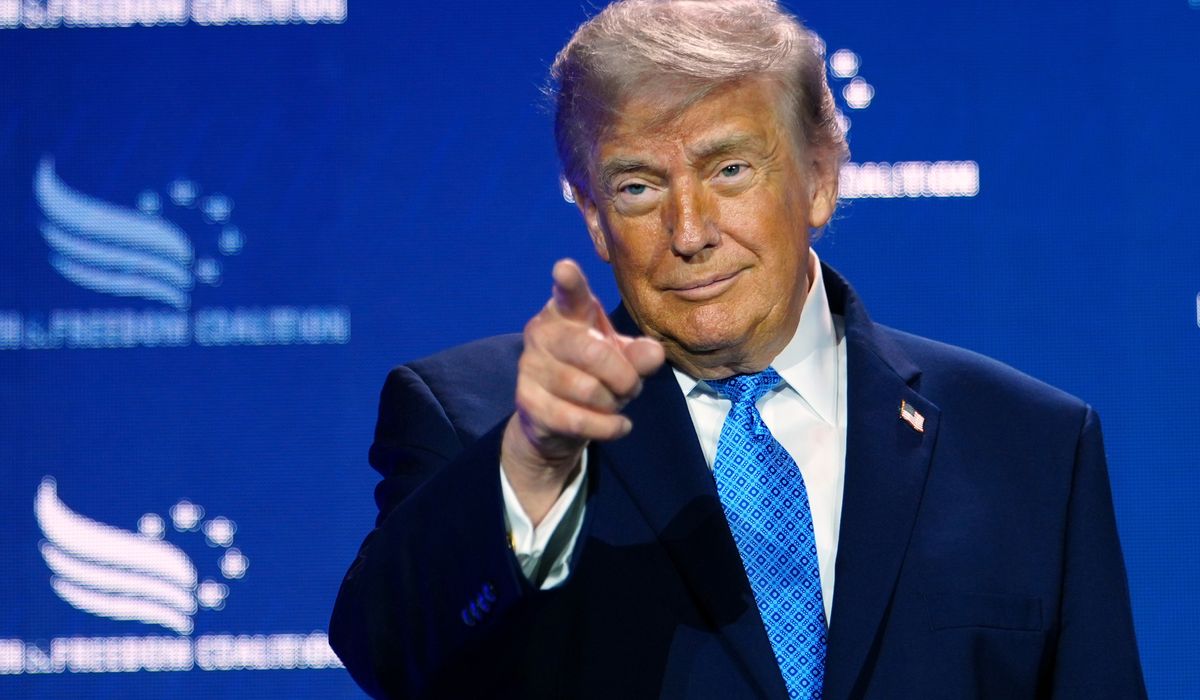
President Trump has been warning recently that communism will pose a threat to the U.S. if Democrats win in the upcoming midterm elections.
President Donald Trump has been warning recently that communism will pose a threat to the U.S. if Democrats win in the upcoming midterm elections. That blunt claim cuts to the heart of what many Republicans see as the election’s real stakes: an ideological choice about American freedom. For conservatives, the worry isn’t just policy fights but a steady drift toward centralized control. That sense of urgency explains the tone and repetition of the message.
Trump frames this as more than campaign rhetoric; he treats it as a national alarm bell. Republicans argue that several Democratic policy trends, from big government spending to expansive regulatory power, echo the kinds of centralized control that weaken individual liberty. Voters are being asked to judge whether a different set of priorities should govern everything from schools to energy. To his supporters, Trump is presenting a clear contrast about how America should be run.
The strategy rests on specific cultural and policy touchpoints where Republicans say they see creeping influence from collectivist ideas. Education curriculum battles, corporate governance, and public-sector union power are presented as warning signs. GOP messaging points to plans that it claims would increase federal reach into daily life and reduce local decision-making. That argument is meant to translate abstract ideology into real-world choices for families and businesses.
On the economic front, Republicans claim that higher taxes and larger entitlement programs push toward dependency rather than opportunity. Trump and allies argue that incentives for entrepreneurship and lower taxes produce stronger growth and preserve personal freedom. They contrast that with proposals they say could centralize economic power under a federal bureaucracy. The pitch is simple: protecting markets means protecting liberty.
National security and foreign policy also feature in this narrative. Trump portrays a stronger America as a bulwark against authoritarian ideologies abroad, implying that softer stances could invite more hostile influence. Supporters see robust defense and assertive diplomacy as checks against foreign interference in democratic institutions. The message ties the domestic policy debate to a global struggle over how nations are governed.
Cultural concerns get equal billing in Republican talking points, where changes to speech norms and institutional governance are described as part of a larger pattern. Conservatives argue that when institutions like schools, tech platforms, and media concentrate power, dissenting views are marginalized. That, in their view, narrows the civic space and tilts the playing field away from traditional American values. Trump uses this to warn voters that elections decide who controls those levers.
Critics say that labeling Democratic proposals as communism is overheated and misleading, but the Trump camp counters that strong language is necessary to wake voters up. Republicans maintain that being blunt about perceived threats is a legitimate political tactic in a high-stakes election. The goal is to mobilize voters who worry about rapid change and want to preserve familiar institutions. For many, the choice is framed as protecting continuity over experiment.
Republican messaging also emphasizes practical consequences if control shifts: regulatory expansion, reshaped labor rules, and altered judicial appointments that could last for decades. Trump highlights judicial picks and agency leadership as areas where long-term changes happen. Those appointments shape policy enforcement and public life well beyond any single term. That reality drives the urgency in conservative appeals to voters.
There is also an appeal to law and order among Republicans who see a link between governance and public safety. The argument is that decentralized power and local accountability produce better policing and community outcomes than top-down mandates. Trump uses examples of crime and border issues to illustrate where he thinks federal leadership must be firm. For his base, these are tangible reasons to vote in a way that maintains current priorities.
Political realities temper the rhetoric, since elections are decided by margins and local conditions as much as by national themes. Republicans know they must translate broad warnings into targeted policy promises to win swing voters. That means highlighting tax relief, school choice, energy independence, and stronger borders as concrete alternatives to the path they oppose. Winning, in their view, depends on convincing enough voters that these are meaningful differences.
Fundamentally, the message is about framing the midterms as a defense of American norms and institutions against what Trump calls an existential drift. The language is designed to be memorable and to push undecided voters to choose a side. Republicans count on mobilizing a coalition that values autonomy, market freedom, and a muscular national posture. The coming votes will test whether that framing resonates widely enough to determine control.
Whatever conclusions voters draw, the election will shape policy direction and institutional leadership for years. For Republicans, the contest is framed as a clear fight over who gets to set the rules and how closely government will intrude on daily life. Trump’s warnings are meant to set a stark choice: maintain the current trajectory or risk a very different model of governance. The result will hinge on turnout and whether that contrast persuades enough Americans at the polls.

