

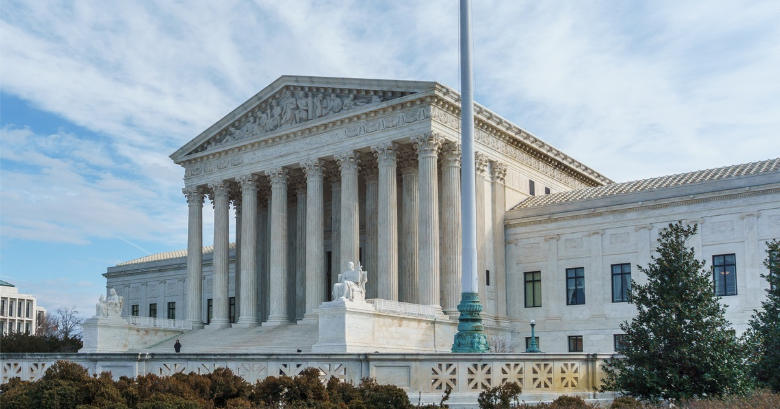
On Monday, the U.S. Supreme Court rejected a lawsuit filed by Michael Cohen, former personal attorney to Donald Trump, in a case that has drawn significant media attention. Cohen, once a close confidant of Trump, had accused the former president, along with former Attorney General Bill Barr and other government officials, of retaliating against him by sending him back to prison. The lawsuit was centered around Cohen’s claim that his return to prison was an act of vengeance for publishing a tell-all book, Disloyal: A Memoir.
Cohen’s legal battle stems from events in 2020 when he was returned to prison after being granted home confinement due to the COVID-19 pandemic. In his lawsuit, Cohen argued that the Bureau of Prisons’ decision to reincarcerate him was a retaliatory move orchestrated by Trump and his allies in response to the upcoming release of his book. The memoir detailed Cohen’s experiences as Trump’s personal lawyer and painted a highly critical picture of his former boss.
Cohen’s lawsuit contended that Trump, using his power and influence over federal institutions, sought to punish him for his decision to speak out publicly against the former president. The suit asserted that Cohen’s re-imprisonment violated his First Amendment rights.
“Presidents are not kings,” Cohen’s petition read. “This case represents the principle that presidents and their subordinates cannot lock away critics of the executive without consequence.” Cohen’s argument went further, suggesting that Trump’s actions reflected a broader abuse of power, akin to the behavior of authoritarian rulers.
Cohen hoped to persuade the courts that his return to jail was directly connected to his plans to release the book, but his legal arguments ultimately failed to sway the judicial system.
Michael Cohen, who was convicted of perjury and other charges, initially served his sentence in federal prison but was granted home confinement in 2020 due to concerns over the spread of COVID-19 in prison facilities. However, he was sent back to prison shortly after, a decision Cohen attributed to his outspoken criticism of Trump.
Judge Alvin K. Hellerstein of the U.S. Federal Court had ruled in Cohen’s favor early on, describing the Bureau of Prisons’ actions as retaliatory. Hellerstein found the decision to reincarcerate Cohen was not based on any legitimate concerns but rather on Cohen’s intent to publish his book.
“The purpose of transferring Mr. Cohen from furlough and home confinement to jail is retaliatory,” Hellerstein stated in his ruling. “It’s retaliatory because of his desire to exercise his First Amendment rights to publish a book and to discuss anything about the book or anything else he wants on social media and with others.”
However, despite the initial victory in court, Cohen’s legal momentum stalled after the U.S. Court of Appeals for the Second Circuit reviewed the case. The appellate court overturned Hellerstein’s ruling, noting that Cohen had ultimately been returned to home confinement shortly after the incident and that the law did not appear to provide for the damages he sought. Cohen was seeking compensation and further legal action against those he accused of retaliation.
The appeals court’s decision left Cohen with few options, and he petitioned the Supreme Court in an attempt to keep his lawsuit alive.
On October 21, 2024, the Supreme Court delivered a major blow to Cohen’s legal efforts by declining to hear his appeal. As is customary, the Court did not provide any explanation for its refusal, effectively ending Cohen’s chances of pursuing further legal action on the matter.
This decision was met with approval from Alina Habba, one of Trump’s attorneys, who issued a statement through Fox News, celebrating the outcome. Habba characterized Cohen’s case as “frivolous and desperate,” adding, “Michael Cohen has exhausted every avenue of his pathetic attempt to drag my client into court time and time again.”
She went on to say, “As expected, the Supreme Court has correctly denied Michael Cohen’s petition, and he must finally abandon his frivolous and desperate claims.”
This ruling marks yet another chapter in the long, contentious relationship between Michael Cohen and Donald Trump. Once a staunch ally and fixer for the former president, Cohen’s fall from grace has been dramatic. He was sentenced to prison after pleading guilty to charges related to campaign finance violations, tax evasion, and lying to Congress—many of which stemmed from his involvement in paying hush money to women who alleged affairs with Trump.
Since his break with Trump, Cohen has been one of the former president’s most vocal critics, regularly denouncing Trump’s behavior and alleging corruption within his inner circle. His book, Disloyal, which was at the heart of this lawsuit, offered a damning portrayal of Trump, casting the former president as someone willing to exploit and manipulate those around him for personal gain.
While this particular case has been closed, Trump continues to face multiple legal challenges in various jurisdictions, including criminal investigations related to the January 6th Capitol riots and ongoing civil lawsuits. Despite Cohen’s failure to succeed with this lawsuit, Trump’s legal battles are far from over.
The Supreme Court’s decision to reject Michael Cohen’s lawsuit against Donald Trump brings a close to one aspect of the former attorney’s long-running legal fight. While Cohen had argued that his reincarceration in 2020 was a retaliatory act linked to his book, the courts ultimately sided against him. As Cohen’s legal efforts come to an end, Trump’s legal saga continues on multiple fronts.


1 Comment
Cohen was sent to jail on his “own” lying illegal activities! He is a desparate man looking to exploit Trump for more money! Shame! At this point, the only redeeming person to forgive Micheal Cohen is God.