

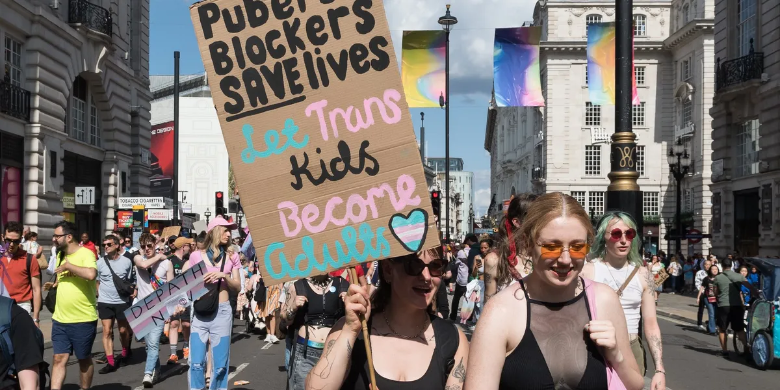
A recent New York Times report has revealed that researchers studying the effects of puberty blockers on transgender youth delayed publishing their findings for political reasons. Dr. Johanna Olson-Kennedy, a prominent advocate for adolescent gender treatments, led the research at Los Angeles Children’s Hospital, where she and her team received millions of dollars in funding to assess the impact of puberty blockers on mental health outcomes for transgender children.
Olson-Kennedy and her colleagues conducted a study involving 95 children, following them over two years to determine whether puberty blockers could alleviate depression and body dysmorphia often experienced by transgender youth. However, the results were not as clear-cut as expected. Despite initially expressing hope that the treatment would ease mental health struggles, the findings did not align with their expectations.
In a statement to the New York Times, Olson-Kennedy acknowledged that the children were “in really good shape” when they entered the study and remained so two years later, indicating no significant change in their mental health. This contradicts an earlier assessment of the same group, which described a quarter of the participants as either suicidal or depressed prior to treatment.
While the scientific community might typically expect results from such studies to be published promptly, Olson-Kennedy admitted that the team chose to withhold the findings due to concerns about how they might be interpreted or “weaponized” by those opposed to transgender healthcare. “It has to be exactly on point, clear, and concise. And that takes time,” Olson-Kennedy said, adding that fear of misuse was the primary reason for the delay.
The claim of needing more time, however, raised eyebrows, particularly because the researchers had received substantial funding—$9.7 million to date—for the broader survey. Critics argue that withholding findings, especially those from a well-funded and important study, undermines the transparency of scientific research and delays potentially critical information that could shape public policy and healthcare decisions.
Other experts voiced concerns about the ethical implications of delaying these results. Amy Tishelman, a clinical and research psychologist at Boston College, stressed the importance of releasing scientific data, regardless of the political climate. “I understand the fear about it being weaponized, but it’s really important to get the science out there,” she said. Tishelman suggested that the absence of significant change in the study’s participants might still provide valuable insight. “No change isn’t necessarily a negative finding — there could be a preventative aspect to it. We just don’t know without more investigation.”
Dr. Hilary Cass, a pediatrician, echoed similar sentiments, warning that withholding data about the effectiveness of transgender treatments could mislead the public and potentially harm patients. “It’s really important we get results out there so we understand whether it’s helpful or not, and for whom,” Cass argued. Her comments highlight the broader issue of accountability and trust in medical research, especially when it comes to treatments with significant social and political ramifications.
The controversy over puberty blockers, which are used to delay the onset of puberty in transgender youth, has only intensified in recent years. Supporters argue that the treatment gives transgender children time to explore their gender identity without the added pressure of physical changes, while critics raise concerns about long-term health risks and the psychological impact of delaying natural development.
Despite these debates, the need for solid, reliable data is universally acknowledged. Olson-Kennedy’s study was expected to contribute meaningful insights into the mental health outcomes of transgender youth undergoing medical interventions, but its delayed publication has led to frustration among researchers and the public alike.
Adding to the controversy, Olson-Kennedy cited budget cuts as another reason for the delays, though the New York Times report contradicted this claim, pointing to the substantial amount of funding her team had received over the years. This inconsistency has only fueled further skepticism about the reasons behind the delay.
For now, the transgender community, medical professionals, and policymakers are left in the dark, unsure whether puberty blockers are truly effective in improving mental health outcomes for transgender youth. Without concrete data, it’s difficult for healthcare providers and parents to make informed decisions about whether these treatments are in the best interests of children struggling with gender dysphoria.
The reluctance to release the study’s findings has sparked wider conversations about transparency in scientific research, particularly when it intersects with highly charged political and social issues. While Olson-Kennedy’s concerns about the potential misuse of the data may be valid, many argue that the public’s right to know—and the potential benefits of the research—outweigh the risks.
In the end, the delay has only deepened the divide over transgender healthcare, leaving many to wonder what the study really found and whether it will ever be made public. Until then, the controversy surrounding puberty blockers, their effectiveness, and their long-term impact remains unresolved.


1 Comment
Sounds like they did not like the results of the study and want to bury it. Taxpayers payed for the study but are not allowed to see the results? Sound like immediate defunding for this scam operation is in order. This is a typical Liberal scam to get money for nut jobs. How about sending me a few million dollars for my study of sex habits of Alaskan earthworms. I promise NOT to publish the results.