

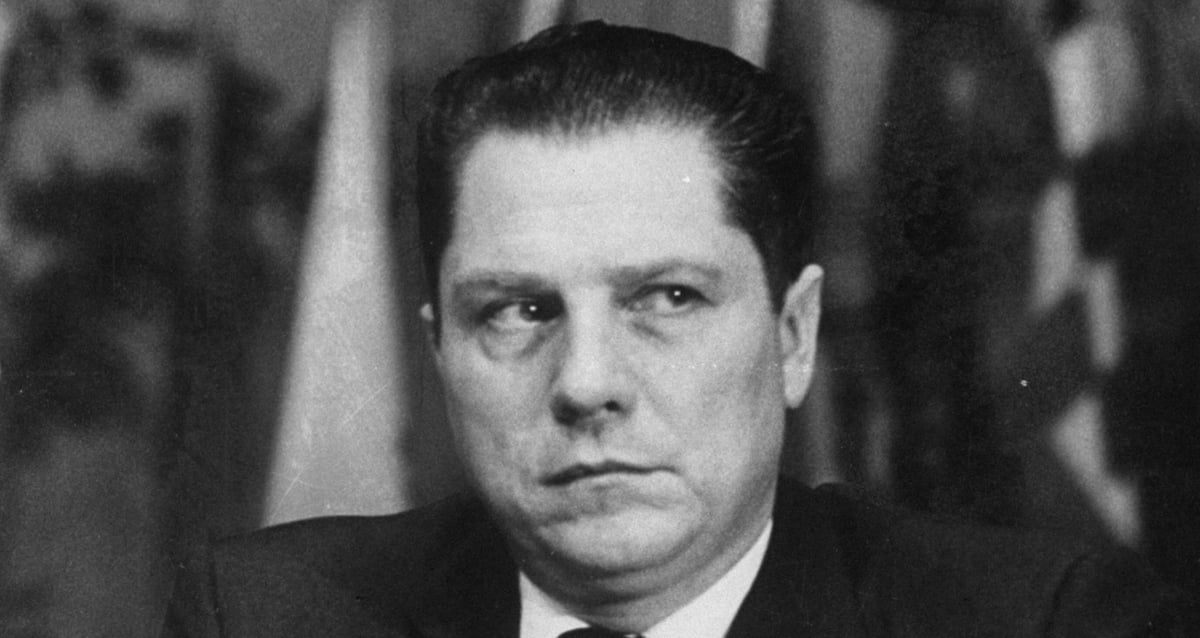
New revelations about the mysterious murder of Jimmy Hoffa have surfaced, shedding light on the infamous case. According to James Hoffa, son of the legendary labor leader, his father was killed in a conspiracy involving the Detroit Mafia. He claims that Frank Fitzsimmons, then-President of the Teamsters Union, collaborated with criminals to eliminate Hoffa.
“They had it set up to murder him, and they did,” James Hoffa stated, reflecting on the tragic events. He detailed the circumstances surrounding his father’s death, emphasizing the intensity of the plot. “They actually got together to kill him because they couldn’t stop him any other way,” he added, highlighting Hoffa’s relentless determination.
In the mid-1970s, Jimmy Hoffa was preparing to run again for the presidency of the International Brotherhood of Teamsters, a move that threatened Fitzsimmons’ position. “Fitzsimmons was afraid that Hoffa was coming back,” James explained. He noted the mob’s fear of Hoffa’s potential return, recognizing that his father would likely win the election and reclaim the union leadership.
Born on Valentine’s Day in 1913, Hoffa vanished on July 30, 1975, near Detroit, Michigan. His early years were marked by adversity, losing his father, a coal miner, at a young age and moving to Detroit. Leaving school at 14, he took on various jobs and started his journey into union organizing in the 1930s.
Hoffa’s legacy as a labor leader spanned from the 1950s to the 1970s, leading the Teamsters through times of significant upheaval and controversy. His disappearance left a profound impact on his family, as James Hoffa recounted. “The disappearance of my father was devastating to my family, to my sister,” he shared, illustrating the emotional scars left behind.
James expressed the deep void left by his father’s absence, stating, “My father was everything, and my mother died five years later of a broken heart.” The lack of closure has been particularly difficult for the Hoffa family. “We don’t have closure because we don’t have a grave,” James said, highlighting the emotional toll of the unresolved case.
The Hoffa family continues to grapple with the unanswered questions and the legacy of a father lost to a brutal conspiracy. Despite the passage of time, the pain remains raw for those who loved him. “We are left with the love of him, but what else do you have? We have a hole in our heart,” James lamented.
The story of Jimmy Hoffa is not just a tale of a missing man but a symbol of the struggles within the labor movement. His disappearance continues to captivate the public and remains one of America’s most enduring mysteries. The involvement of organized crime and union politics paints a complex picture of power, ambition, and betrayal.
Hoffa’s impact on the labor movement is undeniable, and his story serves as a reminder of the challenges faced by union leaders. The shadow of his disappearance looms large over the Teamsters and the broader fight for workers’ rights. As new details emerge, the quest for truth and justice persists.
The Hoffa case underscores the dark intersections of crime and labor in American history. For many, Jimmy Hoffa remains a symbol of resilience and dedication to the working class. His life and death continue to inspire debates and discussions about the role of unions in society.
In the years since Hoffa’s disappearance, theories and speculations have abounded, but the truth remains elusive. His legacy is remembered not only for his contributions to labor but also for the mystery that still surrounds his fate. The story of Jimmy Hoffa is a testament to the enduring power of his influence.
As the Hoffa family seeks answers, the broader implications of his case echo through the corridors of American labor history. The quest for justice remains a poignant reminder of the sacrifices made by those who fought for workers’ rights. Jimmy Hoffa’s story is a chapter in the ongoing narrative of the American labor movement.
Hoffa’s disappearance marked a turning point in the history of the Teamsters and the broader labor movement. It serves as a cautionary tale of the potential costs of power struggles within unions. His life and work continue to be studied by those who seek to understand the dynamics of labor leadership.
For many, the Hoffa mystery is emblematic of the unresolved tensions within the labor movement. His case is a reminder of the complexities and challenges faced by those who lead and organize workers. As new information emerges, the quest for understanding and resolution endures.
The legacy of Jimmy Hoffa is woven into the fabric of American labor history, a story of ambition, power, and untimely loss. His disappearance remains a focal point for those interested in the interplay between labor and organized crime. The search for truth and closure continues to captivate and intrigue.

