

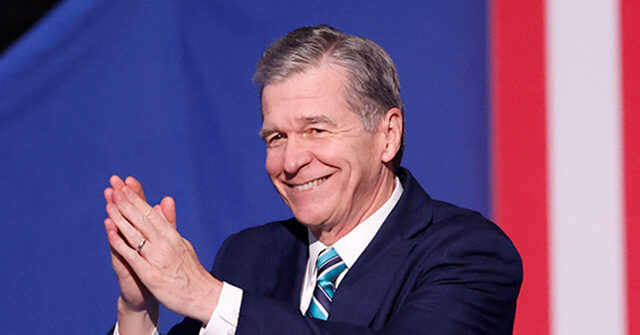
North Carolina’s political landscape has been stirred by Democrat and former Governor Roy Cooper’s Senate campaign announcement. With a video that evokes middle-class values and community spirit, Cooper aims to connect with voters. However, his gubernatorial record reveals a history marked by vetoes and controversial decisions that have sparked debate.
Cooper’s portrayal of himself as a down-to-earth lawyer with a modest background contrasts sharply with his actions as governor. His tenure has been characterized by decisions that many see as radical, particularly in cultural and social issues. While his campaign video criticized billionaires and corporations, it omitted his own contentious policies.
Throughout his time in office, Cooper has used alarmist rhetoric to address various issues, often stoking division. He has claimed North Carolina is deeply affected by climate change and has raised fears about women’s healthcare. These statements have been criticized as fearmongering by many conservatives.
One of Cooper’s notable actions was his veto of House Bill 574, which aimed to protect women’s sports. He argued that the bill was unnecessary and harmful, accusing Republicans of stirring cultural conflicts. Despite his objections, the legislature, led by Republicans, overrode this veto, reflecting a divide between Cooper and the state’s lawmakers.
Cooper’s opposition to the Parents’ Bill of Rights and legislation banning transgender procedures for minors further underscores his controversial record. Both of these vetoes were also overridden, indicating strong legislative opposition to his stances. His campaign announcement notably excluded these contentious decisions.
Additionally, Cooper has supported initiatives that conservatives argue undermine parental rights and public safety. His backing of policies that promote the distribution of abortion pills and his veto of a bill protecting unborn children with Down syndrome highlight his alignment with leftist ideologies. These positions have been met with criticism from conservative circles.
Cooper’s declaration of a “state of emergency” over school choice drew ire, especially given his personal choice to send his children to private schools. His stance on school choice has been perceived as hypocritical by many. This, coupled with his comments during the pandemic about masks symbolizing strength, has fueled further debate.
Another controversial decision was his veto of legislation requiring cooperation with ICE, allowing sanctuary jurisdictions to persist in North Carolina. This has raised concerns about public safety and the rule of law. Conservatives argue that such actions prioritize political ideology over community security.
The National Republican Senatorial Committee (NRSC) has labeled Cooper as a “radical, pro-Hamas leftist,” criticizing his alignment with far-left policies. This characterization reflects the deep political divisions in the state. Cooper’s veto of legislation to remove DEI programs from state government has further fueled these tensions.
In contrast, President Trump has expressed his support for Michael Whatley, the Republican National Committee Chair, for North Carolina’s Senate seat. Trump’s endorsement positions Whatley as a strong contender, showcasing the GOP’s confidence in his leadership. This support highlights the growing conservative momentum in the state.
Whatley has yet to announce his candidacy officially, but Trump’s backing has already bolstered his profile. The endorsement aligns with the grassroots efforts of the GOP to strengthen its influence in North Carolina. As the political landscape shifts, Whatley’s potential candidacy is gaining attention.
Cooper’s record and campaign have sparked significant debate, reflecting broader national tensions. His actions as governor have been scrutinized, and his Senate run will likely face challenges from both sides of the political spectrum. The coming months will be crucial in determining the direction of his campaign.
Conservative voices continue to highlight Cooper’s decisions, emphasizing their impact on North Carolina. The state’s political dynamics are a microcosm of national debates, with Cooper’s campaign at the center. His Senate bid is set against a backdrop of intense scrutiny and political rivalry.
As Cooper moves forward with his campaign, the response from voters and political opponents will shape the race. The state’s conservative base remains vocal in its opposition to his policies. Cooper’s challenge will be to reconcile his gubernatorial record with his Senate aspirations.
With the political stage set, North Carolina’s Senate race promises to be a closely watched contest. The outcome will have implications beyond the state, reflecting broader national trends. For now, the focus remains on Cooper’s campaign and the reactions it elicits.
As North Carolina navigates this political crossroads, the voices of its citizens will play a pivotal role. The state’s future leadership will be decided through active engagement and debate. Cooper’s Senate run is just one part of this dynamic political landscape.
The broader implications of this race extend to national politics, with North Carolina serving as a battleground for competing ideologies. The state’s political discourse is a reflection of the challenges and opportunities facing the nation. As the race unfolds, all eyes will be on North Carolina.

