

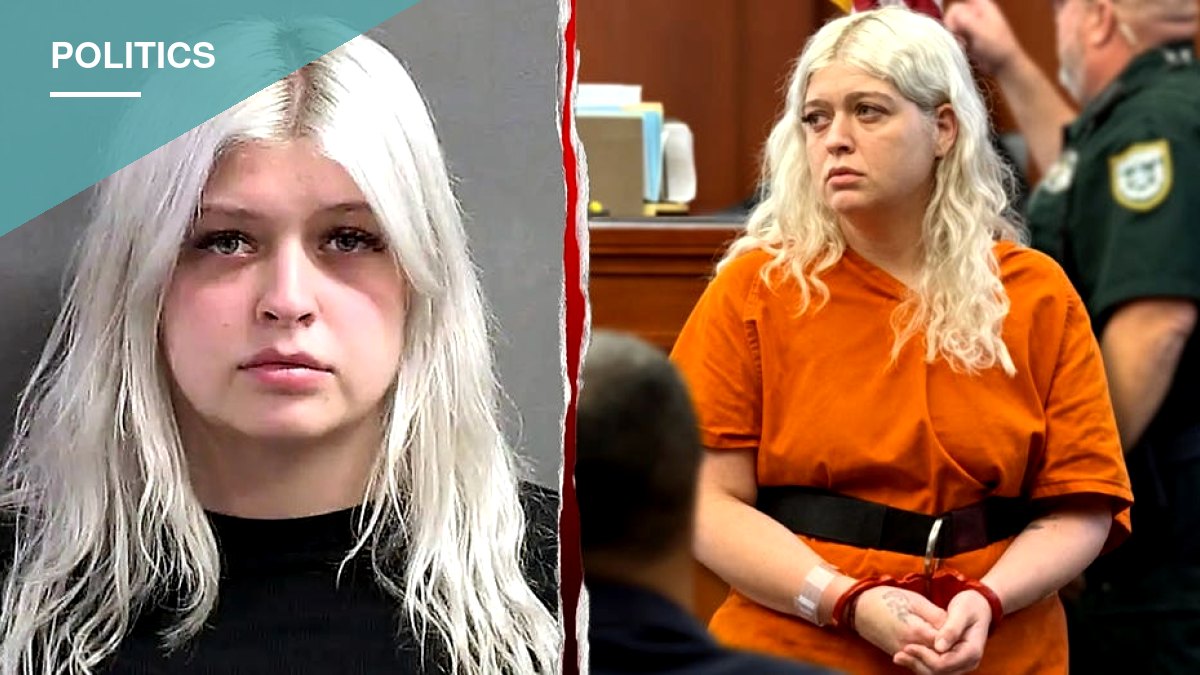
Lindsey Brooke Isaacs, 23, spent 13 days in jail on eight felony charges after Florida investigators used data from a Flock automated license plate reader to connect her black Dodge Durango to a fatal crash on Interstate 4 near DeBary. Prosecutors have since dropped every charge against her, and authorities have arrested another woman in the case.
“My heart was in my stomach,” Isaacs said. “I didn’t know what was going on.”
The crash happened on Oct. 4, 2025, along eastbound I-4 near DeBary. Three people died: motorcyclist Joaquin Deno, Flagler County Deputy Administrator Jorge Salinas, and his wife, Nancy Salinas. Witnesses said a Dodge Durango was involved.
A Flock camera near the Seminole and Volusia county line, about three miles west of the crash site, recorded Isaacs’ Durango traveling eastbound at 9:51 p.m. The crash occurred roughly two minutes later, around 9:53 p.m.
Her attorney, Patrick McGeehan, said a time-distance analysis showed she had already passed the crash location before the collision happened. “They just picked up my car off a camera and called it the end of the day,” Isaacs said. “We got her.”
Other evidence pointed elsewhere
A 911 caller had described a maroon Dodge Durango and provided part of a license plate. Investigators also found red or maroon paint transfer on a Ford Focus involved in the crash. Isaacs’ Durango was black. A specialized Florida Highway Patrol team that later inspected her vehicle found no damage indicating it had been in a collision.
“Where is the damage on the vehicle?” Isaacs recalled asking police. “Because I’m standing right in front of it and I don’t see any damage.” Authorities impounded the SUV anyway.
On April 17, 2026, Isaacs was told to surrender. She faced three counts of vehicular homicide, three counts of leaving the scene of a crash involving death, leaving the scene involving serious bodily injury, and reckless driving causing serious bodily injury. She spent her first several days in solitary confinement, with a toilet, sink and a metal sleeping slab covered by a thin mat. “I was devastated, I was scared,” she said. “I thought my life was over.”
Charges dropped, new arrest made
A renewed review by prosecutors and a specialized Florida Highway Patrol team, which again found no meaningful crash damage on Isaacs’ vehicle, prompted investigators to revisit witness accounts and physical evidence pointing to another car. On May 22, the State Attorney’s Office declined to prosecute Isaacs on all eight charges.
Authorities then arrested Alisa Lee Montalvo, who prosecutors allege was driving a maroon Dodge Durango. She faces nine charges, including three counts of vehicular homicide and tampering with physical evidence. She has not been convicted, and the allegations remain unproven.
“I felt like a new woman,” Isaacs said. “I felt free.” She said she later received an apology in person from the head of the Florida Highway Patrol. She has since filed a federal civil rights lawsuit against two Florida Highway Patrol troopers, alleging false arrest, wrongful imprisonment and malicious prosecution — claims that have not been proven in court.
Flock Safety defends its role
Flock Safety said its cameras generate leads, not conclusions. “Flock cameras provide investigative leads; they do not identify perpetrators, determine guilt, or make arrest decisions,” the company said in a statement, noting that Isaacs’ own complaint calls the Flock evidence “exculpatory, not inculpatory” because it placed her vehicle three miles from the crash scene minutes before it happened. The Florida Highway Patrol did not respond to a request for comment.
Asked whether she blamed the technology itself or how police used it, Isaacs said: “I 100% think the second one you said, how police interpret the camera footage.”
Florida pulls back on the cameras
On Aug. 31, the Florida Department of Transportation revoked permits for license plate reader systems within rights-of-way on the state highway system, citing rapid expansion of the technology and concerns about misuse, data privacy and surveillance. Cameras covered by the order must come down within 30 days, and FDOT said it will stop issuing new permits.
The order does not touch cameras on local city or county property. Miami-Dade County has separately announced it will suspend its entire license plate reader program, while other Florida agencies plan to keep using cameras away from state highways.
Flock Safety has also cut its recommended default data retention period from 30 days to seven days and plans to require law enforcement customers to use an audit tool flagging unusual searches, along with mandatory case codes for searches, by the end of 2026.
Isaacs said she knew Flock cameras existed before her arrest but didn’t grasp their reach. “I just thought it was like a traffic camera,” she said. “I feel very different about those cameras now.”

