

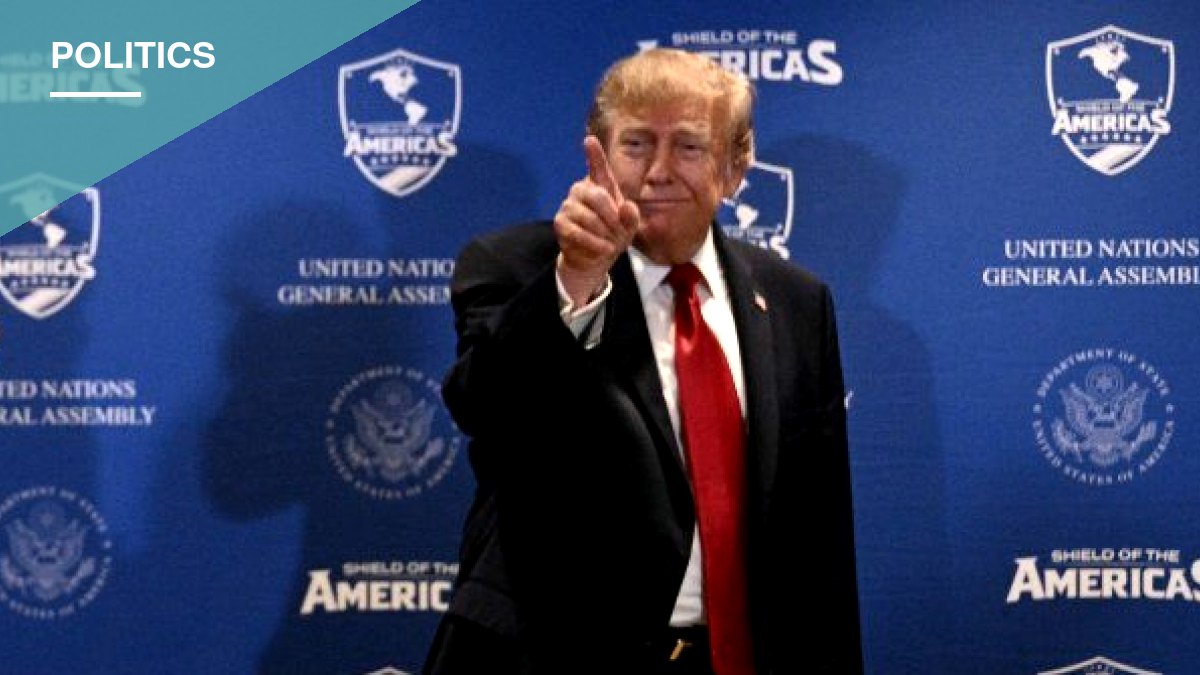
President Trump told the United Nations General Assembly on Tuesday that the United States will officially replace the term “artificial intelligence” with “super intelligence” in all government documents, framing the change as both a linguistic correction and a rejection of international efforts to regulate the technology.
“The United States also totally rejects any attempt to construct a globality scheme to control for the artificial intelligence being spoken of so much now, hereinafter called super intelligence. Changing the name,” Trump told world leaders during his address.
Trump said his objection centers on the word “artificial” itself, arguing it undersells the technology. “The use of the word artificial makes intelligence sound fake,” he said. “It is not fake. It’s actually amazing. But we have to be careful. In fact, it is exactly the opposite of what it purports.”
He said he hopes the rebranding spreads well beyond U.S. policy documents. “From this point forward, all of United States documents and hopefully the world’s will be changed to use the much more accurate term super as opposed to artificial,” Trump said.
The president closed his remarks on the topic by unveiling a new shorthand for the rebranded term. “In other words, welcome to the new world of super intelligence — SI,” he said. “Let’s see if that goes. It sounds much better. It is much better, and it’s much more accurate.”
A Rebrand Months in the Making
The announcement follows earlier moves by the administration on AI policy, including plans to stand up an “AI Force” and appoint a new AI czar. Trump had previously floated the renaming idea in a Truth Social poll asking followers to choose among “Superior Intelligence,” “Extreme Intelligence,” and “Supreme Intelligence.” According to Trump, “Supreme Intelligence” has been losing support in that poll because of its association with the Supreme Court.
The renaming push comes amid a broader debate over how AI should be governed. Some industry leaders have called for slowdowns or new regulatory frameworks even as they continue releasing increasingly powerful models — a pattern critics argue is less about caution than about locking out competitors and shielding themselves from antitrust scrutiny.

