

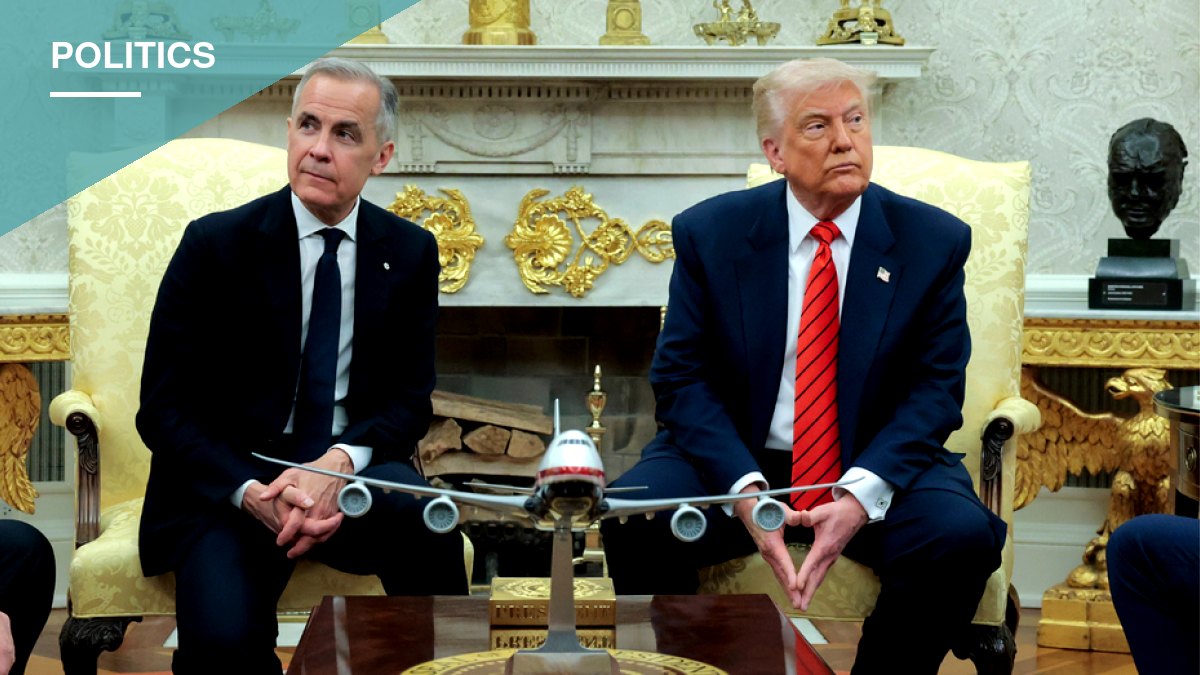
President Trump’s intensifying trade dispute with Canada could hit Michigan particularly hard, threatening to raise costs for automakers and consumers in a state hosting one of the nation’s most competitive Senate races this November.
Michigan’s economy is unusually exposed to cross-border trade with Canada. The state exported roughly $21.2 billion worth of goods to Canada in 2025, about 36% of its total exports, according to the Michigan Department of Transportation, with vehicles and auto parts making up the bulk of that trade.
David Clement, policy director of the free market nonprofit Consumer Choice Center, said Michigan ranks seventh among all states in its exposure to the trade war, driven largely by equipment, machinery and the auto sector.
“How you see this as a Michigan consumer is higher prices on the dealership lot,” Clement said, calling the combination of tariffs and already-elevated living costs a “double whammy.”
The warning comes after Trump imposed an additional 50% tariff on certain Canadian products earlier this year. The administration has since moved to bar certain Canadian products from entering the U.S. starting Sept. 29.
Clement said the complexity of auto manufacturing supply chains makes the tariffs especially disruptive for Michigan.
“Most Americans don’t know that a single component on a U.S.-assembled vehicle can cross the border upwards of eight times before it’s actually completed,” Clement said. “When you are tariffing automotive parts going across the border each way, that is where the exposure numbers start to tick up.”
He added that tariffs and retaliatory measures could “really gum up the very intertwined supply chain for cars between Michigan and Ontario.”
The economic stakes land in the middle of a closely watched Senate contest between Democrat Abdul El-Sayed and Republican Mike Rogers, who are vying for the seat being vacated by retiring Democratic Sen. Gary Peters.
The Trump administration has defended the tariffs as necessary to protect American businesses and workers and to level the playing field with Canada. But Clement argued the timing could prove politically costly.
“It would appear that Donald Trump’s original escalation against Canada has somewhat backfired in terms of the midterms,” Clement said.
He warned that businesses reliant on Canadian goods may feel the squeeze just as voters prepare to cast ballots.
“American manufacturers or American businesses who rely on Canadian inputs are going to start to feel the pain right in the lead-up to going to the ballot box,” Clement said. “Cost of living, cost of goods, cost of doing business is such an important factor for Americans who are going to be casting a ballot.”

