

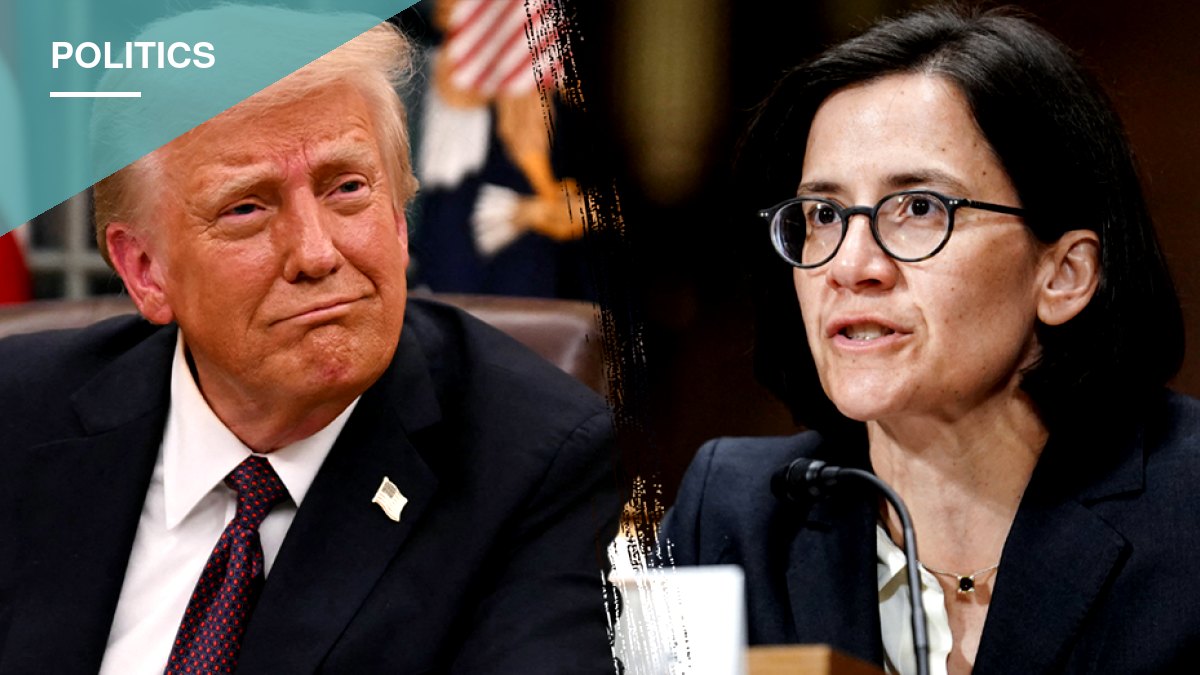
A federal judge in Washington backed away Monday from a demand that Justice Department lawyers personally sign a court filing, ending a nearly seven-hour hearing in a lawsuit over the Trump administration’s plan to overhaul a federally owned D.C. golf course.
U.S. District Judge Ana Reyes, appointed by President Joe Biden in 2023, had invoked Rule 11 of the Federal Rules of Civil Procedure, which holds attorneys accountable for the factual basis of their filings, to demand that DOJ lawyers add their names to a Sunday brief filed solely by Associate Attorney General Stanley Woodward Jr. By the close of the hearing, she dropped the request entirely.
“Late breaking news,” Reyes said. “I’m going to withdraw request that DOJ refile yesterday’s brief with identification of who signed it. We’ve all got better things to spend our time on.”
The reversal came hours after President Donald Trump, on Truth Social, called Reyes a “crazed lunatic” and questioned whether she “may be insane,” while also pressing for release of the court’s audio recordings from the hearings.
The Underlying Fight
The case, filed in February, concerns Trump’s plan to convert East Potomac Golf Links into what he has described as a “world-class, U.S. Open-caliber course.” The dispute escalated earlier this month when the National Park Service removed roughly 430 trees from the course over a weekend. The Interior Department said the removals stemmed from a years-old restoration plan unrelated to Trump’s broader redesign.
Although the tree removal did not violate any standing court order, Reyes responded by issuing a temporary restraining order barring further removals. She was reported to have been “screaming” at administration attorneys during an Oct. 12 hearing on the matter. That exchange prompted Woodward to request Reyes’ removal from the case, citing alleged bias and “open hostility” toward the administration.
Trump added fuel to the dispute Sunday with posts stating that Interior Secretary Doug Burgum and architect Tom Fazio had developed plans for a “World Class Championship Golf Course,” with work to begin November 15. Those posts, which Reyes said conflicted with an earlier DOJ filing claiming there was “no agency action” tied to the golf course plan, led her to impose an 8 p.m. filing deadline for the department’s response.
The Signature Standoff
When that Sunday filing arrived bearing only Woodward’s signature, it became the flashpoint of Monday’s hearing. Reyes asked attorneys to “raise your hand” if they intended to sign the brief, a request Woodward called “not an appropriate request.” She then invoked Rule 11 and ordered the attorneys to the podium to sign in person. They refused.
Reyes initially set a 3 p.m. deadline, pushed it to noon Tuesday, and offered to let attorneys’ names simply appear on the brief rather than require signatures — before abandoning the demand altogether by the end of the hearing.
Former federal prosecutor Abhishek Kambli defended the practice of senior officials signing contentious briefs on social platform X: “If there is something that is likely to be contentious with a judge, a DOJ leader signs their name on the brief so that any issues someone has with the brief is directed at them rather than lower level attorneys.” He added that “it goes without saying that a decision such as this should not be something a judge is inquiring into.”
Rachel Boulvard, vice president of programs at the Conservative Partnership Institute, offered a different explanation on X, writing that “DOJ line attorneys increasingly do not sign briefs because of Dem law fare,” and that Democrats “continue to go after the bar licenses of young DOJ line attorneys who are simply executing on behalf of the department.”
A Judge With a History
This is not the first time Reyes has drawn scrutiny from the administration. She previously faced a Justice Department judicial-misconduct complaint over her handling of a case challenging Trump’s restrictions on transgender individuals serving in the military. During a February 2025 hearing in that case, she asked a Trump administration attorney what Jesus Christ would say about policies excluding transgender people from homeless shelters.
Then-DOJ Chief of Staff Chad Mizelle filed a formal complaint with the D.C. Circuit accusing Reyes of “hostile and egregious misconduct” and potential bias. The complaint was later dismissed after the circuit’s chief judge determined that a recusal motion, not a misconduct complaint, was the proper way to challenge a judge’s conduct.
Both Woodward and Trump have called for the public release of audio recordings from the golf course hearings.

