

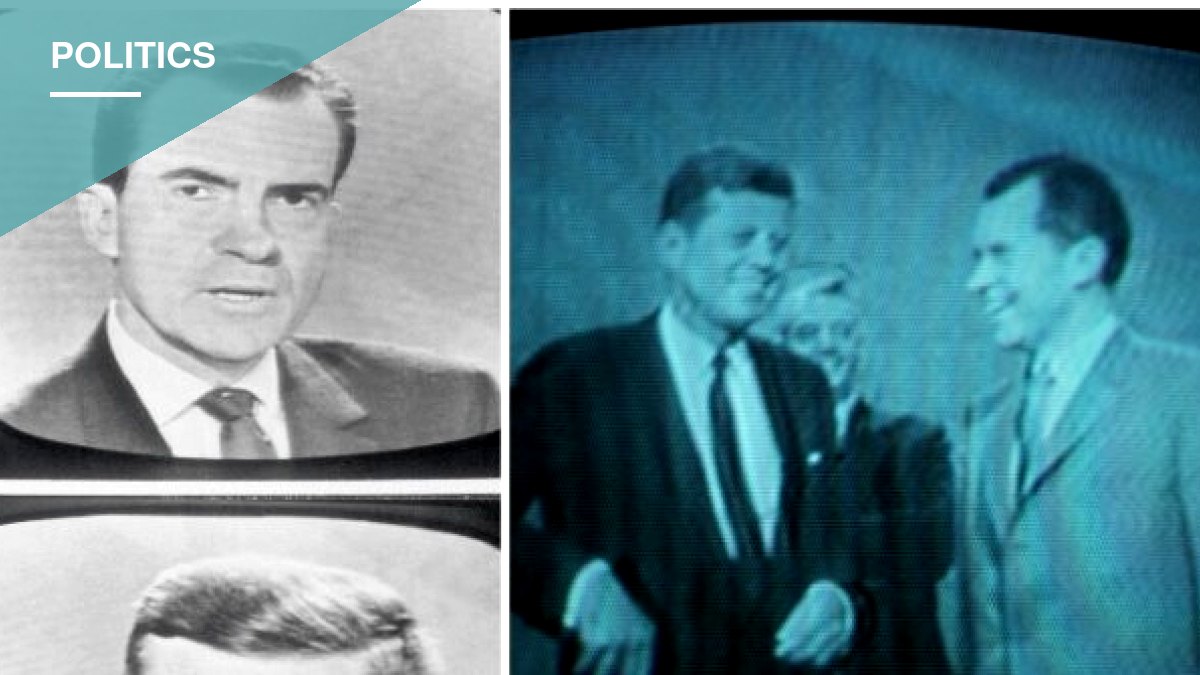
Democrats retook both chambers of Congress on Tuesday, flipping seats in Texas and North Carolina while Georgia Senator Jon Ossoff won a second term. In the aftermath, Atlanta attorney Rich Kaye argues in a Breitbart column that Republicans are repeating a mistake the party first made in 1960 and has never fully corrected: losing on image rather than substance.
Kaye points to the first televised presidential debate, when Vice President Richard Nixon faced Senator John Kennedy in a Chicago studio. Nixon, recovering from a knee infection that had put him in Walter Reed for nearly two weeks, declined professional makeup, wore a light gray suit that blended into the set, and sweated under the studio lights. Kennedy, by contrast, appeared tanned, rested and comfortable on camera. Kaye notes that while historians dispute a widely cited claim that radio listeners thought Nixon won, there is no dispute about what the television audience saw. Kennedy went on to win one of the closest presidential elections in American history.
Kaye argues that pattern has repeated itself across decades of American politics. He cites Barack Obama’s 2007 presidential launch after just two years in the U.S. Senate and a prior stint as an Illinois state senator; California Governor Gavin Newsom, whom he describes as treated as a national star despite the state’s high housing costs, gas prices and homelessness; and Donald Trump, who spent fourteen seasons starring in a network reality show before defeating sixteen Republican primary rivals in 2016.
On Ossoff’s win in Georgia, Kaye writes that Republicans attacked the senator this fall over campaign spending on grooming, noting that his campaign paid a Hollywood makeup artist more than $4,600 this year, more than any other federal candidate, including Alexandria Ocasio-Cortez. Kaye argues the attack failed because voters did not punish Ossoff for investing in his appearance — they rewarded it.
Kaye also points to Ocasio-Cortez’s 2018 upset of the fourth-ranking House Democrat in New York, which he attributes partly to a campaign video he compares to a movie trailer rather than a traditional policy pitch.
“The lesson isn’t that voters are stupid. It’s that voters are human. People decide in seconds whether they trust a face, then look for reasons to agree with their gut.”
Kaye writes that he watched election returns Tuesday night from the Republican Protect the Vote War Room in Atlanta and was struck by footage of Rick Jackson, who he says grew up in public housing and foster homes before building one of Georgia’s largest companies, and his wife Melody Jackson, a Georgia Tech professor who runs a research center there, shown on screen after voting. Kaye says he worried that, whatever their accomplishments, the couple’s appearance on camera would not register with younger voters watching the same coverage.
Kaye’s conclusion is that the Republican Party should recruit candidates the way studios cast leading roles, arguing Democrats already do a version of this by recruiting veterans, prosecutors and candidates who photograph well and building their records around them. He writes that this does not require abandoning conservative principles, only choosing better messengers for them.
Rich Kaye is a practicing attorney based in Atlanta, Georgia.

