
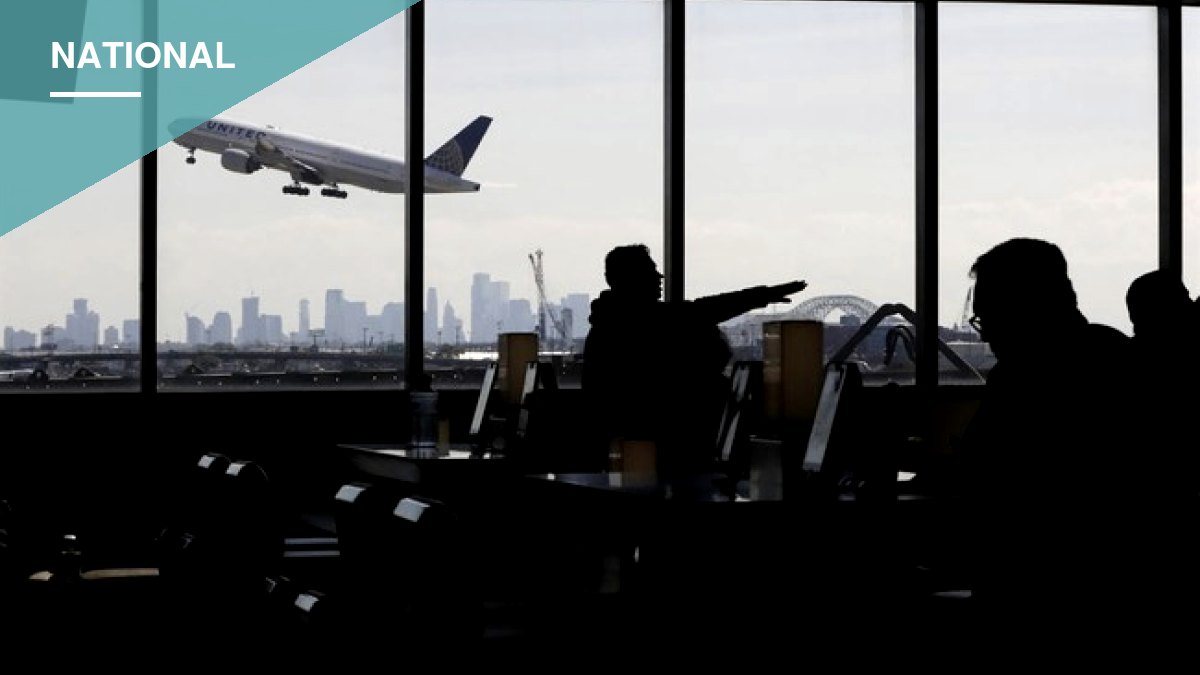
The Federal Aviation Administration ordered a nationwide ground stop on Friday afternoon after air traffic controllers began losing radio contact with pilots, grounding commercial flights across the contiguous United States.
Transportation Secretary Sean Duffy confirmed the scope of the disruption in a post on his official X account, saying the FAA “issued a nationwide ground stop for all U.S. airports following a communication issue impacting all Air Route Traffic Control Centers.” He said FAA technicians were investigating and that updates would follow as they became available.
The trouble reportedly began around 3:15 p.m. Eastern time, when controllers started losing the radio frequencies they use to communicate with pilots. The outage was initially described as a “rolling frequency outage” affecting air traffic control operations tied to major hubs in Boston, New York and Chicago.
By 3:39 p.m. Eastern, the FAA had put ground stops in place at Chicago’s O’Hare and Midway airports because of what it called an “equipment outage,” holding inbound flights at their departure airports until at least 4:30 p.m. Eastern. Departures from Teterboro Airport in New Jersey were also delayed by up to 45 minutes because of the same FAA equipment problem.
Under a ground stop, aircraft still on the ground remain there until the order is lifted, while planes already in the air are permitted to continue to their destinations and then stay put. Ground stops are most commonly issued because of severe weather, which made Friday’s order unusual: it stemmed from a communications failure rather than conditions in the sky.
As of this writing, the FAA had not issued a public statement on when the ground stop might be lifted. Because disruptions of this scale can take hours to fully unwind even after the underlying problem is fixed, delays were expected to ripple through the national air travel system well beyond the initial outage.