

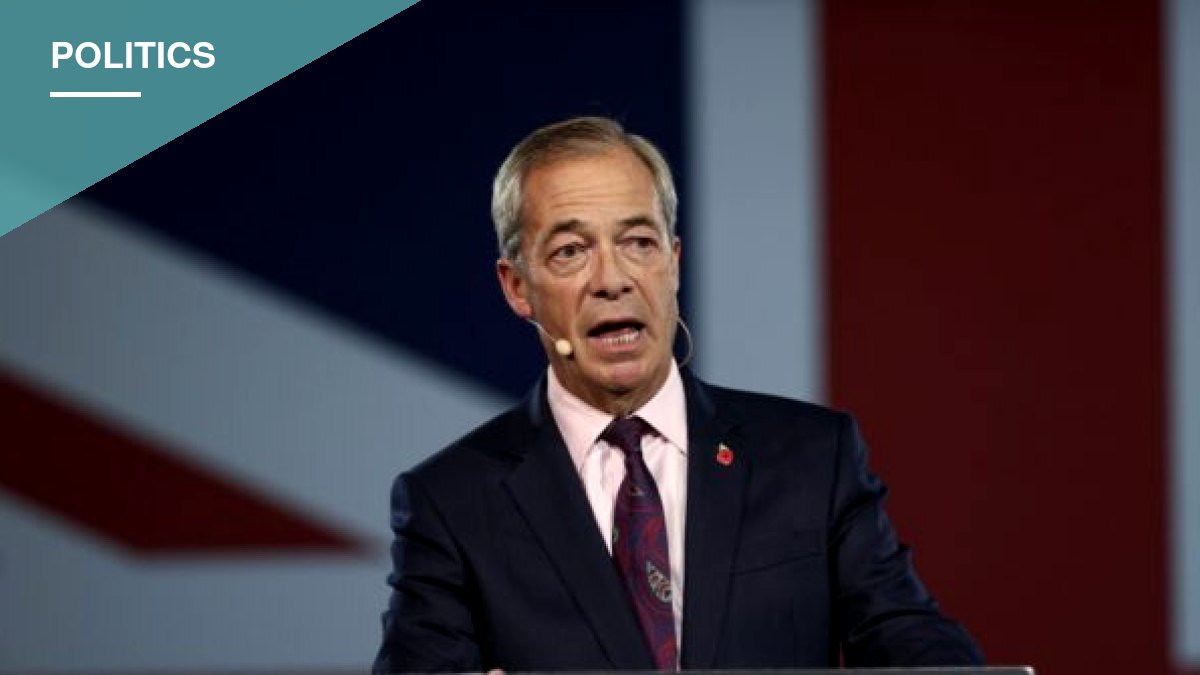
Reform UK leader Nigel Farage has laid out a sweeping national security platform calling on Britain to abandon what he calls the establishment’s doctrine of “managed decline” and rebuild its military and diplomatic weight on the world stage.
The announcement follows Reform UK’s selection of 40-year military veteran Angus MacIntyre as the party’s first Shadow Armed Forces Minister. Writing in The Express, Farage warned that threats to Britain are “no longer abstract.”
“Lone-wolf terrorists and state-sponsored actors, many of them working at the behest of the Islamic Republic in Tehran, are entering our homeland through porous borders. I have warned about this for years, only for my concerns to fall on the deaf ears of a complicit political class.”
Farage said securing Britain’s borders would be the top priority of a Reform UK government, arguing that “being respected starts at home.” He pledged that Reform would withdraw Britain from the European Court of Human Rights, the International Criminal Court, and the Refugee Convention, moves he said would restore full sovereignty over British law and borders.
The plan also includes banning Islamist organizations such as the Muslim Brotherhood, which Farage’s party accuses of fomenting separatism and working toward the imposition of Sharia law in Western countries.
Rebuilding military strength
Farage said Britain’s security does not stop at its coastline, and called for restoring the military capability that once defined the nation. Under his plan, defence spending would rise to 3 percent of GDP by 2030 and 3.5 percent by 2035, with priority given to the nuclear deterrent, undersea defence, and cyber and space-based threats rather than, in his words, “simply hurling money at the same flawed MoD procurement processes that have left our forces threadbare.”
Despite the emphasis on rearmament, Farage framed peace as a central Reform UK objective, arguing that stability abroad would lower energy prices and reduce the cost of traded goods by keeping shipping lanes open.
Infrastructure and sovereignty
Farage said defence spending must also protect critical infrastructure at home, including airports, hospitals, energy supplies and food security.
“Vladimir Putin sees our weaknesses and exploits them… These foundations of everyday life are chronically vulnerable. In so many ways, we have placed global ‘well-being’ above our own. We have promoted diversity, equity and inclusion overseas, at great cost, while neglecting our own national prosperity and strength.”
He also called for reasserting British sovereignty over the Falklands, the Chagos Islands and Gibraltar, and rejecting reparations demands from former colonies. On the global stage, he identified countering Communist China’s ambitions toward Taiwan as a key priority, citing the island’s dominance of the global semiconductor supply through the Taiwan Semiconductor Manufacturing Company, which accounts for roughly 70 percent of the world market.
Farage closed by framing the platform as a rejection of national decline.
“To help bring peace abroad, we must build strength at home. You cannot simply declare yourself a world power; you have to create one… Reform UK rejects the idea that we must be a nation in decline. We can be a nation on the rise once again.”

