
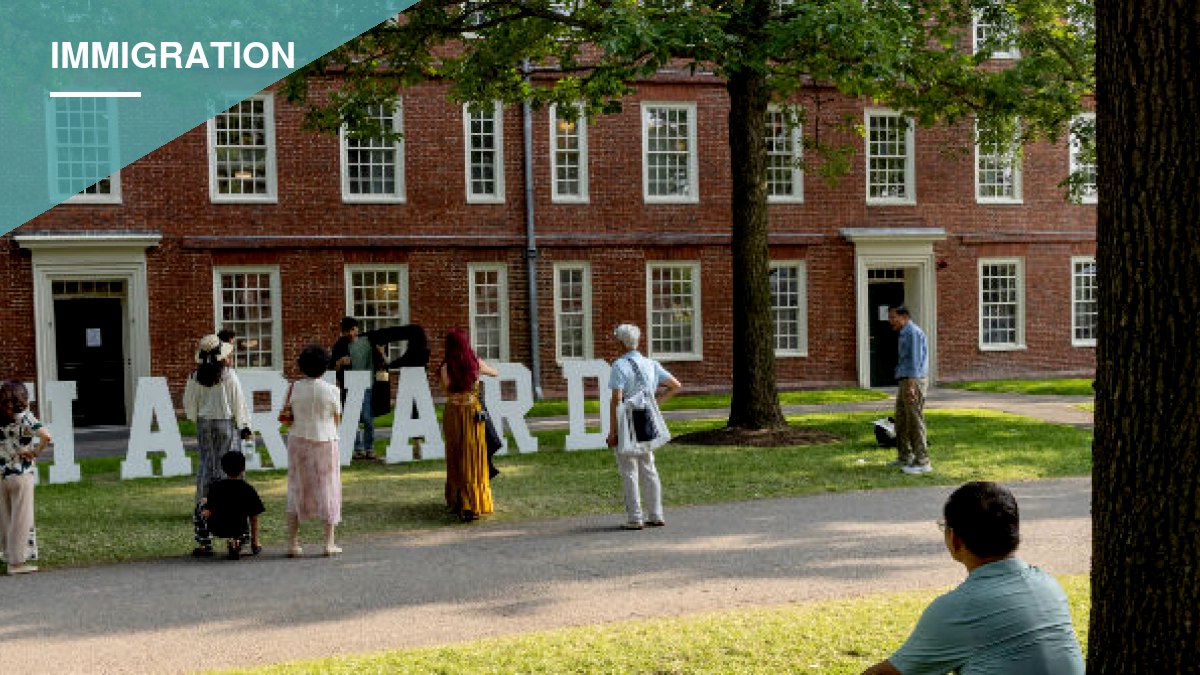
Universities across the country are reporting sharp declines in international student enrollment as the Trump administration increases scrutiny of the F-1 student visa program, a system that for years has also served as a pathway for foreign nationals to move into U.S. white-collar jobs.
According to Politico, preliminary figures from several schools point to a significant drop ahead of the full release of 2025-26 enrollment data. At the University of Washington’s Seattle campus, international enrollment fell for a second straight year, reaching its lowest level in at least a decade. At Ohio State University, international enrollment dropped nearly 13%, the lowest figure in 16 years. The Illinois Institute of Technology says it plans to borrow up to $200 million from its endowment to cope with declining international enrollment.
The declines come as federal officials tighten vetting standards for foreign students and crack down on what they describe as widespread abuse of the visa system.
Administration Defends Crackdown
A Department of Homeland Security official pushed back on criticism from college administrators over the tighter restrictions.
The performative outrage is incredible. Where was the outrage when foreign nationals were abusing the system, violating the terms of their student visas, and making a mockery of our immigration laws? If the media really cared about legitimate international students, they would be thanking President Trump for cracking down on the rampant fraud to ensure only those truly intending to study in the United States are given the privilege.
A State Department spokesperson said the administration is working to protect national security through its visa process. “A visa is a privilege, not a right,” the spokesperson said, citing Secretary of State Marco Rubio. The spokesperson added that the United States “continues to welcome qualified international students whose academic pursuits contribute to American colleges and universities, support the U.S. economy, and strengthen our nation’s global competitiveness.”
Jobs and National Security Concerns
Supporters of the stricter rules argue that some schools have used the F-1 program as a pipeline, educating foreign nationals before moving them into the U.S. workforce through visas such as the H-1B program, in some cases displacing qualified American workers from well-paying jobs.
Officials have also pointed to a connection between campus unrest and foreign students on visas. Leqaa Kordia, a former Columbia University student whose visa had lapsed, took part in violent protests at the school in 2024. Momodou Taal, a former Cornell student, left the United States in 2025 after his student visa was revoked for participating in disruptive protests that included intimidation of Jewish students.
In a January 2025 fact sheet, President Trump said his administration would act against foreign students involved in such activity: “We put you on notice: come 2025, we will find you, and we will deport you. I will also quickly cancel the student visas of all Hamas sympathizers on college campuses, which have been infested with radicalism like never before.”
Closing a Long-Standing Loophole
In July, DHS finalized a rule eliminating the “duration of status” provision that had allowed foreign students, exchange visitors and media representatives to remain in the U.S. indefinitely without regular government oversight.
For nearly half a century, the outdated ‘duration of status’ system has compromised national security and created an environment ripe for immigration fraud. For decades, foreign students have been admitted into the U.S. indefinitely, allowing thousands to abuse our immigration system by perpetually enrolling in courses to avoid having to leave the U.S. By implementing clear, finite limits on these visas, the United States is reclaiming its ability to properly screen, vet, and monitor individuals within our borders. This final rule ensures that foreign students remain focused on their primary purpose: completing their studies and returning home.
DHS Secretary Markwayne Mullin issued that statement when the rule was announced.