

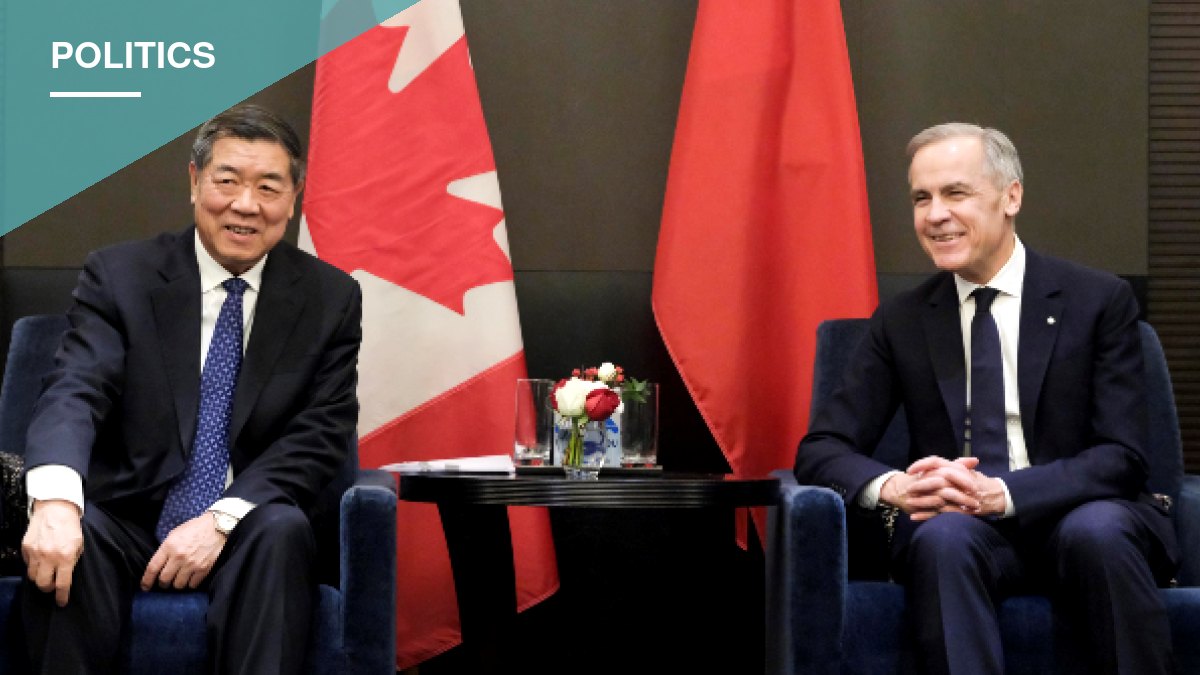
Canadian Prime Minister Mark Carney said Monday that Canada could pivot toward Chinese automakers for vehicles and manufacturing jobs if ongoing trade negotiations with the United States fail to produce a satisfactory deal.
Speaking at a press conference in Cambodia, where he was attending the Francophonie Summit, Carney framed the possibility as a consequence of U.S. trade policy rather than a bargaining tactic.
“We have the best auto workers in the world, and we want them fully deployed, full opportunity, in an integrated North American market. That market has become less integrated because of U.S. trade actions,” Carney said.
Carney insisted he was not using the threat as leverage in trade talks with Washington. “It’s not leverage. But action, reaction,” he said. “If [Canadian auto workers] are not fully utilized in a North American context, that provides other opportunities. Canada is going to move forward either way.”
The remarks came as Carney traveled through Asia. He visited the Philippines on Saturday to finalize a free trade agreement and is scheduled to meet Chinese leader Xi Jinping on the sidelines of the Asia-Pacific Economic Cooperation summit in Shenzhen this week.
Conditions on Chinese Investment
Carney said that if Canada does deepen ties with China on autos, Beijing would be expected to make real manufacturing investments inside Canada, drawing on Canadian supply chains and critical minerals. “It’s not just about kit cars. There has to be a manufacturing aspect involved,” he said.
Canada imposed a 100 percent tariff on Chinese electric vehicles in 2024, along with a 25 percent tariff on Chinese steel and aluminum, mirroring U.S. efforts to shield domestic EV markets from inexpensive Chinese imports. China responded with tariffs on Canadian canola oil, pork, seafood and other farm exports.
In January 2026, Canada broke from the U.S. approach, agreeing to sharply cut tariffs on Chinese EVs in exchange for China easing its retaliatory tariffs on Canadian agriculture. Carney said at the time the arrangement showed China had become a “more predictable” trade partner than the United States.
Ontario Pushes Back
The January agreement angered officials in Ontario, home to Canada’s auto industry. Ontario Premier Doug Ford, who said he was not consulted before the deal was struck, urged Canadians to “boycott the Chinese EV vehicles” and “support companies that are building vehicles here.”
So far, China’s actual inroads into the Canadian market have been limited. The January deal set a quota of up to 49,000 Chinese EVs, but only about 16,200 had been imported by the end of September — and a significant share of that quota went to Teslas built at the American company’s factory in China.
Despite Carney’s January prediction that Chinese manufacturing investment would follow, none has materialized. Four Chinese automakers met with Canadian Industry Minister Melanie Joly in June to discuss building EVs in Canada, but those talks have not produced results, possibly because Chinese firms are wary of Canada’s higher labor and supply-chain costs.
The Kit-Car Controversy
China has shown more interest in a different arrangement — one Carney has said he opposes. Last week, Ford sent Carney a letter warning against allowing “the introduction of Chinese-made knock-down kits” at the Stellantis Brampton assembly plant, which was recently bought by Canadian armored vehicle maker Roshel.
Roshel has said it intends to lease back 25 percent of the plant to Stellantis, which would use the space to assemble Chinese EVs from prefabricated kits manufactured in China — an arrangement that could eliminate hundreds or thousands of jobs at the facility.
“We must remain aligned in our efforts to protect and expand Ontario and Canada’s automotive footprint. Fortifying Ontario and Canada’s industrial base, including a strong and growing automotive sector, is foundational to creating and realizing generational economic opportunities,” Ford wrote to Carney.
The Carney government responded that it was “not considering any proposal to replace full vehicle manufacturing and assembly with Chinese-made kit cars,” adding that any Chinese investment in Canadian auto manufacturing “must use Canadian parts, Canadian labor, and a Canadian supply chain.”
Talks With Trump Continue
Before departing for Europe and Asia on Saturday, Carney said he had a “long, substantive conversation” with President Trump and described the talks as productive. “There is the possibility of a deal, a bilateral deal, but we’re not there yet,” he said.

