

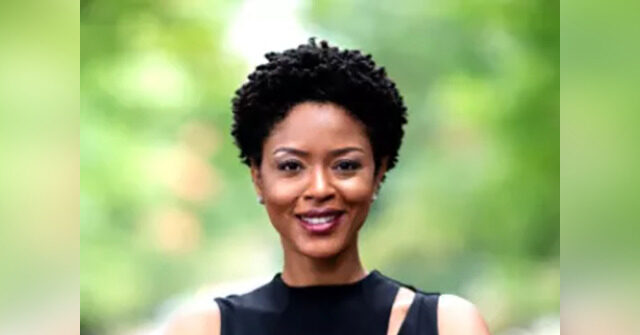
An individual who has been presented on CNN as a medical expert, Chris Pernell, is raising eyebrows due to concerns about her actual medical practice. Despite being introduced as a doctor, reports from the Free Beacon suggest that Pernell has not actively practiced medicine since her residency. She has instead focused her career on diversity, equity, and inclusion (DEI) initiatives within healthcare systems.
Pernell recently made headlines after discussing President Donald Trump’s health conditions, specifically his chronic venous insufficiency (CVI), which the White House described as a common and benign issue. However, Pernell painted a more alarming picture of the President’s health on CNN, despite the Cleveland Clinic noting that CVI is more prevalent among older adults. This has sparked questions about her motivations and the accuracy of her assessments.
Pernell holds a medical degree from the Duke University School of Medicine and completed her residency at Johns Hopkins Bloomberg School of Public Health. Nonetheless, her LinkedIn profile lacks any indication of direct patient care experience. Her career has instead been dedicated to roles such as the director of the NAACP’s Center for Health Equity and a strategic officer at University Hospital in Newark, New Jersey.
Critics have pointed out that while her academic credentials are impressive, they do not necessarily translate into practical medical expertise. Her position at the NAACP involves driving equitable health outcomes and transforming healthcare systems, rather than direct patient interaction. This shift in focus has led some to question the validity of her televised medical opinions.
Pernell has also been involved in drafting and implementing equity and inclusion strategies within healthcare institutions. Her initiatives include hiring directors focused on equity and mandatory training on implicit bias and structural racism. Despite these efforts, her public statements often reflect a strong political bias, particularly against former President Trump and his policies.
In 2022, Pernell shared on the Karen Hunter Show that she faced multiple compliance inquiries from hospital leadership. She attributed these probes to her vocal criticism of President Trump and the Republican Party. Her past comments have included controversial comparisons between vaccine skeptics and white supremacists.
Following these events, Pernell resigned from her position at the hospital, claiming she was “forced out” due to racism. Her departure and subsequent media appearances have continued to draw attention to her views and professional credentials. Pernell’s case highlights the ongoing debate over the intersection of medical expertise and political advocacy.
The media’s choice to feature Pernell as a health expert raises questions about the standards for medical credibility on television. Her role as an “apostle” in a church with leaders who have called Trump the “antichrist” adds another layer to the discussion about impartiality and expertise. Observers are left to consider how much weight should be given to her health assessments.
The conservative perspective argues that media platforms should prioritize experts with active clinical experience and unbiased viewpoints. Critics assert that Pernell’s focus on DEI initiatives may not equip her to provide balanced medical analysis. Her story serves as a cautionary tale about the potential pitfalls of blending activism with healthcare commentary.
The portrayal of Pernell as a medical authority without a recent practice background has sparked debate among political and medical circles. It raises critical questions about the qualifications needed to offer medical opinions on national platforms. As the discourse continues, the emphasis remains on ensuring that public health discussions are informed by genuine medical expertise.
By featuring figures like Pernell, networks risk blurring the lines between political commentary and medical advice. This situation underscores the importance of distinguishing between those who advocate for health equity and those who possess hands-on medical experience. The issue at hand is not Pernell’s credentials but how they are used in the broader media landscape.
Conservative voices argue for a clear separation between political ideology and medical expertise in public discussions. The controversy surrounding Pernell exemplifies the potential consequences of neglecting this distinction. As the conversation evolves, the focus will likely remain on maintaining integrity and accuracy in media representations of health professionals.


4 Comments
That’s all we need! Fake Democrat doctors. As if we don’t have enough BS with fake news media people and fake politicians and fake “Reverends”. All, of course, are political hacks.
This activist fraud freak needs to check into a Forensic Psych Ward for massive therapy!
Did this so-called Doctor ever examine Trump? Why would any reasoning individual accept her word for the implications of his diagnosis if she has not physically examined him nor seen the actual results of tests performed on him? Sounds very like CNN is screaming about the sky falling again and they even have a supposed medical professional to tie this claim too. Since we all are very aware that CNN has not told the truth about anything, there is probably nothing of the truth in this story either.
Kathie, I totally agree and say you’ve hit the proverbial nail over the head!
So many deceivers, fakes and fraudulent characters running around in government and in the mass media!
This loon is a total loser and joke!