

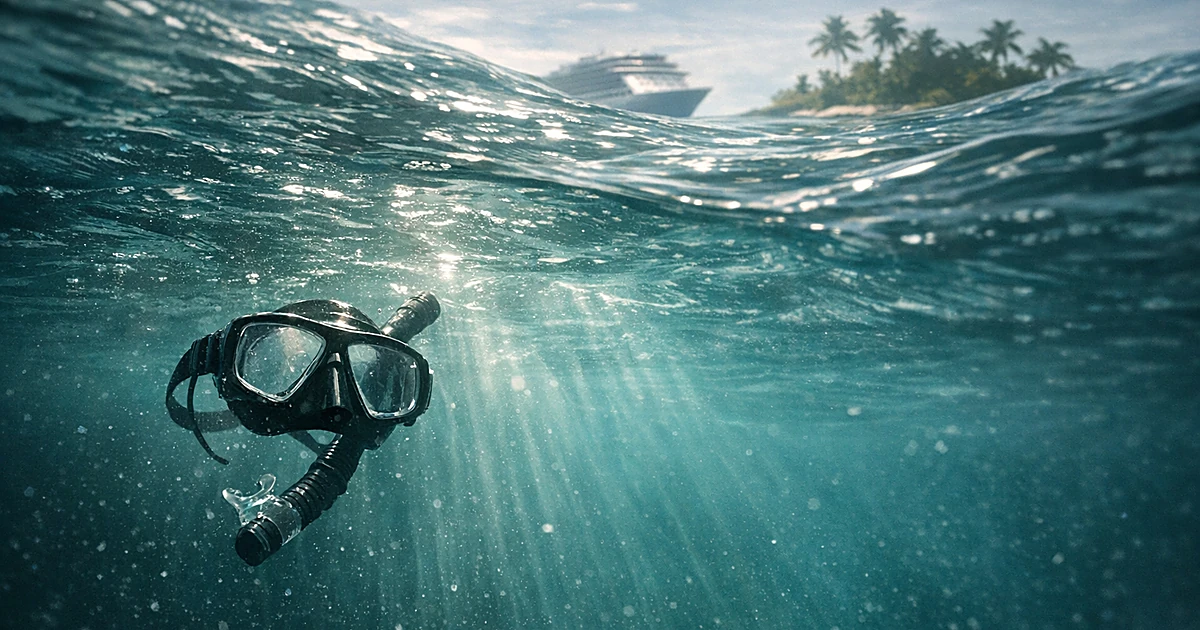
An 83-year-old American tourist died while snorkeling off Great Stirrup Cay, and authorities and the cruise line have released only limited details about the timeline, emergency response, and ongoing questions surrounding the incident.
An elderly passenger on the Norwegian Getaway died Sunday afternoon during a snorkeling outing at Great Stirrup Cay, the island owned by Norwegian Cruise Line. The Royal Bahamas Police Force described the death as an “apparent drowning,” and local responders and the ship’s medical team attempted resuscitation but could not revive the guest.
The victim’s son told police the two were in the water together before they separated, and when the son looked back he found his father motionless and without his snorkel mask. The cruise ship had docked at Great Stirrup Cay at 8 a.m. on May 3 and left at 5 p.m. the same day during a three-day round-trip cruise, placing the incident in a Sunday afternoon window while passengers were ashore.
Police have not published the victim’s name or a full account of where on or near the island the man went under, and officials have not said whether an autopsy or other follow-up investigation will be performed. That lack of official detail leaves basic questions unanswered about location, conditions, and the presence or absence of shore-based safety personnel.
Norwegian Cruise Line issued a brief statement expressing sympathy and describing the medical response. The company said,
“We are saddened by the passing of one of our guests who became unresponsive while snorkeling in the ocean. Our medical team and local emergency responders provided immediate assistance. Unfortunately, the guest was unable to be revived. We extend our heartfelt condolences to the family during this difficult time.”
The statement did not address whether lifeguards or other safety staff were monitoring the snorkeling zone, whether the guest had known health conditions, or what guidelines apply to older passengers taking ocean activities at the private island. Those operational details matter when assessing any maritime or shore-based incident involving vulnerable travelers.
Great Stirrup Cay is a major attraction for Norwegian, promoted as a private-beach stop with snorkeling, kayaking, and other water activities that draw thousands of passengers on busy sailings. Owning the island gives a cruise line control over the guest experience, but ownership also brings responsibility to ensure supervision and emergency readiness where water activities are concerned.
Snorkeling in open ocean demands basic fitness, comfort in the water, and reliable equipment. In this case, the missing snorkel mask and the son’s report of separation in the water highlight how quickly a safe outing can become life-threatening, especially for an 83-year-old in open sea conditions that can shift without warning.
When Americans die while traveling abroad, families face a complex set of administrative tasks including local police reports, consular notifications, and repatriation logistics. Those practical burdens fall first on surviving relatives, and the emotional trauma is often compounded by slow or opaque investigative processes in another country.
The public accounting around deaths at sea or in resort settings tends to be sparse. Brief official statements and slow-moving foreign investigations frequently leave relatives and the public frustrated about what happened and whether anything could have been done differently to prevent the loss.
Here, neither the cruise line nor the Royal Bahamas Police Force has provided enough information to determine if the death was a medical event that led to drowning or a drowning caused by other factors. Transparency about safety staffing, monitoring procedures, and post-incident reviews would help everyone understand whether policies need to change.
Cruise industry growth has put more people into shared, semi-controlled environments like private islands, where resort-style marketing can obscure the real risks of open-water activities. “Controlled” should mean effective supervision and clear safety protocols that account for older guests and those with potential medical vulnerabilities.
The victim’s name remains private and his son has not made public statements beyond the account given to police, leaving the family to cope while investigators proceed without a stated timeline. The situation underscores how quickly a holiday can turn tragic and how much families and the traveling public rely on thorough, timely answers from authorities and operators.
Condolences from a company are necessary, but families and the public also need detailed, verifiable information about what happened and why. When a business runs both the transport and the destination, people expect more than a polished statement; they expect clear facts and accountability where they are due.

