

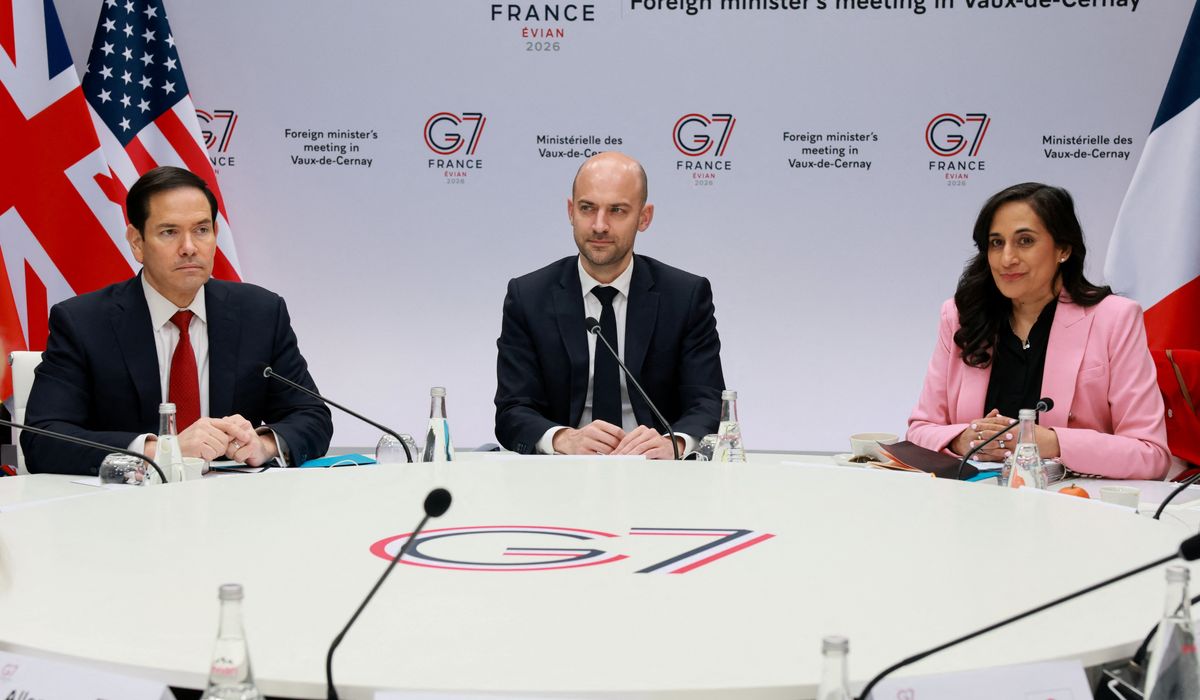
U.S. Secretary of State Marco Rubio is in France meeting his Group of Seven foreign minister counterparts on Friday, after President Trump attacked NATO countries over a reluctance or refusal to take
U.S. Secretary of State Marco Rubio landed in France to join his Group of Seven foreign minister counterparts, arriving amid a charged atmosphere after President Trump publicly took aim at NATO allies. The visit comes at a time when allies and Washington are squaring off over who pays for defense and how responsibilities are shared. Republicans see this as a moment to press hard for fairness and clarity in burden sharing.
Rubio’s schedule in Paris is expected to focus on practical steps that advance American interests while pushing partners to honor commitments. That means pressing allies to meet spending targets and matching rhetoric with resources. From a Republican perspective, diplomacy should come with clear expectations: allies pitch in, or Washington adjusts its posture accordingly.
The backdrop to the talks is familiar: a U.S. administration demanding that allies carry more of the load, and a Europe used to decades of U.S. leadership. President Trump’s criticisms are blunt and unapologetic, and they underline a simple point Republicans make often—America cannot indefinitely underwrite the security of others without fair contribution. Rubio’s job is to translate that blunt message into workable policy with partners who have different domestic politics and security priorities.
On defense spending, the argument is straightforward and non-ideological. If allies want the protection of NATO and other security guarantees, they should fund their share of those collective defenses. That includes meeting agreed-upon targets and investing in capabilities that actually contribute to alliance missions. A diplomacy that ignores the financial and operational realities only delays inevitable tough choices.
Beyond money, Rubio will press for smarter cooperation on intelligence, logistics, and rapid-response forces that can deter threats without a permanent U.S. occupation footing in every region. Republicans favor capability over ceremony: deployable forces, interoperable equipment, and clear rules for burden sharing. Those are the kinds of durable arrangements that turn political promises into real deterrence and lower long-term costs for American taxpayers.
Trade and sanctions will also be on the agenda as tools that back up security commitments. The GOP approach treats economic leverage as part of the diplomatic toolkit—tighten sanctions on bad actors, coordinate with partners on enforcement, and use trade policy where it advances national security. Allies who work together on both economics and defense are more credible and easier to defend politically at home.
Public messaging matters during these meetings, too. Rubio must walk a fine line between standing firm and keeping doors open for cooperation. From a Republican view, firmness is not isolationism; it is realism. Strong language aimed at allies serves two purposes—it signals that the United States will not be taken for granted and it motivates partners to act before tensions force harsher measures.
There will be pushback. European capitals often bristle at U.S. pressure and complain about tone even when they agree with the substance. Rubio’s challenge is to convert friction into results, not into headlines that let diplomats off the hook. Effective diplomacy in this moment looks like a mix of pressure, incentives, and clear benchmarks for action.
At its core, this trip is about rebalancing relationships so that American leadership is sustainable and effective. Republicans favor a version of leadership that demands reciprocity and makes allies accountable without surrendering strategic flexibility. Whether Paris produces new commitments or simply clearer public stances, the goal is the same: make alliances work for U.S. interests and for the security of the free world.

