

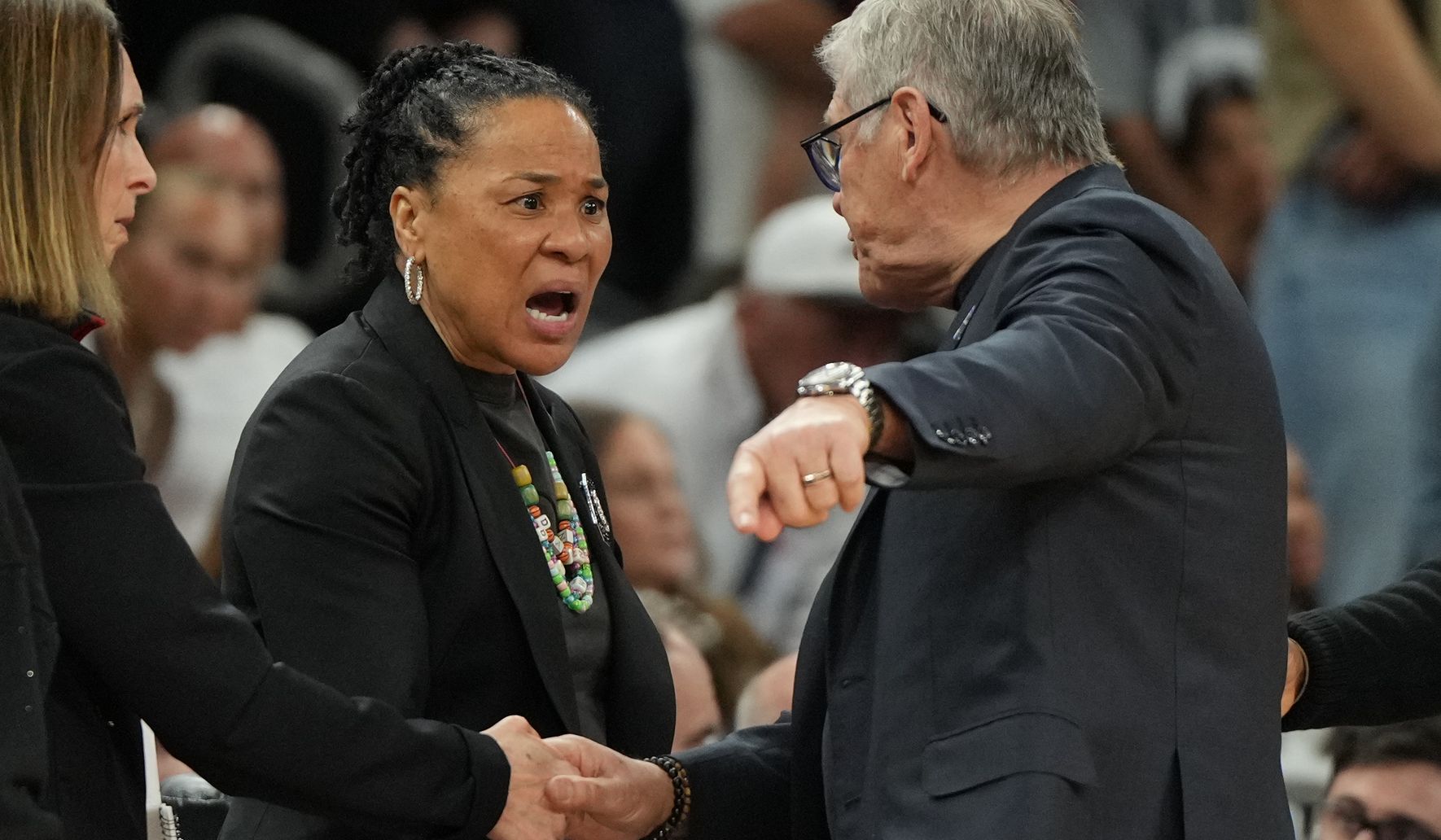
South Carolina and UConn remain in the spotlight after a heated exchange between their coaches at the Final Four, and both programs are now steering attention back to the players and the next steps for their seasons.
The Final Four clash between South Carolina and UConn brought more than just a close game; it included a visible confrontation between the two head coaches that quickly became part of the tournament conversation. That moment dominated headlines and social feeds for hours, shifting focus away from the athletes and on-court performances. People debated intent, context, and the proper role of coaches in high-pressure postseason settings.
South Carolina’s coach addressed the situation directly in the days that followed, calling for a return to focus on basketball fundamentals and team preparation. She stressed that the program’s priorities should remain on player development and discipline, not off-court drama. The message framed the incident as something to learn from rather than dwell on.
South Carolina women’s basketball coach Dawn Staley says it is time to move past her Final Four skirmish with UConn coach Geno Auriemma that became the talk of the tournament. Those exact words landed as a clear attempt to close the chapter, and they were repeated widely across media outlets and social platforms. The plainness of the statement left little room for misinterpretation about Staley’s intent to shift the narrative.
UConn’s storied reputation in the sport also colored reactions, since Coach Geno Auriemma is one of the most recognized figures in college basketball. Fans and analysts compared coaching styles and temperaments, which fed a broader conversation about personality clashes in competitive sports. That context made the incident feel larger than a single moment between two coaching icons.
Many former players and fellow coaches reminded viewers that emotions run high in February and March, but that leadership demands restraint. Veteran voices emphasized the ripple effects that a public spat can have on young athletes and recruiting. The commentary pushed toward constructive responses, including clearer boundaries during intense postseason moments.
Officials and conference administrators reviewed the interaction and the surrounding circumstances to determine if any further action was required. That procedural approach aimed to be measured rather than reactionary, reinforcing standards without inflaming the debate. Those reviews typically lead to reminders about sideline conduct and accountability for staff members.
For the athletes on both squads, the episode quickly became background noise as they concentrated on preparation and recovery. Players spoke in interviews about staying locked into game plans and not letting off-court issues affect performance. Coaches emphasized routines and film work to keep attention where it matters most: on execution and teamwork.
Sports media continued to break down the footage frame by frame, but the coaches and programs attempted to control the narrative by highlighting practice intensity and player milestones. That shift aimed to remind fans and commentators of the season’s broader storylines, including individual growth and team chemistry. It placed the incident in the context of a long schedule rather than treating it as the defining moment.
Social media reactions spanned from criticism to defense, reflecting the polarized nature of modern sports fandom. Analysts noted that viral moments often amplify perceptions and can overshadow quieter, more meaningful parts of a season. Club officials worked to respond proportionately, offering statements that acknowledged the moment without adding fuel to the fire.
Long-term consequences typically depend on whether similar incidents recur and how the programs manage follow-up behavior. Both South Carolina and UConn have deep institutional commitments to excellence and compliance, which gives them frameworks for addressing missteps. Emphasis on mentorship and internal discipline often proves more influential than public rebuke.
Recruiting conversations briefly included questions about program culture, but most evaluators said a single incident rarely outweighs sustained success and player development. Prospective athletes and their families look at coaching stability, academic support, and professional pathways as core considerations. Programs responded by highlighting those strengths and by underscoring their track records for preparing athletes for the next level.
Ultimately, the teams moved on to focus on what remains in front of them: practices, upcoming games, and postseason goals. Media cycles will revisit the exchange in retrospectives, but the immediate priority for both staffs is to advance competitive preparation. The incident left a mark on public perception but did not change the fundamentals of how either program operates day to day.

