

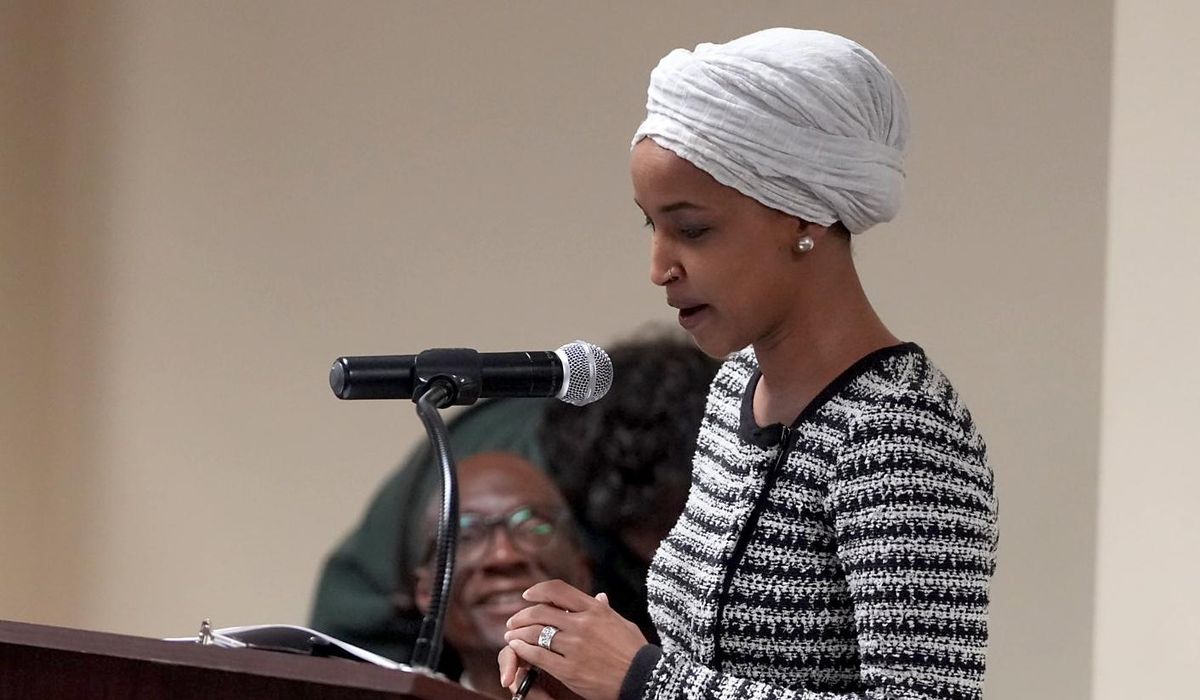
The incident at a Minneapolis town hall ended with a guilty plea, raising questions about security at public events and how the justice system responds to assaults on public officials.
“The man who squirted vinegar on Rep. Ilhan Omar during a town hall in January pleaded guilty Thursday to one count of assaulting a U.S. officer.” That arrest and plea came after a public disturbance that distracted from the intended civic exchange. The case is a clear example of how a single act can force the legal system to step in and address behavior that crosses into criminal conduct.
This wasn’t just a stunt caught on camera; it became a charge that moved through federal channels. Federal authorities treated the matter seriously enough to bring an assault charge against the individual, and the plea shows prosecutors believed they had a solid case. For Republicans watching, the immediate question is whether protections for public servants and the rule of law are being applied consistently.
Town halls are supposed to be places where citizens hold elected officials accountable face to face, not venues for physical harassment or attacks. When someone aims a substance at an elected representative, it elevates beyond protest into a safety issue. Conservatives argue that maintaining order at these events is essential so voters can question leaders without fear of escalation or physical confrontation.
Beyond security, this episode highlights the importance of consequences. A guilty plea to assaulting a U.S. officer sends a message that actions with the potential to harm or intimidate federal personnel will be met with legal response. Republicans often stress that enforcing the law is the right way to deter copycats and preserve civil discourse, rather than normalizing disruptive behavior as mere political expression.
The political climate makes every confrontation feel amplified, and that’s part of the problem. When partisan tensions run high, an incident like this can be spun into competing narratives instead of being assessed on the facts. A straightforward enforcement of statutes keeps the focus on conduct, not on who was targeted, which is what many conservatives want to see.
Courts and prosecutors have to balance free speech and protest rights with protection from assault and intimidation. Charging and accepting a plea in this case signals the system is prepared to draw that line when conduct crosses into criminal territory. Republicans will point to this as a reminder that law and order matter equally to everyone, regardless of the officeholder involved.
For voters and organizers, the lesson is practical: events must be managed to reduce risk, and those who cross the line should face clear consequences. That approach supports a stable environment where citizens can question officials without the scene devolving into chaos. Keeping enforcement predictable and firm is a position Republicans are likely to press as this case moves out of the headlines.

