

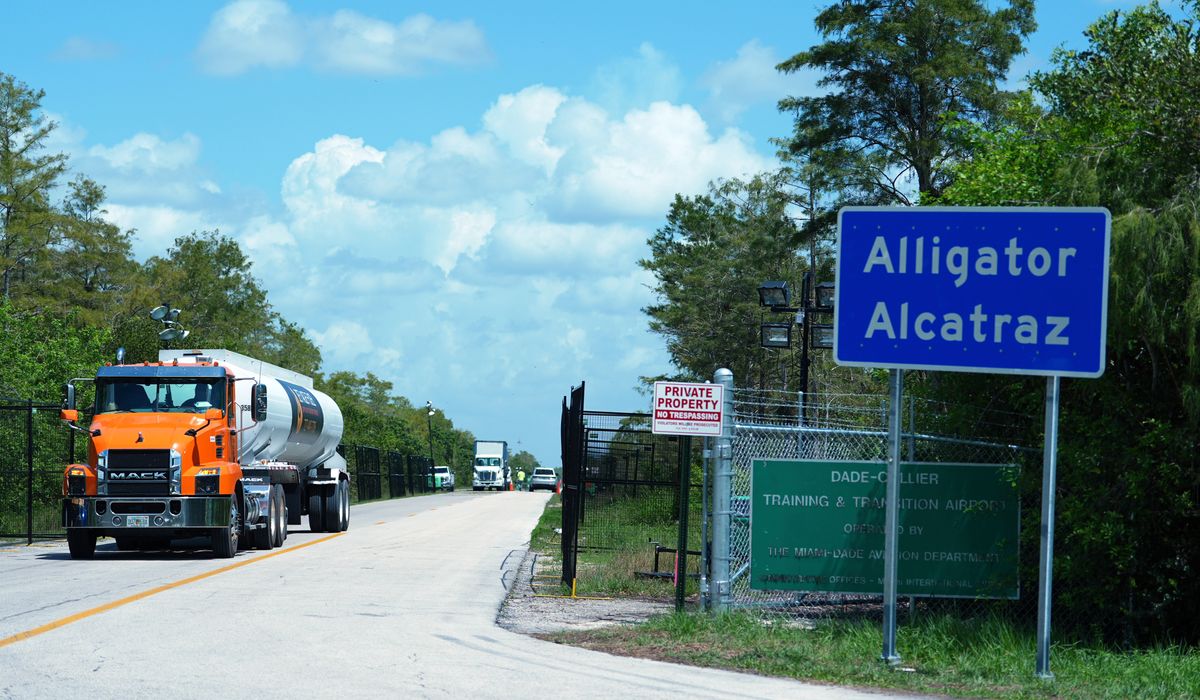
Florida’s move to open a short-term immigration facility drew sharp attention and clear messaging from the governor, who described the location as ” Alligator Alcatraz ” and said it was always intended to be temporary.
Governor Ron DeSantis made a point of framing the new facility as a time-limited response, insisting the state needed a way to manage an immediate and growing challenge at the border. His remarks underscored a broader Republican argument that states must act when the federal system fails to control illegal entry. The language used was blunt and aimed at signaling firm, practical action rather than a long-term policy shift.
The decision to open the detention site reflects frustration with what state leaders see as federal inaction on immigration enforcement. officials argued the surge of migrants overwhelmed local resources and required a temporary, secure place to process arrivals. That pragmatic rationale resonates with voters who prioritize order and public safety.
State officials emphasized that the center would handle intake, medical screening, and initial processing before transferring people to appropriate federal or private facilities. They highlighted logistics and short stays, stressing rapid movement rather than permanent accommodation. The intent is to reduce strain on hospitals, shelters, and local services while lawful procedures play out.
Critics warned about optics and human dignity, concerns DeSantis acknowledged but pushed back against by pointing to controlled conditions and necessary security. He and his team argued that without such steps, local communities face greater disorder and risk. The insistence was on balancing compassion with enforcement and protecting residents.
Republican leaders framed the move as a sober exercise of state authority when national policy falls short. They described it as a practical fix, not an ideological stunt, aimed at restoring predictability to border management. That message appeals to constituents who want borders enforced and communities safeguarded.
The facility’s temporary nature was repeated to counter accusations of permanence or punitive spectacle. Officials promised that processing times would be short and that the center would close once immediate pressures eased. That promise is meant to reassure both local stakeholders and skeptical observers.
Operational details focused on screening, law enforcement coordination, and humane handling for vulnerable people, especially children. State authorities said they would coordinate with federal agencies when possible and rely on experienced personnel to run day-to-day operations. Emphasis was placed on minimizing disruptions to neighboring communities.
Financial and legal questions still hang over the move, from cost to statutory authority, and some opponents vowed legal challenges. State officials counter that emergency measures are justified when federal systems are overwhelmed and public safety is at stake. The political fight is shaping up as another front in a statewide and national debate over immigration policy.
Public reaction was mixed, with supporters applauding decisive steps to regain control and detractors warning about precedent and reputation. The governor’s spokeswoman and allied lawmakers framed the decision as a necessary, temporary measure to protect Floridians. The rhetoric reflects a wider Republican pitch: enforce the law, relieve local strain, and demand federal accountability.
Whatever the outcome, the episode shows how immigration pressures force state leaders to make immediate choices when federal responses lag. The insistence on short-term intent, combined with open discussion of logistics and costs, aims to keep the debate practical and grounded. For now, the state says the center will remain a limited tool to address urgent needs while other solutions are pursued.

