

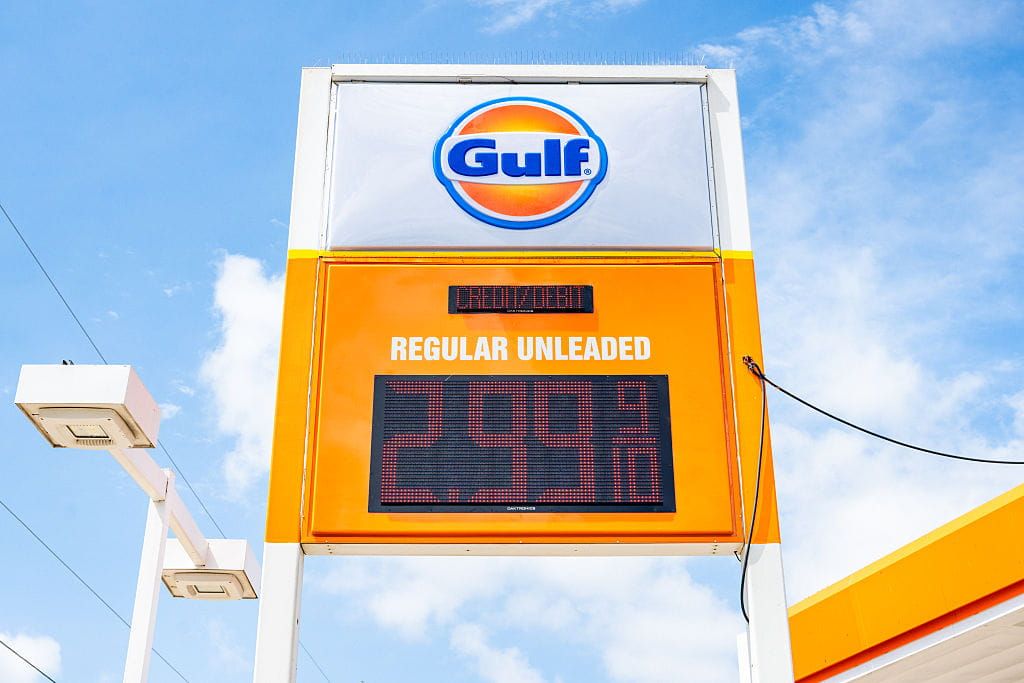
After a brief stretch of sub-$3 gasoline, a war in Iran and a shutdown of the Strait of Hormuz sent crude soaring — at one point Texas crude hit $119 and Brent topped $100 — pushing pump prices above $4.50 before markets and politics pushed them back down toward pre-war levels near $67 a barrel, even as global inventories remain thin and Persian Gulf output may not fully return until early next year.
At the start of the year, average gas below $3 per gallon felt like a rare win for drivers and for the broader economy. Then conflict in Iran upended that calm, creating a real supply shock because the Strait of Hormuz handles about 20% of the world’s oil. The result was a rapid spike in crude and a sharp jump in pump prices that many Americans felt immediately.
By the time markets reacted, retail gasoline topped $4.50 in many places, mirroring the move in crude where Texas crude climbed to $119 and overseas Brent traded above $100 per barrel. Because oil makes up roughly half of the retail cost of gasoline, the linkage was direct and painful. Those price swings pushed headline inflation higher and put pressure on household budgets right before the busy summer driving season.
Then prices started sliding back toward pre-conflict levels, roughly $67 a barrel for crude, as investors began to price in a potential easing between Washington and Tehran and the reopening of shipping routes. Economists talk about a rockets-and-feathers pattern — fast up, slow down — as the usual rhythm for fuel costs. What we saw instead was a faster retreat at the pump than many expected, a move that looks part market and part political.
That political angle is impossible to ignore. President Trump publicly scolded oil companies, accusing them of holding pump prices high even as wholesale oil costs dropped. He warned of federal scrutiny and directed enforcement attention to the issue, a move that put the industry on notice and may have accelerated price cuts at stations. For those paying at the pump, the political pressure felt like a lever as real as any market signal.
“The big Oil Companies are not dropping their price at the pump commensurate with the sharply lower prices they are paying for Oil. Those prices are dropping like a rock! In other words, customers are being ‘gouged,'” Trump wrote in a June 24 Truth Social post. “I have instructed the DOJ to immediately start looking into this. Gasoline prices better start going down a lot faster than what I’m seeing!” That quote landed with force, and stations that feared a federal probe likely factored it into pricing decisions.
Industry behavior still matters. Retailers often slow price cuts to avoid selling fuel bought at higher wholesale rates and to protect thin margins, which explains part of the rockets-and-feathers effect. But when policymakers publicly threaten action and watchdogs lean in, private firms change behavior quickly to avoid enforcement headaches. The mix of market dynamics and political signaling helps explain why prices came down faster than some models predicted.
Even with the recent relief, the outlook is messy and fragile. Global inventories sit at multi-decade lows, Persian Gulf production could take months to normalize and renewed Chinese fuel demand might push prices back up. As motorists head into the Fourth of July driving stretch, the immediate drop at the pump is welcome, but the fundamentals and geopolitics make any lasting forecast uncertain.

