

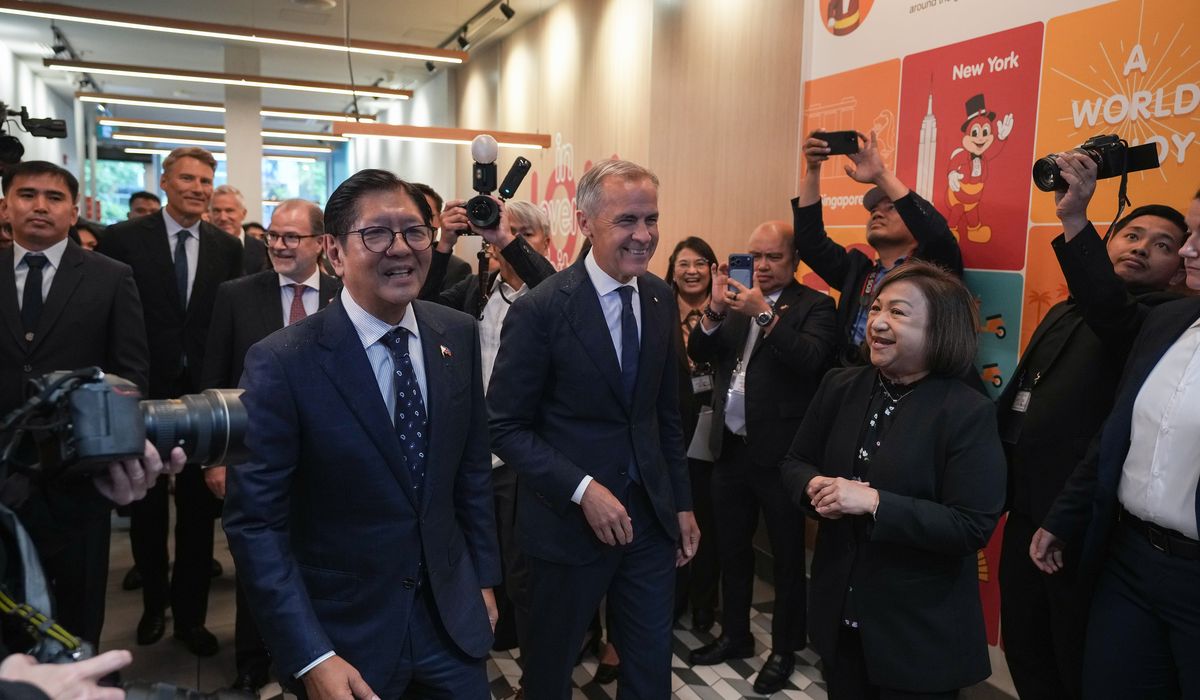
Canadian Prime Minister Mark Carney and Philippine President Ferdinand Marcos Jr. pledged Thursday to strengthen trade, energy and security ties as Canada works to diversify its economy beyond the United States.
This meeting between leaders signals an active push to broaden economic partners and deepen strategic cooperation. Both governments framed the talks around trade, energy and security, aiming to build practical partnerships. The discussion comes as Canada looks to reduce overreliance on a single market and explore wider Asia-Pacific opportunities.
Trade topped the agenda in plain terms: more two-way commerce, smoother market access and targeted investments. Officials discussed ways to reduce barriers and make supply chains more resilient without heavy-handed bureaucracy. The goal is straightforward: expand export markets for Canadian goods while opening Canadian investment to reliable partners.
Energy cooperation was a clear focus, with both sides exploring partnerships in conventional fuels and cleaner energy transitions. Canada can export energy products and expertise while learning from the Philippines on regional energy dynamics and resiliency. There was talk about practical projects and supply arrangements that boost reliability for both nations.
On security, both leaders emphasized shared concerns about regional stability and the need for predictable, rules-based cooperation. This is not about grandiose promises but about practical measures like maritime safety, information sharing and training. The approach favors concrete steps that improve deterrence and stability without escalating tensions.
Economic diversification was framed as sound strategy, not isolationism. For Canada, reducing dependence on one large market protects jobs and growth against shocks and political friction. The Philippines benefits from diversified partnerships too, gaining stable sources of investment, technology and supply chain redundancy.
Both sides indicated interest in leveraging private sector strengths rather than relying solely on government programs. That means encouraging companies to take on viable joint ventures, not subsidizing risky projects that taxpayers carry. Private capital and entrepreneurial initiative are central to sustainable, long-term ties.
People-to-people links were also on the table with attention to business delegations, student exchanges and technical training. These practical connections create the networks that underpin durable partnerships and make trade and security measures more effective. Small steps like professional exchanges can yield big returns in trust and capability.
From a Republican perspective, the focus should remain on national interest and clear-eyed partnership. Strong alliances are earned through shared goals, reciprocal benefits and accountability for results. This meeting signals a preference for pragmatic engagement over ideological theater.
Transparency and measurable outcomes came up repeatedly as necessary to maintain political and public support for deeper ties. Both governments know that deals must deliver jobs, energy security and credible steps that citizens can see. That means setting timelines, benchmarks and public reporting where appropriate.
There is room for real progress if both capitals keep the emphasis on concrete results and private-sector momentum. Expect follow-up working groups and targeted initiatives aimed at logistics, energy deals and defense cooperation. The tone of the talks suggests a willingness to move fast on specific, measurable projects rather than wait for perfect frameworks.
Risks remain, of course, including geopolitical pushback and the temptation to overpromise. The sensible path is incremental gains that build trust and economic benefit, not headline-grabbing commitments that never materialize. A steady, results-driven strategy will yield the most durable wins for both countries.
Ultimately, the leaders’ pledge underscores a strategic choice: diversify, secure critical supplies and partner with reliable democracies. That posture reduces vulnerability and strengthens national resilience. If implemented wisely, it will create more stable trade flows, better energy outcomes and clearer security cooperation for the years ahead.

