
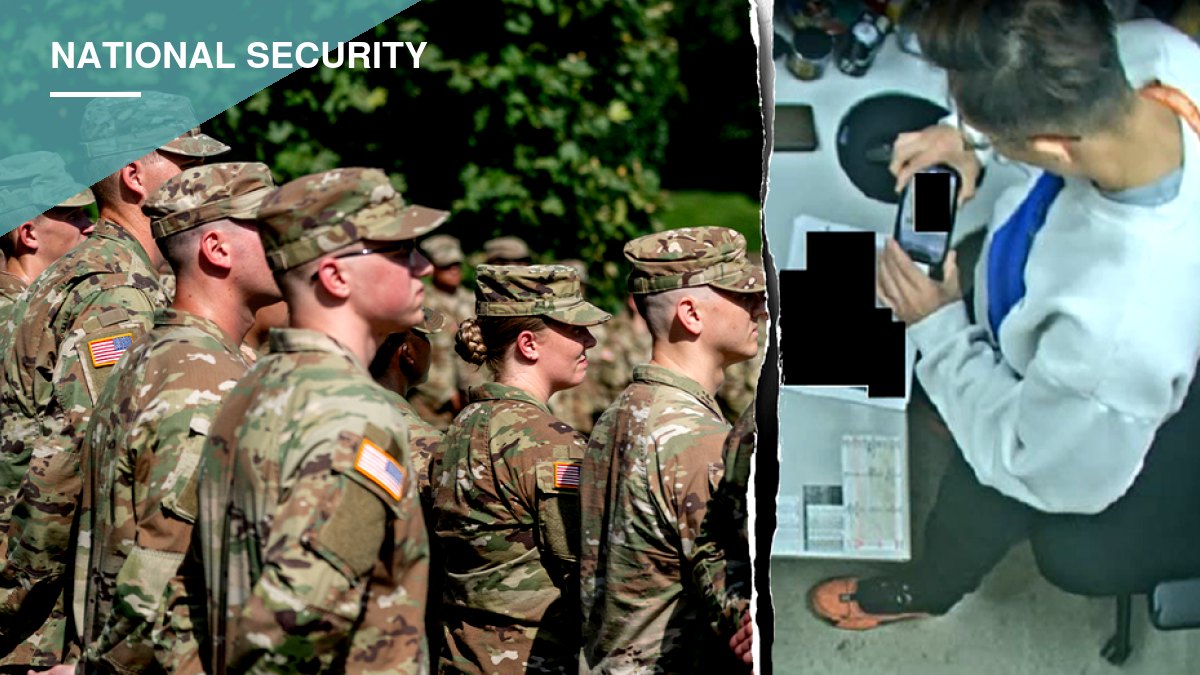
An active-duty Army sergeant stationed at Joint Base Lewis-McChord pleaded guilty Monday to a yearslong scheme that saw him turn classified access into cash, selling military secrets to buyers tied to China, the Justice Department said.
Jian Zhao, 37, admitted to using his personal cellphone to photograph restricted Army documents, passing along excerpts from technical manuals for the High Mobility Artillery Rocket System (HIMARS), and offering military computers and government hard drives for sale. Zhao pleaded guilty to conspiring to gather, transmit and transfer national defense information.
Zhao enlisted in the Army in 2017 and served as a battery supply sergeant at Joint Base Lewis-McChord in Washington, a posting that gave him security clearance and access to sensitive information and equipment, according to prosecutors. The documents he photographed touched on Army operations, communications networks, military exercises, and rocket and missile systems. He also took military storage devices without authorization and collected thousands of dollars for materials he himself described as sensitive, secret or top secret.
U.S. Attorney Scott E. Bradford said the case underscores the stakes of safeguarding military trust.
“Protecting our national security depends on holding accountable those who compromise their oath and endanger the security of our armed forces,” Bradford wrote on X. “Jian Zhao violated that trust by exploiting his access to military information and equipment for personal profit while knowingly providing materials to individuals linked to China.”
Prosecutors trace the scheme to late 2021, when Ruoyu Duan, a former Army soldier living in Hillsboro, Oregon, recruited Zhao and other active-duty troops to supply defense information and helped arrange payment from buyers in China. Duan has previously pleaded guilty to conspiring to transmit national defense information.
Federal agents arrested Zhao at his home in Lacey, Washington, on March 6, 2025, recovering roughly $30,000 in cash, electronic devices and multiple Army hard drives. Under his plea agreement, Zhao agreed to forfeit $17,500 in proceeds from the scheme and give up any claim to the seized cash.
Brig. Gen. Sean Stinchon, who leads Army Counterintelligence Command, said the plea reflects a serious breach of military obligation.
“This guilty plea reflects a deliberate betrayal of the oath every Soldier takes to defend our nation and safeguard our fellow service members,” Stinchon said, adding that the scheme put fellow soldiers at risk and urging troops to report suspicious activity or outreach.
Doug Olson, the FBI’s special agent in charge in Portland, echoed that message.
“By pleading guilty, Jian Zhao has admitted to betraying that trust and abusing the responsibilities that came with his position and security clearance,” Olson said. “Those who choose to compromise sensitive military information for personal gain put our nation’s interests at risk, and the FBI, alongside our law enforcement and military partners, remains committed to holding them accountable.”
Zhao faces up to 10 years in federal prison, a $250,000 fine and up to three years of supervised release. Sentencing is scheduled for March 1, 2027.