

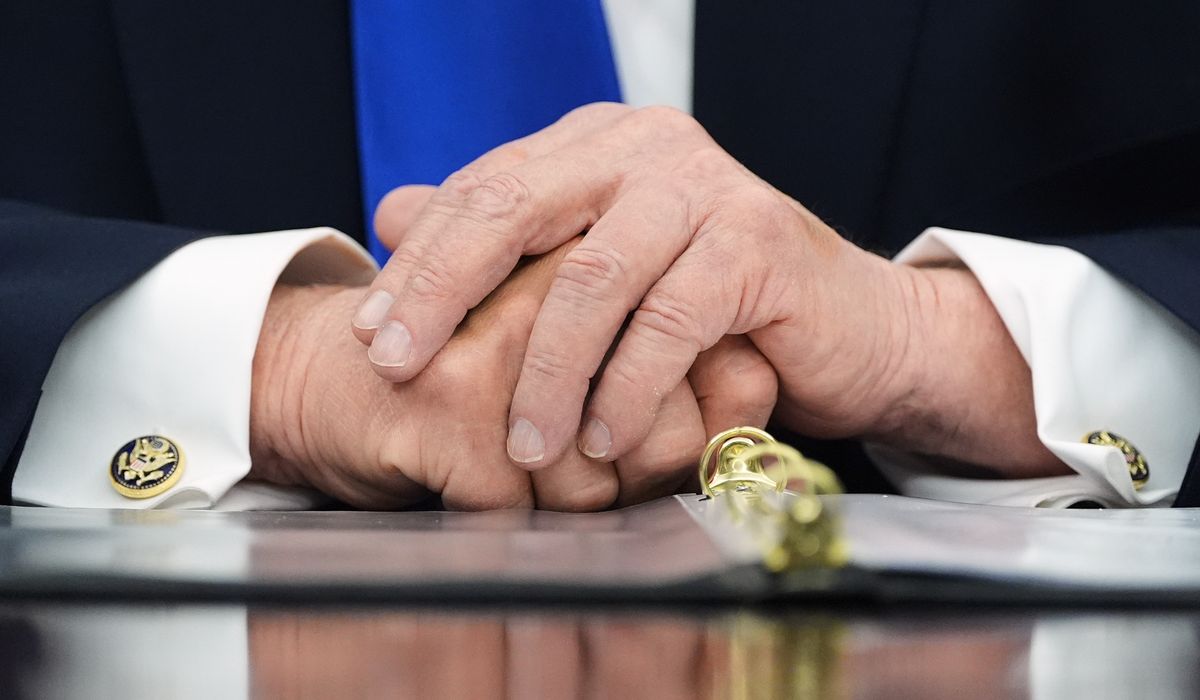
President Trump left written instructions for Vice President J.D. Vance inside the Resolute Desk, according to a senior White House official, a detail that has stirred strong reactions and raised questions about continuity, symbolism, and the seriousness of contingency planning in the current political climate.
“President Trump has left written instructions for Vice President J.D. Vance inside the Resolute Desk should he ever be killed in office, a senior White House official revealed Wednesday.” That line landed hard because it is blunt and literal, and it shows a level of preparation some critics call dramatic and some supporters call responsible. Whatever you think, it is a concrete example of one team’s approach to worst-case planning.
Having a written note tucked into the Resolute Desk is as much symbolic as practical, and a Republican read sees it as a straightforward act of prudence. Leaders plan for emergencies so the nation does not descend into confusion, and a private instruction can help ensure a smooth handoff of urgent priorities. In that frame, the move signals respect for the office and for those who might have to step in under dark circumstances.
Choosing J.D. Vance as the intended recipient of those instructions speaks to a specific political logic. Vance is a conservative figure who has been closely aligned with Trump-era priorities, and naming him underscores loyalty and policy continuity. For supporters, that is reassuring: it shows the president thought about who would carry forward his agenda if the unthinkable happened.
Critics will say this is theatrical and plays into a media spectacle, and they have a point that optics matter in politics. But optics cut both ways; the physical act of leaving a note in the desk is private and deliberate, not a stunt meant for cameras. From a Republican perspective, practical readiness outweighs the possibility of awkward headlines.
There is also a legal and constitutional angle to consider. The rules for succession are clear on paper, but real-world transitions can be messy if key people lack direction during the first frantic hours. Written guidance is one way to reduce confusion and speed decision-making when seconds count, and that matters for national security and for the continuity of government functions.
Security professionals will note that relying on a physical note inside a public residence or office carries risks, so the idea should be coupled with secure protocols and briefings. Nothing about being prepared requires exposing classified details or inviting breaches, and the smart play is to keep sensitive plans under tight control. The headline-grabbing element does not change the fact that continuity planning happens at every level of government.
This episode also highlights a political truth: opponents will always find reasons to criticize, while allies will look for evidence of strength and foresight. For Republicans who value steady leadership and a clear line of succession, the existence of instructions is evidence the president takes the job seriously. It is a reminder that in rough times, priorities and personnel choices matter to how recovery and continuity play out.
How people react next will depend on their view of leadership and risk. Some will insist on more transparency about contingency protocols, while others will trust that private instructions are appropriate and necessary. Either way, the note in the desk has already shifted the conversation toward the practical realities of governing under pressure rather than abstract partisan talking points.

