

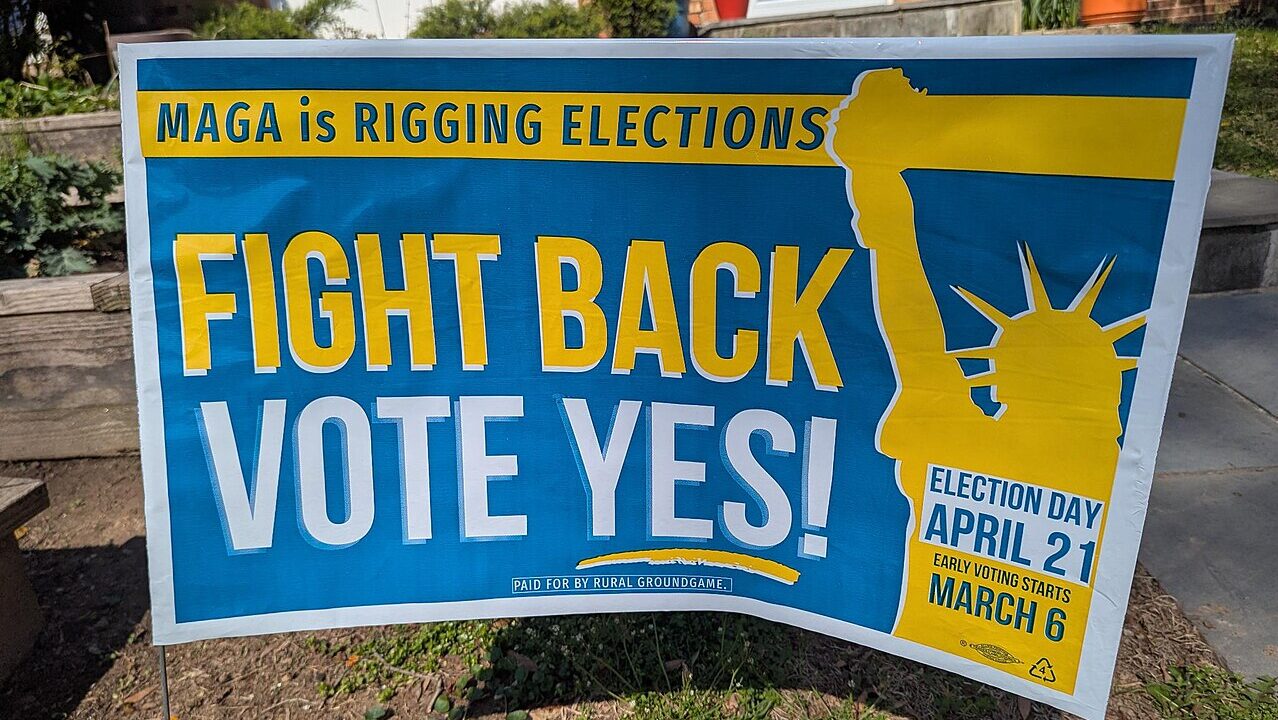
Virginia’s Supreme Court threw out a proposed congressional map that would have tilted representation heavily toward Democrats, overturning a 10-1 plan and producing an unexpected advantage for Republicans in the redistricting fight.
Virginia Democrats pushed a congressional plan that would have produced a 10-1 split in their favor, and the state’s highest court rejected it as unconstitutional. The decision is a clear rebuke of a partisan gerrymander that tried to lock in political power. Voters and candidates will now face a different electoral map than what the party sought to impose.
The ruling arrived after a heated fight over district lines, legal standards, and who gets to draw maps. Judges emphasized constitutional limits and traditional districting principles rather than political convenience. That insistence on law over raw partisan advantage is what ultimately sank the proposal.
The court’s action handed Republicans a tactical win that few expected from state-level fights this season. Republican strategists are already recalculating their plans for outreach and resource deployment in districts that may now be more competitive. The practical effect is a better shot at balancing representation and preventing a single party from dominating by fiat.
Public reaction has been sharp, with critics saying the move restored some measure of fairness to the mapmaking process. Supporters of the struck map argued it reflected demographic shifts and political realities. Still, the court found the plan crossed constitutional lines in ways that could not stand.
Legal experts pointed to the court’s reliance on precedent and neutral criteria when evaluating the map. The ruling did not hinge on partisan outcomes alone but on how the lines were drawn and whether they respected community boundaries and equal representation. That framework made the rejection harder to challenge on purely political grounds.
Republicans framed the decision as vindication for fighting aggressive partisan maps, and they warned that unchecked gerrymanders would erode voter confidence. The party emphasized that courts stepping in sends a message: mapmakers can’t bend constitutional rules to guarantee election results. That argument resonated in conservative legal circles and among voters concerned about fairness.
Democrats, meanwhile, defended their plan as an attempt to reflect political realities and protect communities of interest. They argued the maps were drawn with intent to represent changing populations and partisan turnout patterns. The court’s rejection forced them to retreat from an approach that would have concentrated power narrowly.
The episode also drew national attention because a similar outcome was not delivered in another redistricting battle, where Republican-controlled Indiana reportedly declined to produce a comparable result for its own party. That contrast has been used to argue that some states tolerate gerrymanders while others do not. It underscores how variable the mapmaking process can be across states.
A notable line from the coverage captured the moment’s irony: “Virginia Democrats […]” That exact phrase circulated in analysis and commentary as shorthand for a wider debate about partisanship and law. It highlights how a brief quote can become a rallying point in political reporting.
The timing of the ruling matters because maps shape electoral contests for years, and legal decisions made now will affect candidate planning and voter outreach. Parties must adapt quickly when courts intervene, shifting where they focus volunteers, ads, and fundraising. That scramble sometimes changes the texture of campaigns in short order.
Beyond immediate politics, the case will likely influence future redistricting fights by reinforcing legal guardrails. Mapmakers on both sides will have to account for constitutional constraints and anticipate judicial scrutiny. That dynamic could curb the most extreme attempts to lock in one-party advantages.
Critics of heavy-handed redistricting say this ruling should be a warning to lawmakers who try to engineer outcomes rather than represent people. The message from the court was procedural and constitutional: you can’t bypass rules to secure elections. Conservatives welcomed that stance as protection for voters and electoral integrity.
For regular citizens, the decision offers mixed signals: court oversight can prevent blatant abuses, but uncertainty remains until new maps are finalized. Voters should expect shifts in how districts are drawn and who competes where, and both parties will press their cases in courtrooms and legislatures alike. The next phase of redistricting is now underway.
Whatever comes next, the Virginia ruling demonstrates that courts remain a central battleground for where political lines get drawn. Parties will keep pushing until maps meet legal tests or the political winds change. In the short term, Republicans see a practical advantage from a decision that blocked an extreme Democratic map.

