

China’s military could be leveraging access to advanced American semiconductors and artificial intelligence infrastructure—through espionage, evasion of export controls, or lax oversight—to build weapons capable of threatening U.S. forces, according to two leaders of a congressional watchdog body who spoke with Fox News Digital.
The warning comes from the U.S.-China Economic and Security Review Commission’s 2026 annual report, which concludes that Beijing is working to get around existing American export controls to obtain advanced semiconductors for use in military modernization.
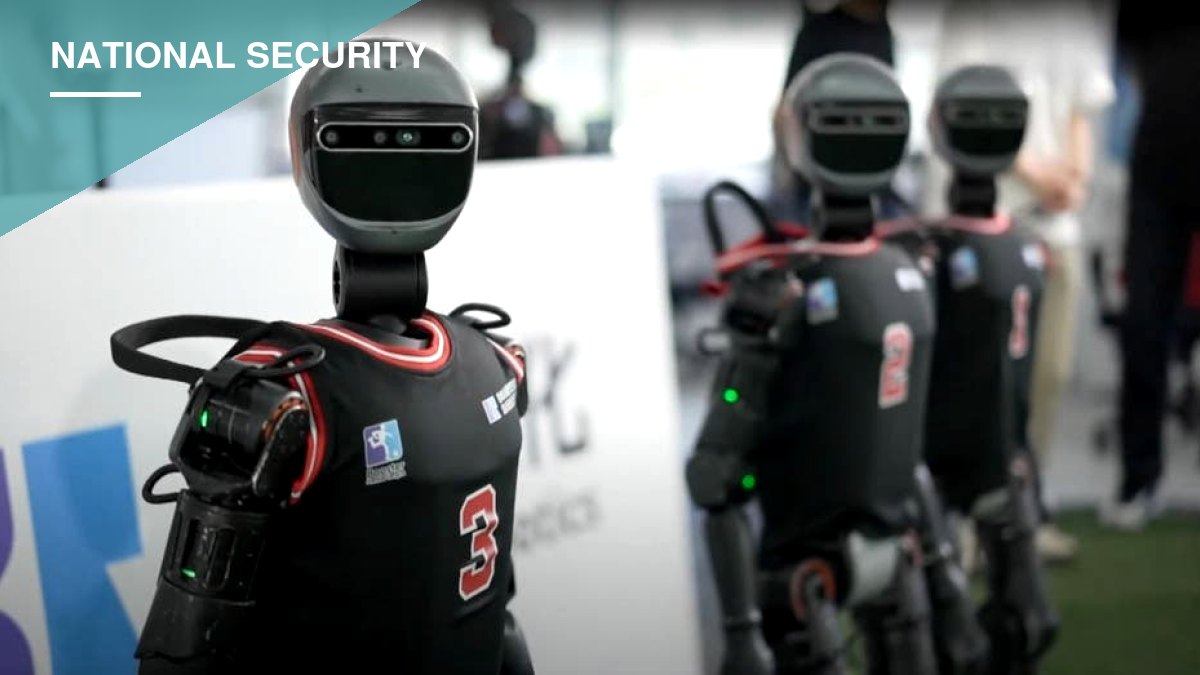
Citing an April 2026 assessment from Georgetown University’s Center for Security and Emerging Technology, the commission reported that China’s People’s Liberation Army has been soliciting advanced Nvidia chips to build AI-enabled military capabilities. The report describes Beijing’s pursuit of what it calls “intelligentized warfare”—folding AI into weapons systems, targeting, command structures and logistics.
Commission Vice Chairman Mike Kuiken said the danger isn’t limited to chip sales themselves but extends to foreign access to computing infrastructure more broadly.
“Anytime the Chinese gain access to advanced chips, we are helping them,” Kuiken told Fox News Digital.
Commission Chairman Randall Schriver acknowledged the risk, citing permitted sales of dual-use technology, insufficient cybersecurity safeguards, and American investment flows into China as contributing factors.
“I think we need sort of a comprehensive look at how the Americans are either wittingly or unwittingly contributing to Chinese military modernization,” Schriver said.
Kuiken also raised the possibility that Chinese AI developers or military-linked institutions could obtain access to powerful data centers outside China’s borders. “If we’re doing it knowingly, we need to bring it to an end,” he said.
Nvidia Under Scrutiny
The commission’s warnings land amid intensified scrutiny of Nvidia’s dealings with China. Reuters reported on Nov. 18, 2026, that Nvidia had halted shipments of its licensed Hopper-generation AI data center chips to Chinese customers, according to interim CEO Colette Kress.
The findings also arrive alongside a separate controversy involving Nvidia co-founder and former CEO Jensen Huang, who resigned in November after revelations of extramarital affairs, including one with Chinese businesswoman Alice Huang, whom U.S. authorities have suspected of having intelligence ties to Beijing.
Jensen Huang has denied knowing about her alleged intelligence connections, and Beijing has rejected the espionage accusations. Nvidia’s board has launched an independent investigation. U.S. authorities have not conclusively established that Alice Huang was spying for Beijing, and Fox News Digital, which first reported these details, said it could not independently verify the allegations.
Beyond Hardware
The commissioners warned that China’s military advances aren’t limited to acquiring American hardware. “Denial and deception is part of the CCP’s standing doctrine, and that extends to the PLA, so I’m sure there are things we have yet to discover,” Schriver said, pointing to China’s expanding use of AI-enabled military systems, including autonomous unmanned platforms.
Kuiken said Beijing is increasingly folding advanced AI into military technology it already has in service. “We are absolutely seeing the PLA take the technologies that they have on the shelf today and figuring out how they can deploy the most advanced artificial intelligence capabilities into that ecosystem so that they can gain advantage,” he said.
Notably, China’s Foreign Ministry struck a more conciliatory tone on AI security in a Nov. 19, 2026, statement following a meeting between President Xi Jinping and President Donald Trump in Shenzhen, saying: “China and the United States should strengthen communication and coordination, prevent the security risks of AI, and ensure that AI is always under human control.”
Data Protection as a Priority
The commission’s report also names protection of American data as a top national security priority, warning that AI tools make it easier to identify cybersecurity vulnerabilities and compromise sensitive systems—concerns raised against a backdrop of recent high-profile outages affecting the NSA, Apple and Chase Bank.
Asked about those disruptions, Kuiken said increasingly capable AI models are lowering the bar for finding weaknesses in software systems. “These frontier models are incredibly good at cyber, which means they’re good at coding and coding means it’s very easy to find vulnerabilities in things,” he said. “You’re basically seeing these leading organizations around the world do everything they can to lock down their organizations to make sure they’re not vulnerable.”
Kuiken said the commission’s top recommendation this year is centered on protecting American data, framing it as both a security and economic imperative. “One, we want to protect it to keep ourselves secure and two, we wanna deploy it in the models that we have with the democratic world, controls to get economic benefit from it,” he said.
The commissioners did not draw any direct connection between the recent technology outages and Chinese cyber operations. Fox News Digital said it reached out to the White House and the Chinese Embassy in Washington for comment but did not receive a response before publication.

