

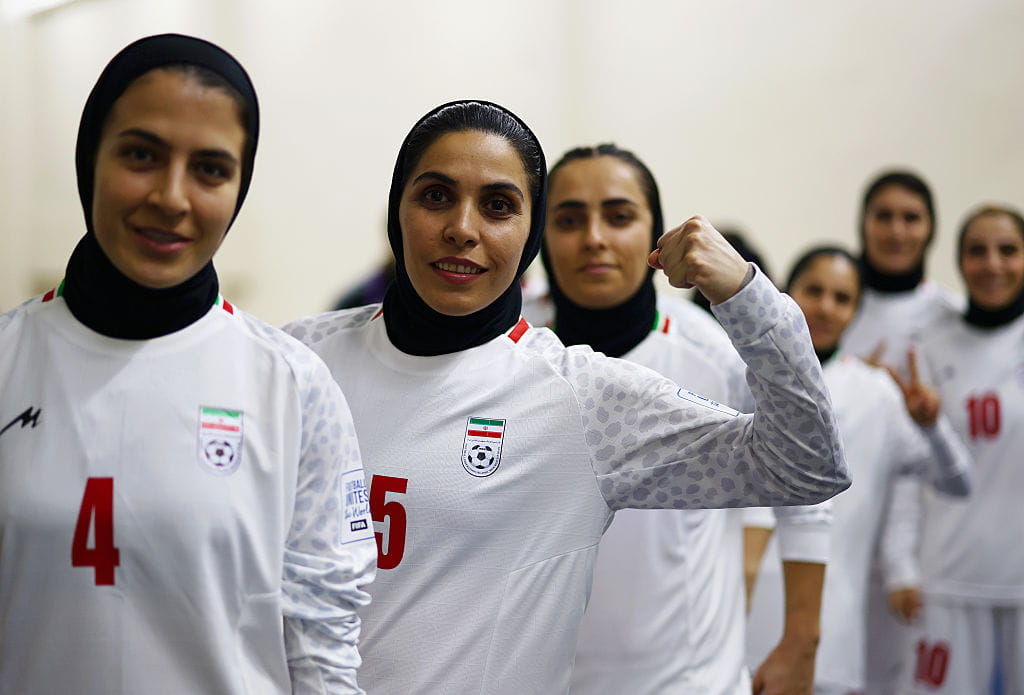
Five members of Iran’s women’s national soccer team who were labeled “traitors” on state television after refusing to sing the national anthem during the Asia Cup have withdrawn their asylum applications in Australia amid fears for their safety and uncertainty about next steps.
The players initially sought humanitarian protection in Australia because they feared persecution at home for their actions during an international tournament. Their refusal to sing the anthem became a flashpoint, triggering state media outrage and accusations that are still being used to punish dissent. That public vilification raised immediate concerns about retaliation against athletes who challenge Iran’s strict social and political rules.
The label “traitors” was applied on Iranian state television, a blunt example of how the regime uses media to intimidate and control. When athletes speak out or act in ways that contradict official expectations, the response can be swift and severe, with careers, travel, and even personal safety at risk. Those consequences create an environment where seeking safety abroad can seem like the only realistic option for many.
Australia’s humanitarian system was the destination chosen by these women because it offers legal pathways and protections for people fleeing persecution. Applying for asylum requires proof of a credible fear of harm, which can be a heavy burden for applicants who lack documented threats or face intimidation that is difficult to prove from afar. The withdrawal of their claims does not mean the risks they cited have vanished; it may reflect practical, legal, or emotional pressures that influenced their decision.
There are several plausible reasons people in their position might withdraw an asylum claim, including family concerns, fear of reprisal against relatives back home, or doubts about their ability to meet asylum requirements. The uncertainty of prolonged legal battles and the psychological toll of living in limbo weigh heavily on applicants. For athletes accustomed to regimented schedules and public scrutiny, the chaos of displacement can be particularly destabilizing.
The broader context matters: Iran has a history of policing public behavior, especially for women, and punishing those seen as challenging state norms. Sporting events have become a stage for both protest and state control, putting competitors in a crossfire between personal conscience and official expectations. That dynamic turns routine decisions into high-stakes gambits with life-changing consequences.
From a Republican perspective, this episode underscores the importance of standing up to authoritarian regimes that weaponize media narratives and legal systems to silence dissent. Democracies should offer refuge to people targeted for exercising basic freedoms, and strong support for persecuted athletes sends a clear message that principles matter. Encouraging firmness in defending human rights also means making asylum processes accessible and efficient for genuine cases.
There’s also a practical angle: national teams and sports federations must recognize the risks their athletes face and take preventive steps, including legal advice and contingency planning for international travel. Sports governing bodies should not ignore the political dimensions of international competition when athletes’ safety is at stake. Protecting players requires both institutional awareness and international cooperation to prevent reprisals.
The withdrawal of these asylum claims will be read differently by different audiences: some will see it as a retreat born of fear, others as a pragmatic response to a difficult legal reality. Whatever the interpretation, the underlying issues remain—the players faced public shaming, potential punishment, and a tough decision about seeking safety abroad. Those realities should prompt continued attention to how regimes treat dissenting voices and how democratic nations respond when people seek protection.

