

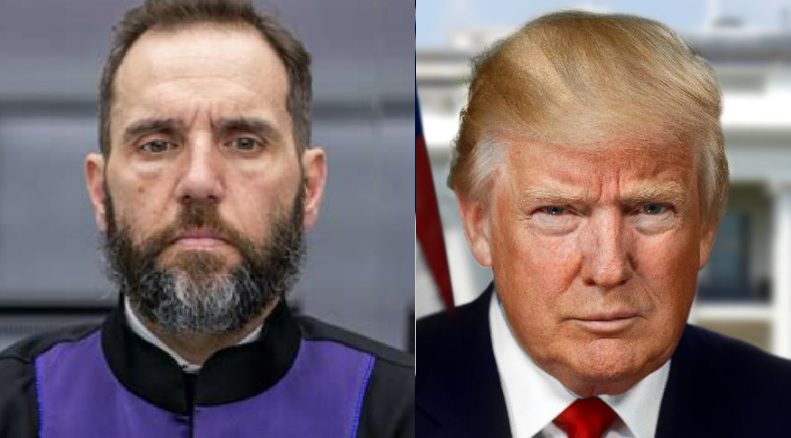
On Tuesday, Judge Tanya Chutkan approved Special Counsel Jack Smith’s request to submit a 180-page “opening brief” against former President Donald Trump in connection with the January 6 case in Washington, D.C.
This move has sparked controversy, with Trump’s legal team accusing Smith of attempting to influence the upcoming election by releasing a lengthy and critical document before the trial.
Jack Smith, who is investigating Trump’s role in the events of January 6, 2021, sought approval for what is considered an unusually large and detailed filing.
Trump’s attorneys had previously argued that the document far exceeds the standard page limit for such filings, which is typically much shorter in the D.C. district court.
In their view, the request is part of a broader effort to present damaging information about Trump in the lead-up to the 2024 presidential election.
Judge Chutkan, who was appointed by former President Barack Obama, granted the request despite the objections from Trump’s legal team.
Trump’s attorneys had argued that the 180-page brief is a calculated attempt to sway public opinion against Trump before voters head to the polls.
They also claimed that the brief, which touches on issues of presidential immunity in the January 6 case, is designed to exploit the media’s coverage of the trial for political purposes.
In response to Judge Chutkan’s decision, Tom Fitton, the president of Judicial Watch, tweeted: “Obama appointee Judge Chutkan doubles down in changing the rules to allow Biden-Harris-Garland appointee Jack Smith to smear @RealDonaldTrump a month before the election.”
Fitton criticized the Republican-controlled House for continuing to fund Smith’s investigations, even as the special counsel’s actions come under scrutiny.
Trump’s legal team also emphasized that the brief could unfairly shape the election dialogue.
They argued that it is impossible for Trump to fully respond to the allegations due to a gag order imposed on him in the case.
This gag order limits Trump’s ability to publicly address or refute any claims made by Jack Smith or the prosecution.
As a result, Trump’s attorneys contend that Smith’s extensive document will enter public discussion without Trump being able to offer his defense without risking legal penalties.
In their filing, Trump’s lawyers pointed to the Justice Department’s own guidelines, known as the “60-day rule,” which is meant to prevent actions that could influence an election.
They cited the Justice Manual, which states: “Federal prosecutors and agents may never select the timing of any action… for the purpose of affecting any election.”
Trump’s team accused Smith of violating this guideline by pushing to release such a significant document so close to the election, calling it a clear violation of the Department’s internal rules.
Judge Chutkan, however, rejected these arguments, dismissing Trump’s request to deny Smith’s filing and to reconsider the pre-trial briefing schedule.
By doing so, she paved the way for Smith’s detailed accusations to be formally submitted in court, setting the stage for an intense legal battle as the case moves forward.
This development is likely to fuel further debate about the intersection of the legal system and political elections in the coming months.

