

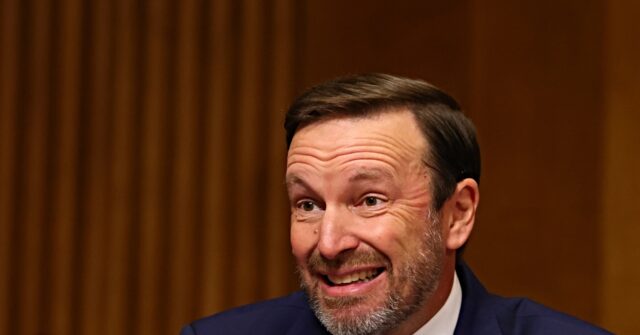
Senator Chris Murphy, a Democrat from Connecticut, has introduced an amendment to a defense spending bill that seeks to significantly raise the National Firearms Act (NFA) tax on suppressors. Currently set at $200, this tax is poised to drop to zero due to recent legislative language. However, Murphy’s proposal aims to reverse this by increasing the tax on suppressors and short-barrel rifles to a staggering $4,709.
In addition to targeting suppressors, Murphy is looking to increase the tax on “Any Other Weapons” (AOWs) from the current five dollars to $55. This move has garnered support from groups like the Brady Campaign, who praised Murphy’s efforts. They expressed their gratitude for his initiative to counteract the provision that would have eliminated taxes on what they term “deadly silencers” and other weapons.
The Truth About Guns has reported extensively on Murphy’s push, highlighting the significant leap in taxes he is advocating for. Guns.com echoed these sentiments, noting the positive response from anti-gun groups. It’s clear that Murphy’s amendment is a point of contention, especially among Second Amendment defenders.
AWR Hawkins, a prominent Second Amendment columnist for Breitbart News, has been vocal about such legislative moves. His work, including his newsletter “Down Range with AWR Hawkins,” often examines these issues through a conservative lens. Hawkins is well-regarded in the world of gun rights advocacy, bringing a historical and analytical perspective to the debate.
Conservatives argue that increasing taxes on firearms suppressors is a step towards infringing on Second Amendment rights. Many believe that such fiscal measures are a backdoor attempt to limit access to firearms. They view the proposed tax hike as an unnecessary burden on law-abiding gun owners.
Critics of Murphy’s proposal suggest that it unfairly targets responsible gun owners rather than addressing the root causes of gun violence. They argue that suppressors, often referred to as silencers, are misunderstood tools that primarily protect hearing. These tools, they assert, should not be subject to punitive taxation.
The proposed amendment has sparked a flurry of discussion among conservative commentators. Many see it as emblematic of a broader agenda to control gun ownership through legislative means. This aligns with a long-standing belief that the left seeks to erode Second Amendment rights incrementally.
Supporters of increased firearm taxes argue that they reflect necessary adjustments for inflation and public safety. However, opponents counter that such measures disproportionately affect those least able to afford them. This economic argument resonates deeply within conservative circles.
Fox News and other conservative outlets have been covering the amendment’s progress closely. They report that the proposal is part of a larger pattern of regulatory overreach. This is seen as a direct challenge to the principles of gun ownership and personal freedom.
The debate surrounding suppressor taxes is not new, but Murphy’s amendment has brought it back into the spotlight. It’s a reminder of the ongoing clash between differing philosophies on gun control. The conversation continues to be a defining element of the national dialogue on firearms.
Murphy’s advocacy for higher taxes on firearms has galvanized both support and opposition. Those in favor see it as a necessary measure for safety, while critics view it as an infringement on rights. This dichotomy is central to the enduring debate on gun legislation.
Newsmax has highlighted the role of organizations like the Brady Campaign in supporting Murphy’s proposal. They emphasize the divide between those who view firearms as a fundamental right and those who see them as a public health concern. This division is a recurring theme in the discourse on gun control.
As discussions progress, the amendment’s fate remains uncertain. What is clear, however, is the strong sentiment it has provoked on both sides. This tension underscores the complexity and passion inherent in the American conversation about guns.
Murphy’s proposal serves as a focal point for broader ideological battles. It encapsulates the ongoing struggle between regulatory measures and constitutional freedoms. For many, it is a litmus test of where lawmakers stand on issues of liberty and control.
The response from the gun rights community has been swift and substantive. Organizations and individuals alike have mobilized to voice their opposition. This mobilization is indicative of the high stakes involved in the debate over firearm legislation.
Ultimately, the outcome of Murphy’s amendment will be a significant indicator of the political climate surrounding gun rights. The conversation it has sparked will likely continue to resonate in legislative corridors. Each development in this narrative adds a layer to the complex tapestry of American gun politics.

