

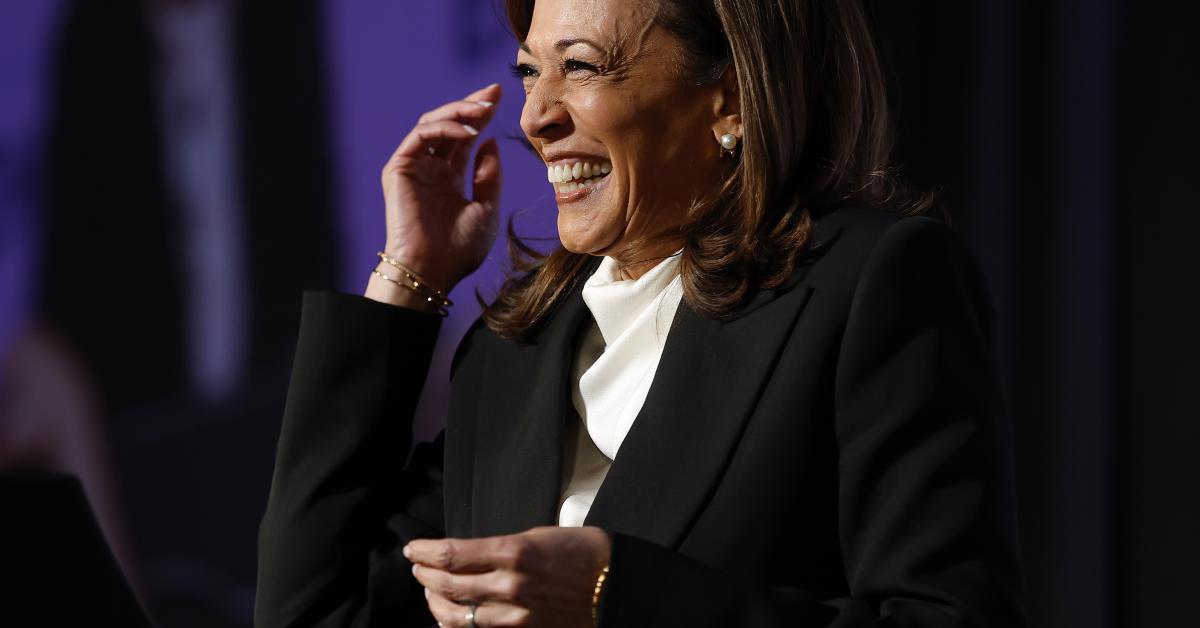
Kamala Harris told reporters she supports the “Democratic nominee” in the New York City mayoral contest, yet she notably declined to name the man many expected her to endorse. “Look, as far as I’m concerned, he’s the Democratic nominee and he should be supported,” she responded when pressed about the race. That phrasing felt calculated and clipped, the sort of national-level spin voters now expect from political veterans.
Harris was asked directly whether she would back Zohran Mamdani during an interview, and she sidestepped the chance to give a clear, personal endorsement. Instead she offered another shorthand line: “I support the Democrat in the race, sure.” The double vagueness — not naming a candidate and not articulating why — leaves room for every faction in her party to interpret the message in its own way.
She also insisted the Democratic Party shouldn’t lose sight of local leaders beyond New York, pointing to elected officials she called “stars” around the country. “I hope that we don’t so over-index on New York City that we lose sight of the stars throughout our country,” Harris said, explicitly invoking a broader team of Democrats. That sentiment is fine in theory, but it reads like a defensive note aimed at tempering criticism of national involvement in local fights.
Why it matters
The split in Democratic response to the NYC field is no small detail; it shows a party juggling competing constituencies. Senate Minority Leader Chuck Schumer has been cautious about lending his full-throated support, while progressives such as Rep. Alexandria Ocasio-Cortez and Sen. Bernie Sanders have embraced Mamdani. That contrast matters because it signals that top-down endorsements are less decisive when the base itself is fractured along ideological lines.
On the ballot, Mamdani faces an unusual mix: former Governor Andrew Cuomo and current Mayor Eric Adams are running as independents even though they are long-time Democrats, and Republican Curtis Sliwa remains in the race as the conservative alternative. Those dynamics turn a municipal contest into a proxy fight over the soul of the city and, by extension, the national party brand. Voters who want clear choices may find themselves confronted with messaging that feels muddled or evasive.
From a Republican viewpoint, Harris’s choice to wrap an endorsement in vagueness is a missed chance to hold a candidate accountable to clear commitments and to let voters weigh specifics. When national figures refuse to name names, it suggests they want to avoid blame if a candidate stumbles or to dodge intra-party blowback from rival factions. That kind of managerial caution can come across to voters as elitism, the same aloofness that drove political backlash in previous cycles.
There’s also a strategic point here: local races are where parties either repair their brand with ordinary voters or let it fray further. National endorsements can help by concentrating fundraising and attention, but they can also inflame local resentments if they appear to impose an outside will. Harris’s language — broad, protective of the party tent, but light on specifics — looks like an attempt to have it both ways, pleasing activists without angering moderates.
Progressives will read her comments as validation that the national party will tolerate their choices, even when those choices are controversial or polarizing. Moderates and independents, by contrast, may hear little reassurance about competence, crime, schools, or services that directly affect daily life in New York. That disconnect feeds political opportunity for Republicans who can run disciplined, issue-focused campaigns and present themselves as the alternative to intra-party squabbling.
Another angle is accountability. Endorsers who name names create a paper trail and stake a political claim that can be judged later at the ballot box. Evasive endorsements leave no such trail and make it harder for voters to assess whether national leaders stand behind candidates when policy decisions matter most. From an electoral perspective, that lack of clarity is a self-inflicted handicap in a closely watched contest.
Harris’s comments also highlight a broader trend within the modern Democratic Party: the tension between a national brand that wants unity and local realities that demand nuance. When national figures weigh in, they need to balance loyalty to the party with an honest assessment of who can win and govern. Saying “support the Democrat” is neat from a messaging standpoint, but it risks appearing hollow when voters want concrete answers.
Ultimately, this episode will play out in multiple ways on the ground: in fundraising, volunteer energy, media narratives, and the choices of undecided voters. Republicans will argue that the Democrats’ public hesitation shows weakness and a lack of confidence in their own rising stars, while Democrats will frame Harris’s comment as principled unity. In the end the voters decide, and ambiguous national statements have a way of galvanizing opposition rather than calming it.
For now, Harris’s approach is emblematic: careful, wide, and noncommittal — the kind of political posture that keeps options open but rarely inspires. If the goal was to unify a fractious field, words like “Democratic nominee” do the job only halfway; voters who want leadership and answers will likely want more than a label and a reflexive nod of support.
n
h/t: Just The News
n

