

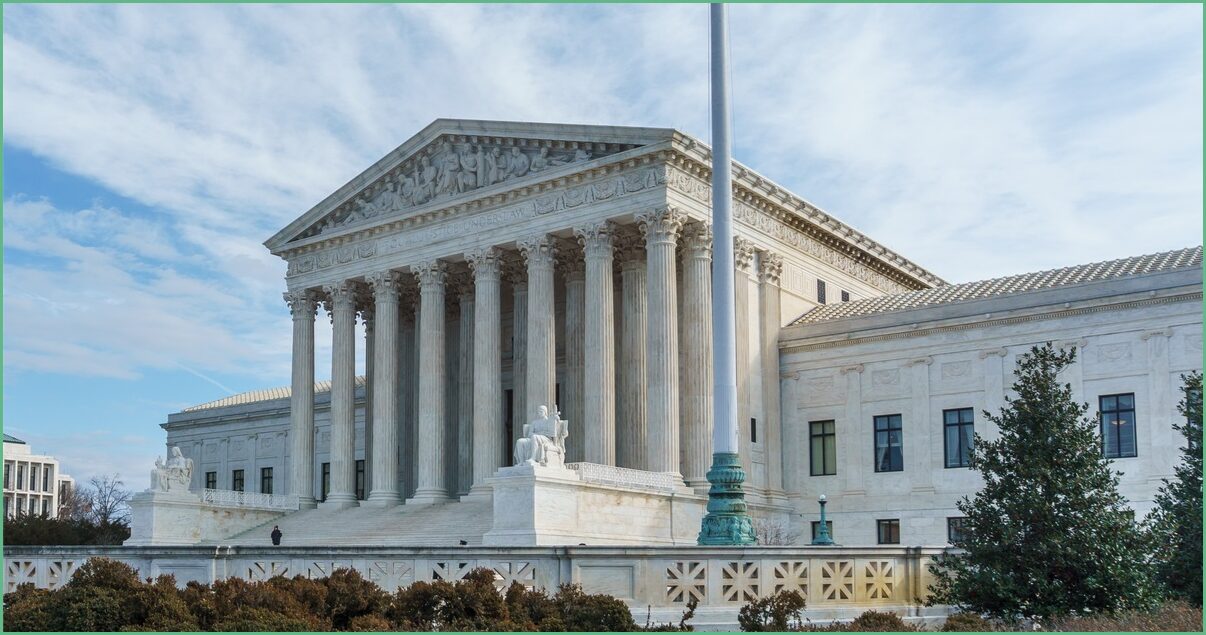
The Supreme Court is about to hear arguments over President Donald Trump’s firing of Federal Trade Commission Commissioner Rebecca Kelly Slaughter, and the stakes could not be higher for presidential authority. This case is being framed as a test of whether modern presidents can meaningfully supervise the executive branch. The outcome will likely reshape how Washington balances power between elected leaders and so-called independent agencies.
A 1935 precedent on the chopping block
At the center of the dispute is a long-standing decision, Humphrey’s Executor v. United States, decided in 1935, which has limited a president’s power to remove officials at independent agencies. Legal conservatives argue that the ruling is an anachronism that weakens accountability and creates a class of public officials who are effectively insulated from presidential oversight. In plain terms, critics say Humphrey’s lets bureaucrats act like kings inside a kingdom the president is supposed to run.
Hans von Spakovsky, a legal fellow at the Heritage Foundation, made that point bluntly in public comments, arguing for a clearer chain of command. “The Constitution says the president is the head of the executive branch,” von Spakovsky explained in a statement to Fox News. That line is central to the Republican case that the president must be able to remove executive officers who thwart official policy.
The case will force the court to confront whether the original Humphrey’s rationale still holds up when modern agencies exercise broad regulatory and enforcement power. Humphrey’s was decided in a different era, when the administrative state was much smaller and less intrusive. For critics, precedent should not be an excuse to preserve outdated legal constructs that shield unelected officials from democratic accountability.
What a decision could mean for Washington
Law professors and conservative thinkers predict the ruling could ripple far beyond the FTC and change how multiple agencies operate under presidential administrations. “I think this ruling will necessarily reach beyond the FTC,” Blackman stated. “The only question is whether they maintain that the Federal Reserve is different.”
That warning matters because the Federal Reserve, the Consumer Financial Protection Bureau, the Securities and Exchange Commission, and several other bodies could all be affected if the court narrows or overturns Humphrey’s. A decision that restores stronger removal power to the president would allow more direct supervision of enforcement priorities and regulatory agendas. Supporters argue this would make agencies more responsive to voters and elected leaders, not less.
Opponents say striking down Humphrey’s would inject politics into expert work and destabilize institutions that need independence for credibility. Republicans, by contrast, view the move as restoring constitutional order and preventing regulatory capture by career bureaucrats. This debate is ultimately about whether America wants elected officials to be accountable for the actions of the executive branch.
The timing of this case also matters politically, because it arrives amid broader conservative momentum to re-evaluate how courts treat stare decisis, the doctrine that favors following precedent. Conservative jurists argue that blind allegiance to precedent can cement bad law and prevent necessary corrections. Those arguments resonate with voters who feel that entrenched bureaucrats are not answerable to them.
Supreme Court Justice Clarence Thomas has made comments that underline this approach, questioning whether precedent should be treated as untouchable. “At some point we need to think about what we’re doing with stare decisis,” Thomas said publicly to a law-school audience. He cautioned against treating settled law as a sacred cow when it clashes with constitutional text and history.
Thomas pushed the point further in remarks that challenge ritualistic legal deference. “And it’s not some sort of talismanic deal where you can just say ‘stare decisis’ and not think, turn off the brain,” the Republican-appointee stressed. Those words signal appetite on the court to revisit decades-old decisions rather than accept them uncritically.
The justice also suggested that precedent should be rooted in something more defensible than mere habit. “the precedent should be respectful of our legal tradition and our country and our laws and be based on something, not just something that somebody dreamt up and others went along with.” That sentence captures the conservative critique that some precedents lack solid constitutional grounding.
Even Thomas acknowledged the limits of judicial certainty and the need for humility in legal change. “I don’t think that I have the gospel, and I don’t [think] that any of these cases that have been decided are the gospel,” he declared. His frankness frames the debate as one about principle and institutional design rather than partisan score settling.
If the court sides with the president, the decision will be hailed by conservatives as a step toward restoring the separation of powers and political accountability. If it upholds Humphrey’s, defenders of the administrative state will claim a victory for institutional stability and depoliticized governance. Either way, the ruling will reverberate through rulemaking, enforcement, and the daily reality of how federal agencies operate.
For voters and policymakers alike, the case is a reminder that legal doctrine shapes political power in practical ways. The next Supreme Court opinion on this matter will not be quiet legal text; it will be a blueprint for how much control future presidents have over the federal bureaucracy. That makes this dispute essential reading for anyone who cares about who calls the shots in Washington.

