

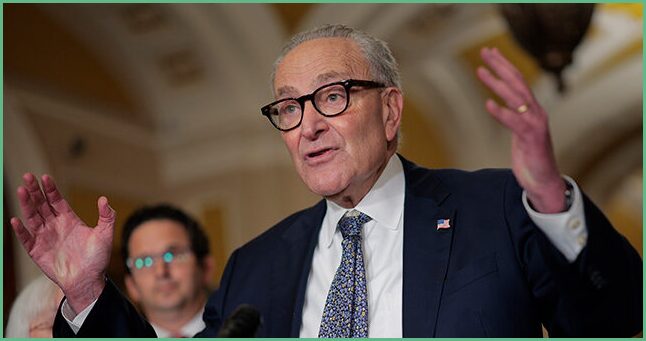
Democrats have made their bed, but whether they can sleep in it – or eventually get out – is anyone’s guess.
Look, this isn’t about gloating. It’s about pointing out that decisions have consequences, and right now those consequences are showing up in the real world where people live, work, and raise families.
The policies pushed by the left over the last few years promised utopia and delivered uncertainty, higher costs, and weaker borders, and voters notice that kind of mismatch fast.
Take the economy: inflation ate at paychecks while Washington celebrated recovery numbers that didn’t match the checkout line reality.
Families paid more for groceries and gas while politicians traded blame and spun technical statistics, and that disconnect creates anger and distrust.
Energy policy is another glaring example where idealism met reality and left people freezing or filling up at more expensive pumps.
Shifting away from reliable domestic production without a realistic transition plan meant fewer jobs and higher prices, and everyday Americans paid the bill.
On immigration, open-door rhetoric turned into overwhelmed communities and a crisis at the border that shows no signs of a coherent fix from those in charge.
Communities want orderly, lawful immigration, not chaotic flows that strain schools, hospitals, and housing, and leaders promising both outcomes are losing credibility.
Crime and public safety aren’t abstract talking points; they’re the streets people walk down every day, and rising disorder erodes trust in leadership fast.
When prosecutors refuse to enforce laws and politicians prioritize messaging over results, you get neighborhoods that feel less safe and people who vote their feet and their ballots.
The cultural fights matter too because they shape institutions that raise our children and preserve our history, and many Americans feel sidelined by elite mandates in classrooms and boardrooms.
Cancel culture and one-size-fits-all policies from coastal power centers leave a lot of Americans feeling unheard and dismissed, which fuels resentment and turnout on election day.
Meanwhile, the media’s protective spin for incumbent power structures only deepens the divide between reality and the headlines, and that gap erodes trust in institutions that used to serve as neutral referees.
Public faith matters; when it falls, democracy gets choppy and things break in ways you can’t easily fix with a press release or a few polling numbers.
Republicans should not only point out failures, but also offer clear, practical alternatives that address pocketbook concerns, secure borders, and restore order without needless drama.
Policy proposals should be measured, explainable, and immediate—tax relief where it helps, energy strategies that lower costs now and responsibly look to the future, and enforcement that restores confidence locally.
Electoral strategy matters too; showing up in suburbs, speaking plainly to small-business owners, and reconnecting with working-class voters will beat fuzzy rhetoric every time.
We win by being the adults in the room who solve problems rather than performing moral superiority while handing people uncertainty and higher bills.
That’s not just politics; it’s a responsibility to be effective stewards of people’s lives, and voters reward competence when they see it backed by results.
If Democrats want to sleep in that bed they made, fine—but voters should remember the cost and the alternatives when they head to the polls.

