

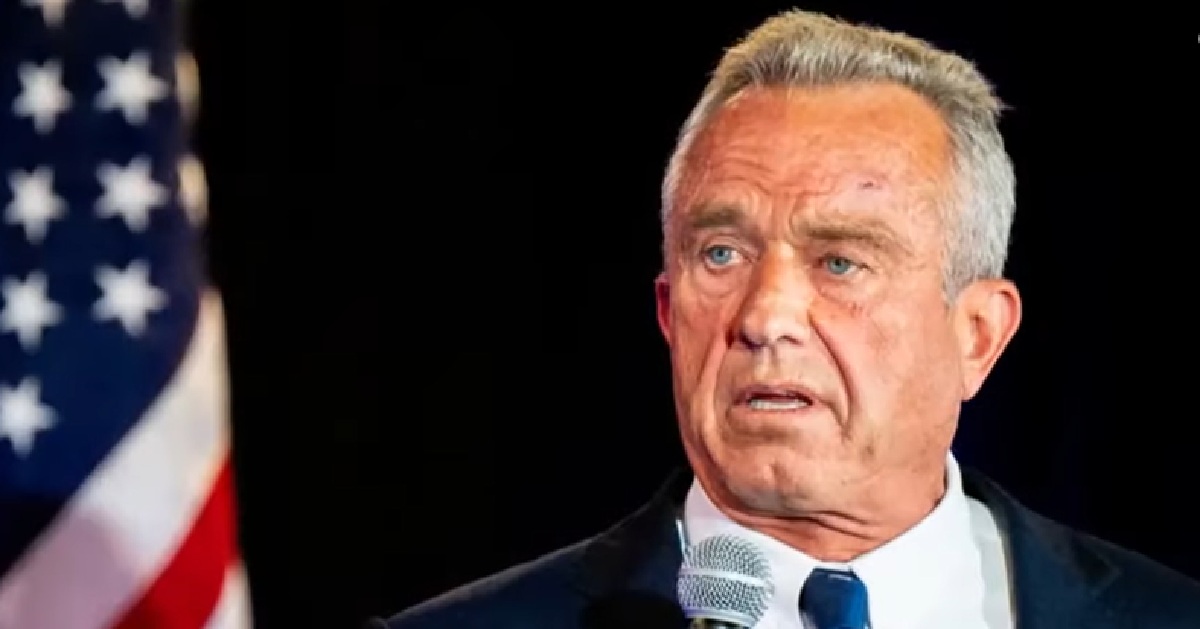
Cheryl Hines, wife of Health and Human Services Secretary Robert F. Kennedy, Jr., spoke publicly about allegations that surfaced during her husband’s 2024 campaign and made clear she’s standing by him. She addressed the controversy on the Katie Miller Podcast and pushed back at the idea that a few sensational headlines should define a marriage. The story reconnects the campaign-era reporting, the reporter at the center of the dispute, and Hines’s direct comments defending her husband.
Hines appeared on the Katie Miller Podcast and framed the episode as one more confusing flap in a campaign season full of noise and distraction. She was pointed and personal, stressing private discussions over public chatter when it comes to their marriage. Her reaction fits a familiar pattern: a spouse choosing to treat allegations as claims to be vetted, not verdicts to be lived by.
The alleged sexting controversy first surfaced while Kennedy was campaigning for president in 2024, drawing new attention to old campaign chaos. “At the time, he was also embroiled in a scandal with 32-year-old New York Magazine reporter [Olivia] Nuzzi, after it emerged that the pair became ’emotionally involved’ while she was writing a feature on his campaign.” That development was widely covered and became part of the larger narrative around his run.
Kennedy consistently denied any improper relationship and insisted encounters were limited, pushing back against sensational reporting at the height of the story. The reporting thread also included the claim that Nuzzi was let go, even though an internal investigation by New York Magazine found “no inaccuracies nor evidence of bias” in Nuzzi’s reporting on Kennedy. That line has been used by both defenders and critics to argue opposing points about media fairness and campaign pressure.
Now the reporter at the center of that episode is preparing a memoir that reportedly touches on the messages she received, a move that will reignite interest and invite fresh scrutiny. Memoirs sell on conflict and candid detail, and this one promises to revisit the private-public mess that dogged parts of the campaign. For Republicans watching, the timing and tone of such releases often looks like another media play rather than a neutral illumination.
Hines explained to Katie Miller why she could stand by her husband while the headlines circulated and lawsuits of rumor rolled by. She framed her approach as pragmatic and grounded in private conversation rather than public rumor. Her focus was on scrutinizing the source and then discussing realities directly with Kennedy.
“I think you always have to consider the source, right? So that’s where I start. And then it ends with a conversation with Bobby.”
Hines also offered a broader take on why some stories gain traction and why personalities are often pulled into the spotlight for reasons beyond simple reporting. She suggested a pattern where attention and clout drive behavior, not necessarily the pursuit of truth. That critique lands with anyone who has watched late-night headlines chase clicks instead of facts.
“There’s a lot of people who look for clout. Well, that’s the thing that I really learned during the campaign,” agreed Hines. “There are people that really want to be involved in the conversation. They want to be a part of it. And they want to-, I’m not just talking about this person, I’m talking about a lot people.
And they spend a lot time figuring out how to write something that’s going to get people’s attention, and if they do, then they are really celebrating, you know? And whether it’s true or false, it doesn’t matter if it gets people’s intention, it’s a celebration, it’s a success for them.
Kennedy and Hines have been married for 11 years, and she made clear that brief scandals and media cycles are not going to be the measuring stick for their relationship. She framed the episode as a recurring lesson in how stories spread and how couples cope when private matters leak into public life. For those on the right, her comments reinforce a broader skepticism about the press and a call to weigh allegations carefully before letting them define people and politics.

