

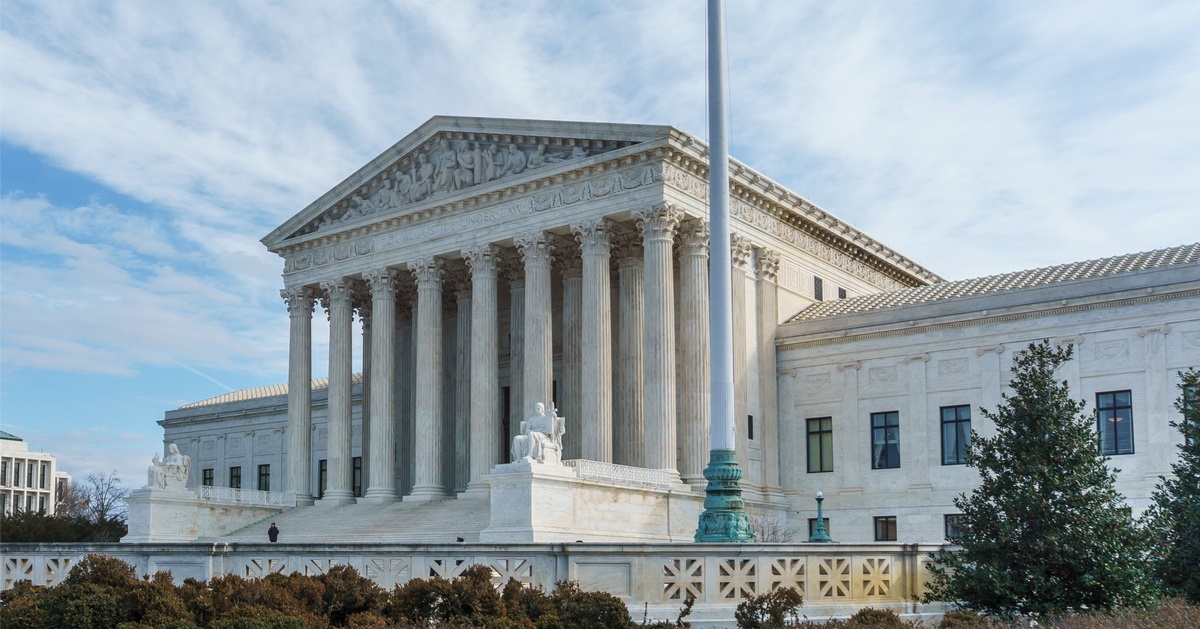
President Donald Trump’s push to send roughly 300 National Guard troops to protect federal officers in Chicago has been temporarily blocked by the Supreme Court in a 6-3 order, a decision that raises questions about federal authority, state sovereignty, and public safety.
The Supreme Court issued a temporary block on the planned deployment after lower courts found the administration had not met the legal standard for invoking a rarely used federal statute. The move prevents about 300 Guardsmen from being federalized to shield federal personnel, including ICE officers, while litigation moves forward.
From a conservative perspective this is more than a legal skirmish; it’s about whether the federal government can act when federal officers face real danger. If federal protection is constrained, local taxpayers could end up paying the bill for unrest and property damage while federal personnel operate without additional safeguards.
The administration said it relied on a seldom-used federal law to federalize the Guard, arguing that protesters in Chicago were assaulting and threatening ICE personnel. That move triggered a lawsuit from Illinois, which argued the state’s law enforcement could handle the situation and that federal action would intrude on state control.
The state attorneys insisted, “The planned deployment would infringe on Illinois’s sovereign interests in regulating and overseeing its own law enforcement activities,” a direct claim that framed the case as a clash over sovereignty. Illinois leaders tied the deployment to partisan disputes over immigration enforcement and local priorities.
The Court’s majority explained that the term “regular forces” referred to the U.S. military rather than civilian agencies like ICE, signaling a narrow reading of the statute. Justices also flagged concerns about the Posse Comitatus Act and the danger of turning soldiers into domestic police without explicit congressional authorization.
That legal reasoning matters because it sets boundaries on how and when the federal government can use armed forces within U.S. cities. For those who prioritize law and order, the ruling feels like a missed opportunity to protect federal personnel on the ground from escalating confrontations.
Justice Samuel Alito, joined by Justice Clarence Thomas, wrote a blistering dissent calling the majority’s approach “unwise” and “imprudent.” Alito made a forceful point: “Whatever one may think about the current administration’s enforcement of the immigration laws or the way ICE has conducted its operations, the protection of federal officers from potentially lethal attacks should not be thwarted.”
Alito’s dissent frames the dispute as a simple question of officer safety versus legal technicalities, and that argument resonates with voters worried about violence against government workers. The dissent also underscores a broader unease among conservatives about courts trimming executive flexibility on security matters.
This decision comes as part of a pattern of judicial pushback against efforts to deploy federal resources in cities like Portland and parts of California. Similar legal challenges have blocked moves intended to protect federal facilities and personnel, creating a patchwork of outcomes across jurisdictions.
The Department of Homeland Security criticized Illinois leadership for what it viewed as inaction during anti-ICE unrest in Broadview, stressing that federal officers were placed at risk. Illinois countered that most protests were peaceful and that the state has systems in place to handle disorder without federal intervention.
The clash will likely continue through the courts, with implications beyond Chicago for how administrations secure federal functions in the face of local resistance. For voters and officials focused on safety, the core issue remains whether legal limits are hamstringing reasonable steps to protect people who enforce federal law.

