

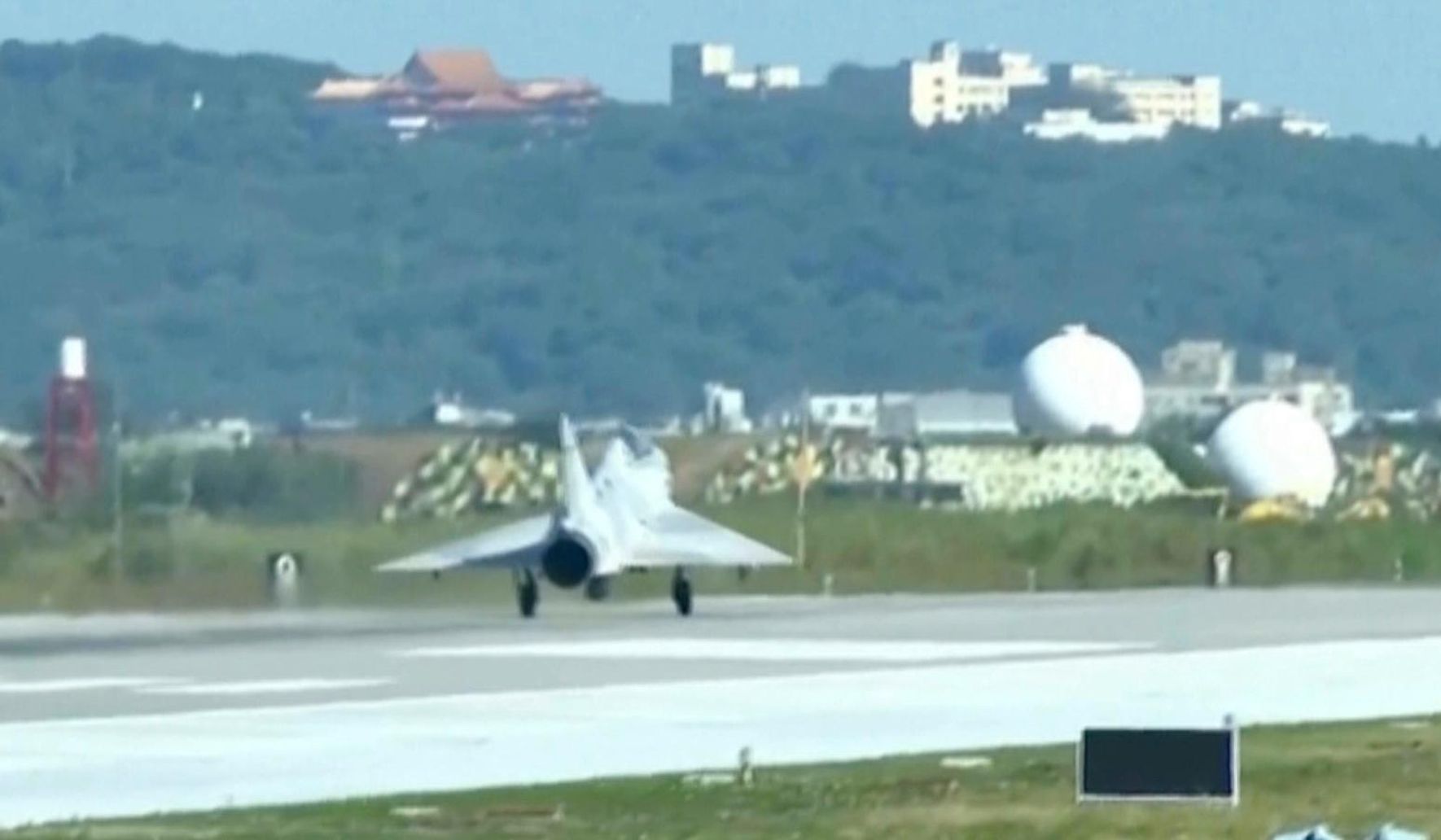
China staged broad military drills around Taiwan on Monday, sending army, navy, air force and rocket force units into coordinated operations labeled Justice Mission 2025, a move that raises regional tensions and draws sharp comment from U.S. and allied observers.
What happened near Taiwan this week was unmistakable: coordinated drills meant to test and display multi-branch capability. The operation, called Justice Mission 2025, involved units from the army, navy, air force and rocket force moving in concert around the island. That kind of joint activity signals a step up from single-branch probes to a more integrated campaign posture.
From a Republican perspective, Beijing’s maneuvers look like deliberate coercion aimed at reshaping the status quo by force or the threat of force. Those close to defense matters see joint exercises as rehearsals for blockade, isolation, or worse. Americans who value a stable Indo-Pacific should watch such integrated operations with concern.
Beyond the symbolism, these drills test logistics, command-and-control, and the ability to coordinate air, sea and strike assets under pressure. That operational focus matters because it narrows the window for effective deterrence if conflict ever erupts. A credible defense requires anticipating those cross-domain linkups before they are fielded as doctrine.
Taipei’s position remains difficult: it must demonstrate resolve and readiness without provoking an all-out confrontation. The island’s forces have limited depth compared with China’s growing inventory, and Republicans often argue that strong, visible deterrence is the most reliable means to prevent escalation. Deterrence can be political, military and economic, and each layer matters when facing a strategic competitor.
Hill Republicans and defense hawks often frame China’s drills as a warning to democracies that rely on a rules-based order. They point to the pattern of increasing pressure around Taiwan as part of a broader geopolitical push by Beijing across the South China Sea and beyond. This is not just a local tussle; it’s a strategic test for allies and partners across the region.
For Washington, then, clarity of purpose and persistent support for partners are central talking points among Republican leaders. That includes demonstrating capabilities that complicate Beijing’s plans and signal that any attempt at forcible change would be costly. The emphasis is on deterrence through strength and coalition cohesion rather than accommodation in the face of coercion.
Analysts tracking the drills note that joint-force training can reveal technical gaps as well as tactical confidence. Observers will be looking at sortie rates, replenishment lines, and the integration of long-range strike assets. Those details tell you whether an exercise is a show of force or a step toward operational readiness for a real campaign.
In public discourse, the narrative matters: presenting the drills as routine misses the broader intent behind integrated operations, while alarmism without context undercuts steady policy. Republicans typically favor a direct framing: this is pressure that tests U.S. alliances and the will of democracies in the region. The practical response, from that viewpoint, is measured reinforcement of deterrence and clearer signals that stability is a shared interest.

