

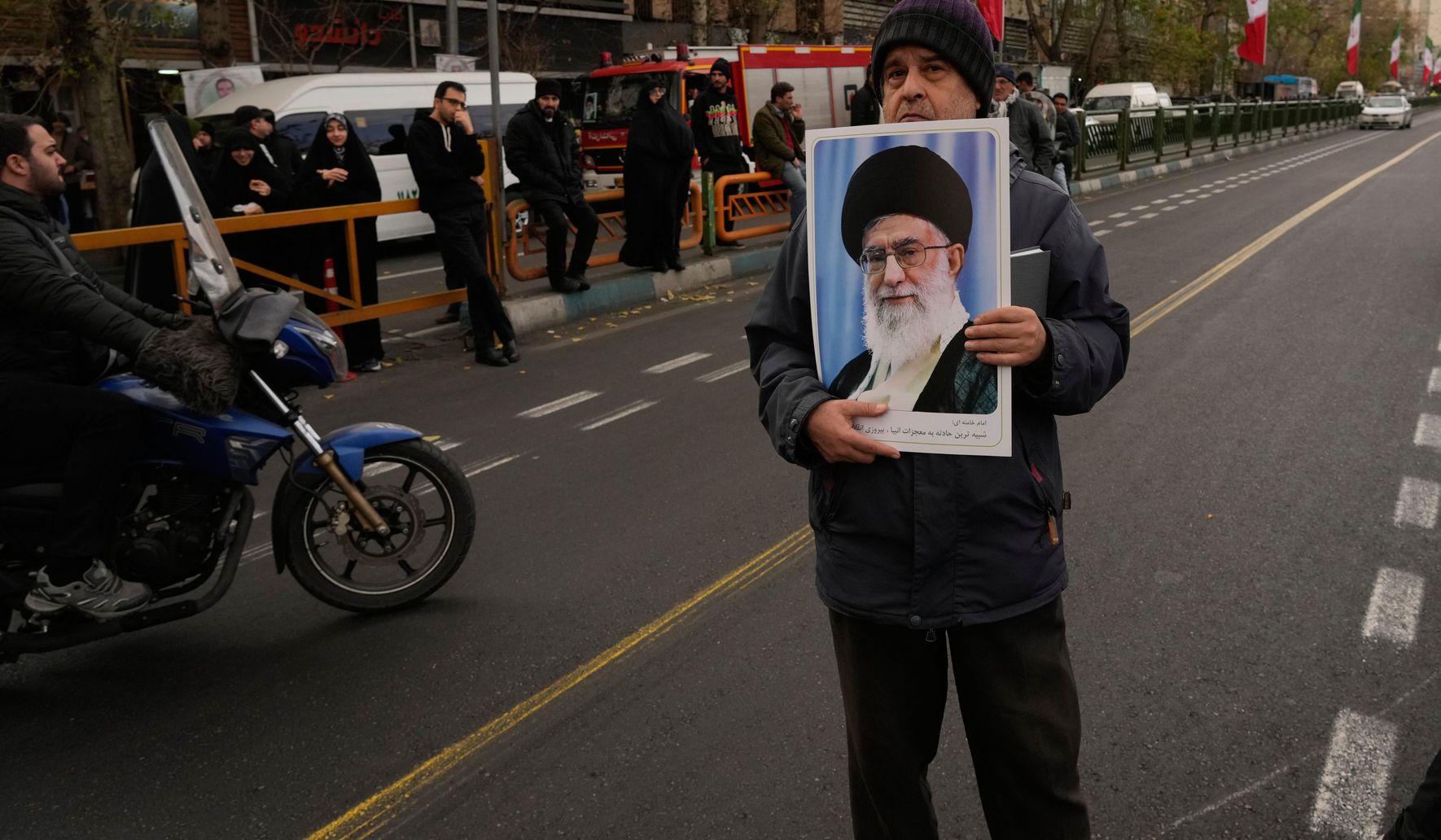
President Trump publicly urged “new leadership” in Iran after a sharp exchange with Iran’s Supreme Leader, who directly blamed Mr. Trump in a social media tirade; this piece examines the clash, the political signal it sends, and the likely reactions from conservative circles and the Iranian regime.
President Trump’s call for “new leadership” in Iran landed in the middle of a tense back-and-forth with Ayatollah Ali Khamenei, who took to social media to single out Mr. Trump personally. The exchange is more than talk; it’s a public challenge to a regime long accused of repressing its own people and exporting instability. From a Republican angle, that bluntness is a feature, not a bug, signaling clarity and resolve in confronting Tehran. The president’s posture taps into a broader conservative belief that clear language matters in foreign policy.
The timing added a layer of drama: the president spoke just hours after Khamenei’s online tirade, turning an already charged moment into a political watershed. For conservatives, the swift response underlines a willingness to call out bad actors without equivocation. It also forces opponents to take a stance: either defend the regime’s behavior or back America’s right to advocate for change. In that sense, the exchange shifts the debate from abstract criticism to a concrete demand for accountability.
Calling for “new leadership” is a deliberate choice of words that carries an unmistakable purpose. It frames the Iranian leadership as part of the problem rather than victims of circumstance, indicating a policy predisposed to confront authoritarian behavior. Republicans tend to prefer pressure over platitudes, and that phrase makes the intent clear: the current regime’s conduct is unacceptable to U.S. interests and to those who value liberty. The message resonates with voters who want principles applied consistently abroad.
Khamenei’s social media tirade, accusing Mr. Trump directly, is also revealing. When a figure like Khamenei resorts to personalized attacks, it shows the regime feels threatened and is trying to control the narrative at home and abroad. That reaction undercuts Tehran’s moral high ground and highlights the regime’s insecurity. From a Republican perspective, such bluster confirms the need for sustained pressure and exposure of the regime’s contradictions.
The political implications inside the U.S. are straightforward: Republicans can use the exchange to argue for stronger measures and a clearer strategy. Whether that means intensified sanctions, diplomatic isolation, or support for dissident voices, the rhetoric sets the stage for tougher options. Conservatives often view strong language as the first step toward leverage; you don’t get leverage by equivocating. This moment gives Republican policymakers room to press for a firmer posture.
Critics will accuse the president of escalating tensions, but the alternative is pretending the status quo is acceptable. For conservatives, that’s not a serious option when a regime repeatedly sponsors violence and crushes dissent. Calling out leadership is a nonviolent political act aimed at delegitimizing those who rule through fear. It also sends a signal to allies and adversaries that the U.S. will not normalize or reward behavior that undermines regional stability and human rights.
There’s also a messaging component for the Iranian people. Publicly advocating for leadership change is a form of solidarity with those who seek freedom and reform. Republicans see value in aligning U.S. rhetoric with universal ideals, making it harder for the regime to paint protesters as foreign pawns. Clear American language can embolden reformers and erode a regime’s internal credibility over time.
On the risk side, pushing too hard without a clear follow-through can be criticized as empty rhetoric. But from a Republican viewpoint, starting with strong language and following with concrete policy actions is the right sequence. Words open doors; actions close them. If public statements are coupled with concrete steps that increase pressure, the combination becomes a lever for change rather than mere provocation.
The exchange between President Trump and Ayatollah Khamenei is emblematic of a larger contest over influence and legitimacy in the Middle East. For conservatives, it represents an opportunity to reset expectations about how the United States engages with hostile regimes. The insistence on “new leadership” is meant to sharpen focus on accountability, human rights, and American interests, laying out a clear alternative to complacency and appeasement.

